
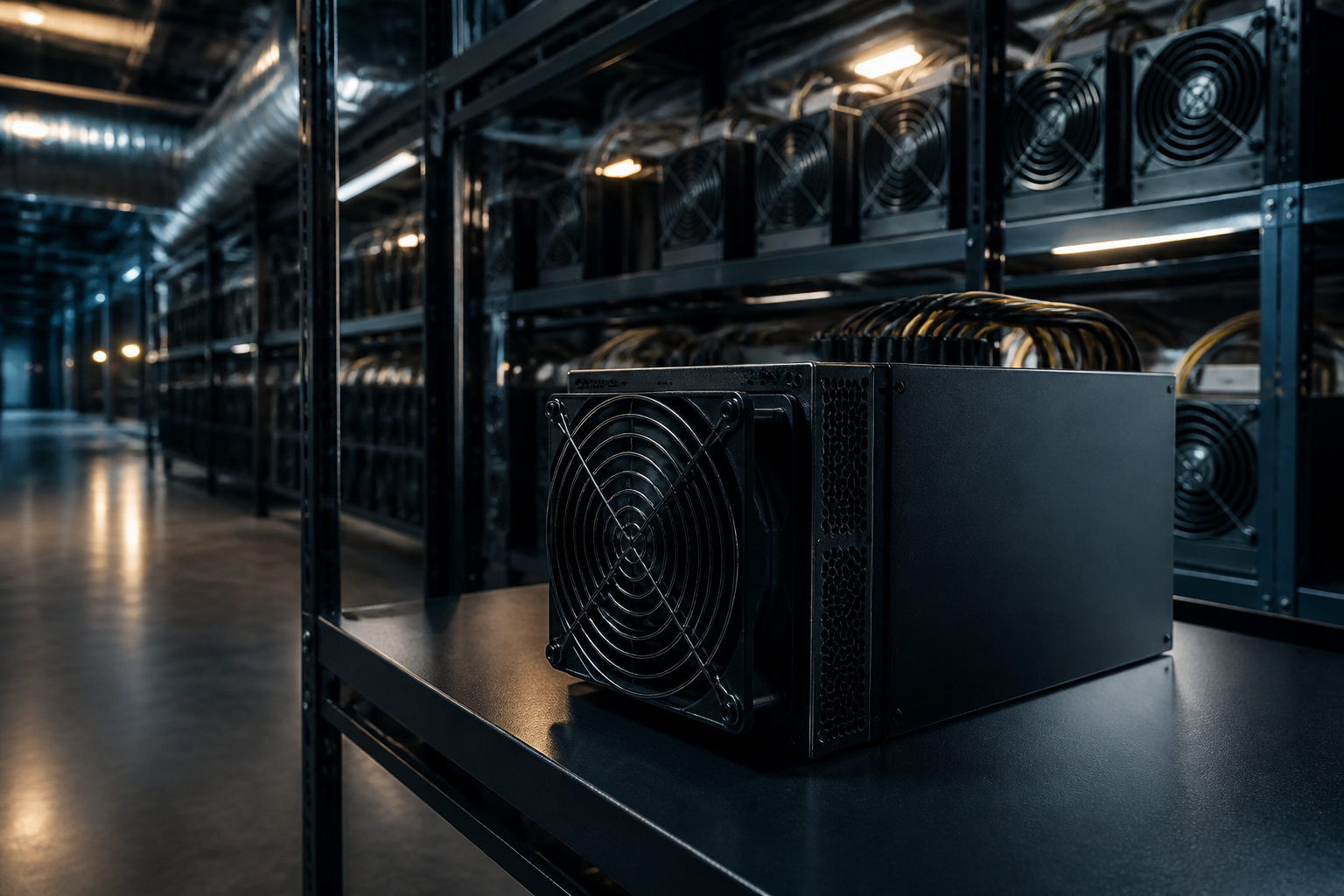
A bitcoin mining center is a site where many mining machines, power systems, cooling equipment, and network connections are grouped together to compete in Bitcoin’s block-finding process.
Think of it as a warehouse built for a bookkeeping race
Bitcoin runs on a public ledger. New transactions wait to be added, and miners compete to package them into a block that meets the network’s rules. When a miner finds a valid block first, that block can be added to the chain, and the miner can receive the block reward plus transaction fees.
A mining center exists because this competition depends on far more than owning one machine. As the number of devices grows, heat, electrical load, noise, cabling, uptime, and maintenance become operational issues that need constant attention. Grouping machines in one place makes those problems easier to manage at scale.
That is why the word “center” matters. It points to a physical operation with infrastructure, not just a person running mining software on a spare computer. In practice, a mining center is closer to an industrial computing site than a casual home setup.
What you would actually find inside one
The core item is the mining machine, often called an ASIC, which is built for one task: performing the hashing calculations used in Bitcoin mining. Around those machines sits the infrastructure that keeps them productive. That includes power distribution, ventilation or other cooling methods, networking gear, monitoring tools, and on-site maintenance.
Power quality is a major concern. Mining hardware runs under sustained load, so outages and unstable supply can lead to downtime or hardware stress. Cooling matters for the same reason. Hot equipment can lose efficiency, shut down unexpectedly, or wear out faster if the environment is poorly managed.
Network performance also plays a role. A miner needs to receive fresh block information quickly and send work results back without delay. A machine can be fully powered on and still contribute poorly if the connection is unstable or slow.
| Component | Main job |
|---|---|
| Mining machines | Perform hashing work and compete for new blocks |
| Power system | Keep hardware running with stable electricity |
| Cooling setup | Control temperature during continuous operation |
| Network connection | Sync with pools or nodes and submit work |
| Operations team | Handle failures, cleaning, monitoring, and replacements |
How a mining center connects to Bitcoin
Bitcoin launched with its genesis block in 2009. Since then, the network has used proof of work to decide who gets to add the next block. Miners keep trying hashes until one result satisfies the protocol’s target. There is no shortcut that lets a machine skip the computation.
The network produces a block about every 10 minutes. Bitcoin’s supply is capped at 21 million coins, and the block subsidy is cut in half about every 4 years, or every 210,000 blocks. The halving years so far are 2012, 2016, 2020, and 2024. Those rules shape how mining centers think about hardware lifespan, operating costs, and long-term planning.
Many centers connect their machines to a mining pool. A pool combines the hash power of many miners, which can make rewards arrive more regularly than solo mining. The trade-off is that participants need to understand the pool’s fee model, payout method, and account controls before they commit machines to it.
A mining center does not control Bitcoin by itself. Full nodes still validate the rules of the network, and miners operate inside those rules. Even a very large site is still one participant in a wider system.
How people take part in one
There are a few common paths. Some people build a small setup themselves and manage the machines on-site. Others buy hardware and place it in a hosted facility that provides rack space, electricity, cooling, and routine maintenance. Another group starts by learning pool configuration and wallet setup first, then decides whether owning machines makes sense.
Each route changes the type of work you take on. A home setup gives you direct control, but noise and heat can become immediate obstacles. Hosting removes much of the physical burden, yet it adds trust and contract risk because someone else is handling the site. Pool participation lowers variance in outcomes, but it still requires you to understand account security and payout settings.
Newcomers often focus only on the machine itself. That misses the larger picture. Mining has an operational side that keeps demanding attention after the hardware arrives: firmware settings, failed fans, dust, temperature swings, offline alerts, and replacement parts. If you do not understand those items, the learning curve can be expensive.
The cost reality people tend to miss
Electricity is usually the first cost people think about, and for good reason, but it is only part of the picture. Cooling equipment, repairs, labor, cleaning, networking, site rent, downtime, and shipping can all affect whether a setup stays viable. A mining center can look simple from the outside while hiding a long list of recurring burdens.
Noise is another practical issue. Mining machines are loud under heavy load, which is why industrial-style sites are common. Environmental conditions matter too. Dust, humidity, and poor airflow can create avoidable failures even when the hardware itself is modern.
Legal and local compliance questions also belong in the planning stage. Different places can have different rules around commercial power use, facility permits, fire safety, and noise. Anyone considering a mining center should check local requirements before choosing between self-hosting and third-party hosting.
Security needs a broad view. The machines matter, but so do pool accounts, remote management tools, wallet settings, and access controls. A weak password or a badly handled admin panel can cause damage long before a machine physically breaks.
FAQ
What does a bitcoin mining center actually do?
It houses and manages mining machines that compete to add new Bitcoin blocks. The center also handles the power, cooling, networking, and maintenance needed to keep those machines running.
Is a mining center the same as a mining pool?
No. A mining center is a physical site, while a mining pool is a coordination service that combines hash power from many miners and distributes rewards by its own rules.
Can I mine Bitcoin from home instead?
You can, but home mining brings practical limits. Heat, noise, electrical capacity, and stable connectivity are the first issues most people run into.
Do I need to own many machines to join a mining center?
Not always. Some people start with a small number of machines or use hosted services, then expand only after they understand the operating model and the ongoing costs.
What should I check before using a hosted mining facility?
Read the hosting terms closely. You should know who controls the machines, how downtime is handled, what maintenance is included, how access is managed, and where your payout wallet is configured.
If you are still deciding whether this field makes sense for you, map the full chain of responsibility first: machine ownership, site operations, pool settings, wallet control, and failure handling. If any link in that chain is unclear, that is the part to study before spending money.
Disclaimer: This article is for informational and educational purposes only and is not investment, financial, or legal advice. Crypto assets are highly volatile and you could lose your entire investment. Do your own research and decide carefully.