
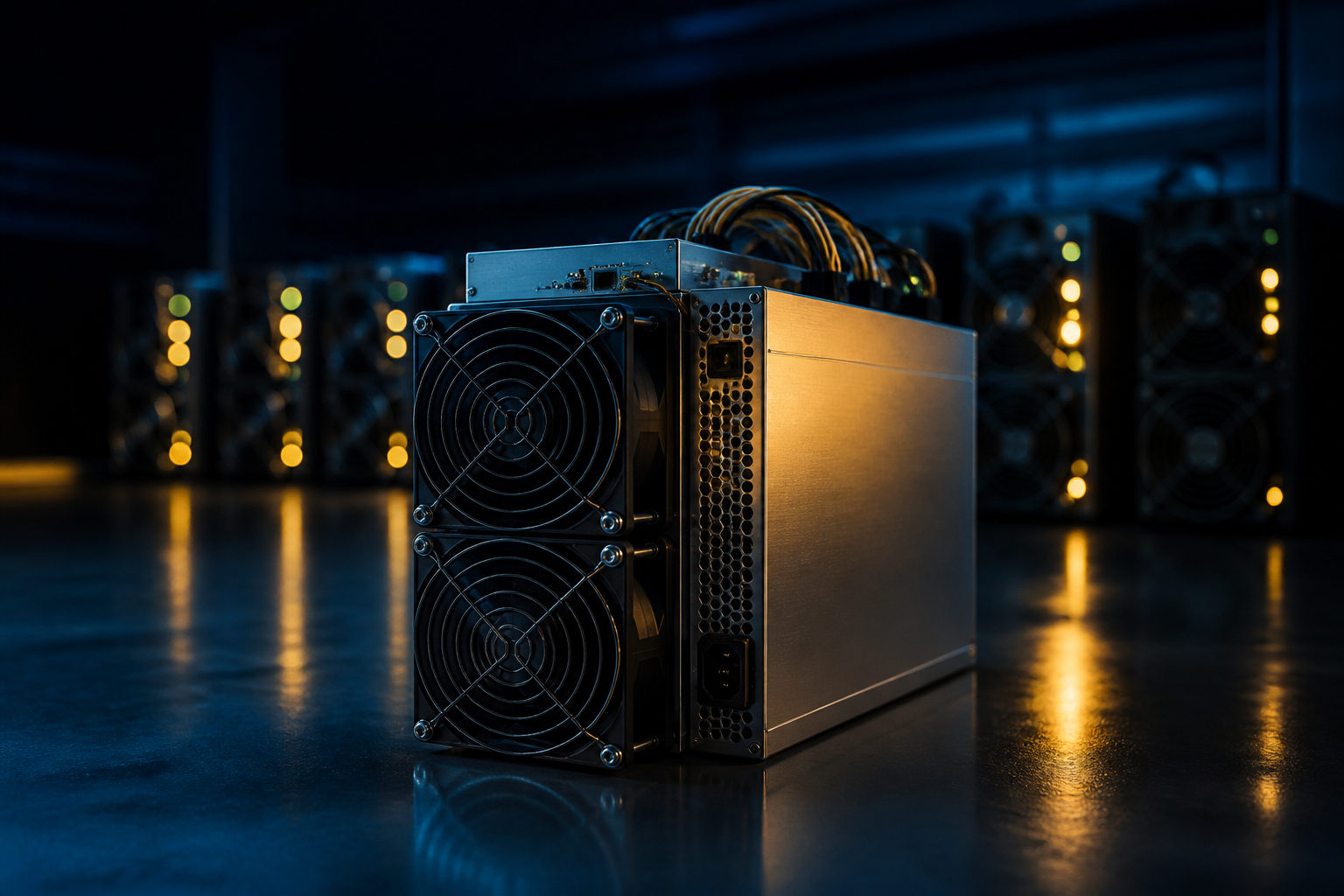
There is no permanent single answer to who is the largest bitcoin miner. The right answer depends on the yardstick: network hash rate, recent block share, mining fleet size, or the scale of a mining company’s operations.
What bitcoin miners are actually competing for
Bitcoin mining is a bookkeeping race. The network aims to produce one block about every 10 minutes, and miners compete to find a valid result that lets them add a new block of transactions to the chain.
The current block reward is 3.125 BTC, set after the 2024-04-19 halving, and it is expected to stay there until the next halving around 2028. With about 144 blocks per day, the whole network adds about 450 BTC daily. That figure applies to the network as a whole, not to any one miner, mining farm, or public company.
This is where many readers get tripped up. “Miner” can mean a single machine, an individual operator, a mining pool, or a company that owns sites, power arrangements, and hardware. If those categories get mixed together, the answer to “who is the largest bitcoin miner” turns blurry fast.
| Term | What it refers to | Can it answer “largest miner” by itself? |
|---|---|---|
| Mining machine | One device doing hash computations | No, it is only the smallest unit |
| Individual miner | A person or team operating equipment | Sometimes, but hard to compare from the outside |
| Mining pool | A coordinator that combines hash rate from many miners | Often mistaken for the largest miner |
| Mining company | A business managing sites, machines, power, and finance | Yes, if the comparison method is clear |
The main ways people define “largest”
The most direct measure is hash rate. The more effective hash rate a miner controls, the better its long-run chance of winning blocks and earning rewards. That makes hash rate a strong technical measure of size.
Another method is block share over a period of time. If a pool or company is associated with more found blocks, many people will call it the largest miner. The catch is that pool results often reflect combined contributions from many independent miners rather than one owner’s equipment.
A third measure is operational scale. In business discussions, people may look at machine fleets, site capacity, power access, and the ability to keep hardware running. This is often the most practical way to compare big mining firms, though it still requires caution because one company may own machines directly while another may focus more on hosting.
Some observers also look at bitcoin holdings. That can reveal treasury strategy, but it does not prove mining strength on its own. A company that holds more BTC may simply choose to keep coins on its balance sheet instead of selling them quickly.
| Yardstick | What it helps answer | Common mistake |
|---|---|---|
| Hash rate | Who has stronger long-term mining capacity | Ignoring that active hash rate can change |
| Block share | Who found more blocks in a given period | Treating pool output as one owner’s output |
| Fleet and site scale | Who runs the larger physical operation | Assuming all installed machines are always online |
| BTC holdings | Who keeps more mined bitcoin | Confusing treasury policy with mining power |
Why the answer keeps changing
Mining is probabilistic. Two operators with similar hash rate can post different short-term block results simply because of luck. That is why one snapshot rarely settles the question in a meaningful way.
The industry structure also muddies the picture. Many miners join pools, which smooth out reward variance by combining hash power and sharing payouts. A pool can look dominant from public block data even when the underlying machines belong to many separate participants.
Then there is the economics. Bitcoin has a hard cap of 21,000,000 BTC, expected to be fully issued around 2140, and the block subsidy is cut in half every 210,000 blocks. The halving dates so far are 2012-11-28, 2016-07-09, 2020-05-11, and 2024-04-19. After each halving, efficiency matters more because the reward per block drops while operators still face power, cooling, repair, and financing demands.
That pressure reshuffles rankings. Older machines may become less competitive, high-cost sites may turn unworkable, and firms with better energy deals or better uptime may move ahead. A company that looked huge in one phase may lose ground later if its operating conditions weaken.
How people still participate in mining today
In Bitcoin’s early years, individual participation was much more accessible. The network launched with the genesis block on 2009-01-03, and competition was lighter than it is now. Today mining is dominated by specialized hardware, power planning, thermal management, and round-the-clock operations.
For most people, the realistic options fall into three buckets: owning machines yourself, placing machines with a hosting provider, or joining a mining pool to reduce payout variance. All three connect to the same network, but they come with very different demands.
| Approach | Who it may suit | Main practical issue |
|---|---|---|
| Run your own machines | People who want direct control | Noise, heat, power setup, and maintenance |
| Hosted mining | People without a suitable location | Dependence on the host’s uptime and settlement rules |
| Join a pool | People who want steadier reward distribution | Need to understand fee and payout methods |
The cost reality matters more than the headline reward. Seeing 3.125 BTC per block can give new readers the wrong impression, because that reward belongs to the winner of a network-wide contest and is then subject to pool rules or internal company accounting. It is not a fixed return that any one participant can expect by simply switching on a machine.
That is why the phrase “largest bitcoin miner” needs context every time. If you mean the biggest pool, one list may answer it. If you mean the biggest self-operated mining company, you need a different set of comparisons. If you mean the biggest individual miner, public information is often incomplete.
FAQ
Is the largest mining pool the same as the largest bitcoin miner?
Not necessarily. A mining pool organizes and pays out combined hash rate from many participants, so the pool’s name can be large even when the machines belong to many separate operators.
Can an individual still mine bitcoin today?
Yes, in a technical sense anyone can participate. In practice, success depends on hardware efficiency, power access, cooling, uptime, and whether the setup makes sense for your situation.
Why do some people rank miners by hash rate while others use block output?
They are measuring different things. Hash rate points to long-run competitive strength, while block output reflects observed results over a period and can be affected by luck and pool structure.
Why does halving affect who counts as a large miner?
The subsidy falls every 210,000 blocks, and after 2024-04-19 the reward became 3.125 BTC. When revenue per block drops, operators with weaker efficiency or higher costs can lose ground or leave the field.
What should I check first if I want to compare large miners properly?
Start by separating pools from mining companies and companies from individual operators. Then keep the metric consistent, because comparing one firm’s machine fleet with another pool’s block share will not give a clean answer.
If you want a useful answer to who is the largest bitcoin miner, pick the definition before you pick the name. Compare pools by block share, compare mining companies by active hash rate and operating conditions, and compare personal mining plans by the realities of power, heat, and maintenance.
Disclaimer: This article is for informational and educational purposes only and is not investment, financial, or legal advice. Crypto assets are highly volatile and you could lose your entire investment. Do your own research and decide carefully.