
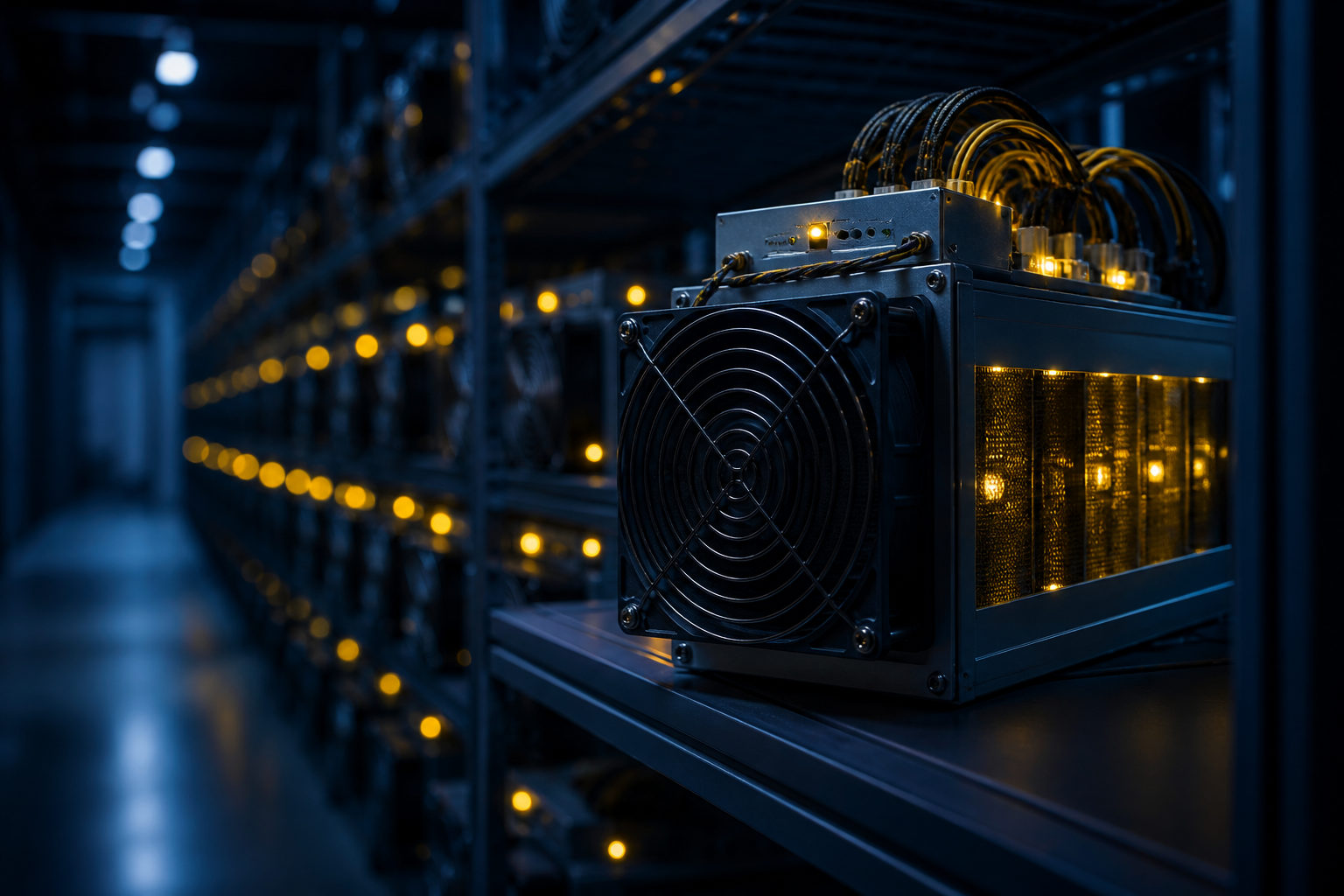
Can we still mine bitcoin? Yes. There are still bitcoins left to be mined, but bitcoin mining has changed from a casual hobby into a specialized competition shaped by hardware, electricity costs, and the way you choose to participate.
Why bitcoin can still be mined
A simple way to picture mining is to think of it as a race to earn the right to write the next page of a shared ledger. When the network groups new transactions into a block, miners run machines that keep making guesses until one of them finds a valid result under the protocol rules.
Bitcoin was not released all at once. It began with the genesis block in January 2009, and new coins enter circulation over time as new blocks are added. The supply cap is 21 million coins, so until that full amount has been issued, there is still bitcoin to mine.
New blocks are added about every 10 minutes on average. That does not mean rewards are spread evenly. Mining is competitive, so the result depends on computing power, machine efficiency, and chance at any given moment.
Yes, you can mine bitcoin, but the bar is much higher now
Many people asking “can you still mine bitcoin” are really asking whether ordinary users still have a realistic path in. The answer is yes in theory, though the practical side is much tougher than it used to be.
In bitcoin’s early years, less specialized hardware could still take part. Today, serious mining usually depends on dedicated mining machines, steady power, good cooling, and ongoing maintenance. You are not competing with a few hobbyists. You are up against operators built around efficiency.
The halving cycle also matters. Bitcoin’s block subsidy is cut about every 4 years, or every 210,000 blocks, and halvings have taken place in 2012, 2016, 2020, and 2024. Each cut reduces the flow of newly issued bitcoin, which makes cost control and hardware efficiency more important over time.
Main ways people still participate
If you want to understand whether people can still mine for bitcoins, it helps to separate the protocol answer from the participation options. There is more than one way to join, and each route comes with different demands.
Solo mining
This means you run your own machine and compete directly for block rewards. The appeal is clear control over the setup and no shared reward structure, but the odds can be uneven for smaller operators, and the technical burden stays with you.
Mining through a pool
A mining pool combines the computing power of many participants and shares rewards according to its rules. For most smaller miners, this is the more realistic model because it smooths out the long wait that can come with mining alone.
Hosted or managed mining
Some participants place machines in a professional facility that handles power, cooling, and maintenance. This can reduce the operational hassle, though it adds another layer of trust, service terms, and reporting that should be checked carefully.
Before choosing any path, decide what you want from the process. If your goal is to learn how bitcoin works, your decision may look very different from someone trying to run mining as an ongoing operation.
The real constraints are cost, setup, and staying power
Mining does not end when the machine turns on. The harder part is keeping it running under workable conditions. Newcomers often focus on the idea of earning bitcoin and pay less attention to the daily realities that shape whether mining remains viable.
- Electricity: one of the biggest variables, because mining machines run continuously.
- Hardware efficiency: better efficiency can matter as much as raw computing power.
- Cooling: heat management affects stability and operating conditions.
- Noise and space: many home settings are a poor fit for dedicated mining gear.
- Maintenance: fans, firmware, dust, networking, and uptime all matter.
- Pool terms: payout rules, fees, and thresholds can change the experience.
It also helps to drop one common misconception. Mining is not free bitcoin. You are putting real-world resources into a system that uses proof of work to secure transaction history. Whether that makes sense for you depends on your costs and your setup, not just on interest in the idea.
Why mining feels like a bookkeeping contest
The bookkeeping race comparison works because it gets to the heart of what miners do. Transactions are waiting to be confirmed, and miners compete to package them into a valid block. They do this by performing repeated calculations until one machine finds a result that satisfies the network’s difficulty target.
Once that result is found, the proposed block is broadcast to the network. Other nodes verify it, and if it passes those checks, the block is accepted. Because this process demands real computational work, changing old records is extremely hard, which is a major part of bitcoin’s security model.
So when people ask whether there are still bitcoins to mine, the best short answer is this: yes, because miners are still being rewarded for helping the network confirm transactions and maintain the chain under the protocol rules.
FAQ
Can an individual still mine bitcoin today?
Yes, an individual can still participate. The harder question is whether the setup makes sense once you factor in electricity, hardware, cooling, and the time needed to manage it properly.
Are there still bitcoins left to mine?
Yes. Bitcoin has a fixed cap of 21 million coins, and issuance happens over time through block rewards, so mining continues until the full supply has been distributed.
Can a home computer still mine bitcoins?
From a technical standpoint, you can still run software and connect to the network. In practical competition, though, a home computer is usually far less efficient than dedicated mining hardware, so it is better viewed as a learning exercise.
What is the difference between solo mining and pool mining?
Solo mining means you compete on your own and only receive a block reward if your setup finds a valid block. Pool mining combines many participants, which usually makes reward distribution steadier for smaller miners.
Where should I check the bitcoin price if I am thinking about mining?
Use a major market data platform for live bitcoin pricing. Then treat mining as a separate calculation that also includes electricity, machine efficiency, pool fees, and maintenance, because price alone does not answer the mining question.
What to do before you get started
Start by choosing your goal, then work backward from the basics. Learn how bitcoin mining works, compare solo and pool setups, review electricity and cooling conditions, and only then look at hardware; if your living space is a bad match for constant heat and noise, studying the process first is often the smarter move.
Disclaimer: This article is for informational and educational purposes only and is not investment, financial, or legal advice. Crypto assets are highly volatile and you could lose your entire investment. Do your own research and decide carefully.