
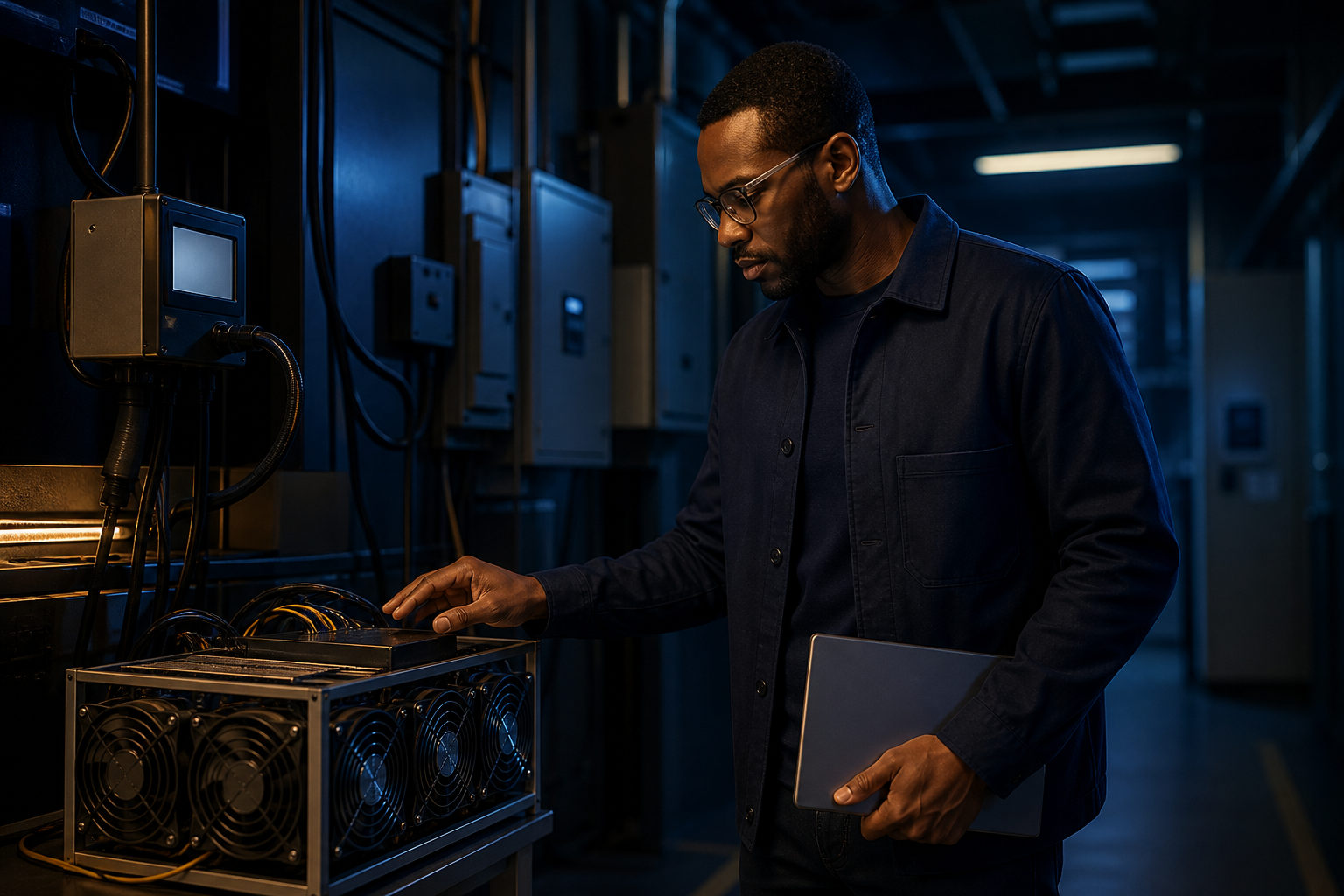
Is bitcoin mining legal? Sometimes yes, sometimes no, and often the real answer depends on where you are, how you mine, what kind of power you use, and whether your setup looks like a personal hobby or a business activity.
Think of mining as a nonstop contest to write the next page of a public ledger
A simple way to understand bitcoin mining is to picture a shared ledger that anyone can verify. Participants compete for the right to add the next batch of transactions. When one participant meets the network rules first, that participant can package transactions into a new block and append it to the chain.
That is why the term mining can be confusing for beginners. Nothing is being dug out of the ground. Miners supply computing power to a rules-based process that keeps the Bitcoin network in sync. Bitcoin produces a block about every 10 minutes, and the system adjusts so block production stays on a steady rhythm over time.
Bitcoin also has a fixed supply limit of 21 million coins. New issuance follows the block schedule rather than the decision of any company or government. The block reward halves about every 4 years, or every 210,000 blocks. The halving years so far are 2012, 2016, 2020, and 2024. Those rules matter because they explain what miners are doing: they are competing to help secure and update the ledger inside a preset monetary system.
Legal status depends on more than one rule
People often ask the question as if there should be one universal answer. In practice, legality usually has several layers. A place may allow ownership of bitcoin while placing limits on mining operations. Another may allow mining in general but still restrict certain power arrangements, property uses, or commercial hosting services.
| Area to check | What it means | Why it matters |
|---|---|---|
| Crypto rules | Whether local law allows mining, holding, or related services | The activity itself may be limited or regulated |
| Power use | Whether your electricity source and contract allow heavy continuous load | A legal activity can still become a problem if power use breaks local rules |
| Property terms | Whether your home, rental, or facility permits this kind of equipment | Noise, heat, ventilation, and fire safety often trigger disputes |
| Business status | Whether you mine for yourself or host machines for others | Running a service usually creates extra obligations |
| Tax reporting | Whether mined bitcoin or later sales must be reported | Poor records can create trouble later |
So when someone asks whether bitcoin mining is legal, the sharper version of the question is this: is it legal for me, in my location, using this power source, in this property, under this setup. Without those details, the answer is too vague to be useful.
Cross-border hosting adds another layer. If your machine runs in a different jurisdiction, that does not automatically remove your responsibility. Contract terms, ownership disputes, tax treatment, and withdrawal procedures can still affect you directly.
For most people, mining is an equipment and operations problem first
Many beginner guides make mining sound like a software task. You install a program, click a few buttons, and let it run. That description skips the hard part. Real-world bitcoin mining is heavily shaped by hardware, cooling, noise control, maintenance, uptime, and pool rules.
In the early days, general-purpose computers had a larger role. Today, people looking at Bitcoin usually face a different reality. Competitive participation often involves specialized machines, mining pools, or third-party hosting facilities. Even then, joining the network does not remove the need to understand the operating conditions around your setup.
| Way to participate | Who it suits | Main advantage | Main difficulty |
|---|---|---|---|
| Run your own machine locally | People who can manage power, cooling, and noise on site | High control over hardware | Operational burden stays with you |
| Join a mining pool | People who want a steadier distribution model than solo mining | Results are shared according to pool rules | You still need to understand fees, payout terms, and trust assumptions |
| Use a hosting provider | People who cannot keep equipment at home or on their own property | Less direct facility management | Dependence on the provider becomes a major risk |
A mining pool does not turn mining into passive income by itself. It mainly changes how results are distributed among participants. Hosting does not erase risk either. It shifts part of the work to someone else, which means contract clarity, downtime handling, machine access, and asset withdrawal become central questions.
Another point beginners often miss: mining bitcoin and buying bitcoin are two different exposures. Mining adds machine risk, electricity risk, and operating friction. Buying bitcoin skips the machinery but leaves you directly exposed to price movements. Both involve Bitcoin, but not in the same way.
Before you think about profit, check the conditions you cannot avoid
Without current market data and your own operating costs, any promise about mining returns would be weak. A better approach is to identify the constraints that will shape your decision before you spend money or sign anything.
| Checkpoint | Why it comes first | Common mistake |
|---|---|---|
| Local rules | They determine whether you can start at all | Relying on social posts instead of formal guidance |
| Electricity setup | Mining needs stable long-running power | Ignoring contract terms or capacity limits |
| Noise and cooling | They affect machine health and nearby people | Treating a normal living space like a server room |
| Hardware source | It affects maintenance and support expectations | Looking only at headline specs |
| Pool terms | They shape your payout experience | Joining without reading fee and payout rules |
| Wallet custody | Mined coins still need secure storage | Leaving operations and long-term storage mixed together |
If you cannot answer these points clearly, you are not yet ready to judge whether mining makes sense for you. For many readers, the practical barrier is not getting a machine to start. It is keeping the whole arrangement compliant, stable, and manageable over time.
The legal angle also shows up in small details. A home power contract may not match the way mining hardware runs. A landlord may object to heat or noise. A service provider may market hosting aggressively while leaving key outage terms vague. These issues can matter more than the broad question of whether Bitcoin itself is allowed where you live.
How to check whether mining is allowed where you are
The safest path is simple, even if it takes time. Start with official local rules on crypto activities. Then confirm power and property conditions. After that, look at tax treatment and any business obligations tied to your setup.
- Check public guidance from local authorities or other official sources to see whether mining, hosting, or related crypto activity is restricted.
- Confirm that your electricity arrangement allows the kind of continuous use your equipment would require.
- Review lease terms, building rules, or property conditions for noise, ventilation, and equipment limits.
- If you plan to host machines for others or split ownership, define responsibilities and recordkeeping before funds move.
- Prepare a wallet you control so mining operations, pool accounts, and long-term storage do not all sit in one place.
This sequence sounds less exciting than shopping for hardware, but it saves people from basic mistakes. A claim that mining is easy at home should always be tested against power load, heat, ventilation, and property rules.
FAQ
Can I legally mine bitcoin from home
Maybe, but home mining depends on more than general crypto law. Your housing terms, power contract, ventilation, noise level, and local safety rules can all affect whether a home setup is acceptable.
Does joining a mining pool solve the legal side
No. A pool changes how mining output is shared, but it does not fix issues with electricity use, property restrictions, licensing, or tax reporting in your location.
Can I mine bitcoin with a regular computer
You can use a regular computer to learn how the process works at a basic level. For actual Bitcoin mining in current conditions, general-purpose machines are usually not the practical choice.
Is hosted mining safer than running my own machine
It can reduce on-site hassle, but it adds provider risk. You need to read the service terms carefully, especially around downtime, machine access, ownership, and withdrawal procedures.
Should mined bitcoin stay in the pool account
A pool account may be fine for short-term settlement. For longer-term holding, many people prefer a wallet where they control the keys, keeping storage separate from mining operations.
If you are serious about mining bitcoin, make a checklist before you buy anything: local rules, electricity terms, property limits, pool conditions, and wallet custody. If one of those pieces is unclear, stop there and clear it up first.
Disclaimer: This article is for informational and educational purposes only and is not investment, financial, or legal advice. Crypto assets are highly volatile and you could lose your entire investment. Do your own research and decide carefully.