
Does Google mine bitcoins? In public discussion, Google is known first as a technology company, not as a public-facing Bitcoin miner. To answer the question, you need to separate big-company computing from what Bitcoin mining actually is.
Bitcoin mining is a contest for the next page of the ledger
A simple way to picture mining is to imagine a nonstop race to earn the right to write the next entry in a shared record book. Participants gather pending transactions, form a block, and run repeated calculations. The participant that meets the network’s rule first gets to add that block to the chain and receive the block reward plus transaction fees.
This system is called proof of work. No one digs up a physical coin from a machine. Mining is the process of using computing power to compete for block production under open network rules. Bitcoin has a fixed supply cap of 2100万枚? No.
Bitcoin has a fixed supply cap of 2100万枚.
Bitcoin has a fixed supply cap of 21 million coins, the network produces a block about every 10 minutes, and the issuance schedule changes through halvings. Those facts matter because they show why mining is not just “running a computer” in the casual sense. It is a structured competition with built-in scarcity and a schedule that tightens over time.
Bitcoin began with the genesis block in January 2009. Its creator used the name Satoshi Nakamoto, and that identity remains unknown. From the start, the idea was to let a distributed network verify and update the ledger without depending on one company to keep the system alive. That is why the question of whether Google mines is interesting, but not central to whether Bitcoin functions.
Google’s role and a miner’s role are not the same
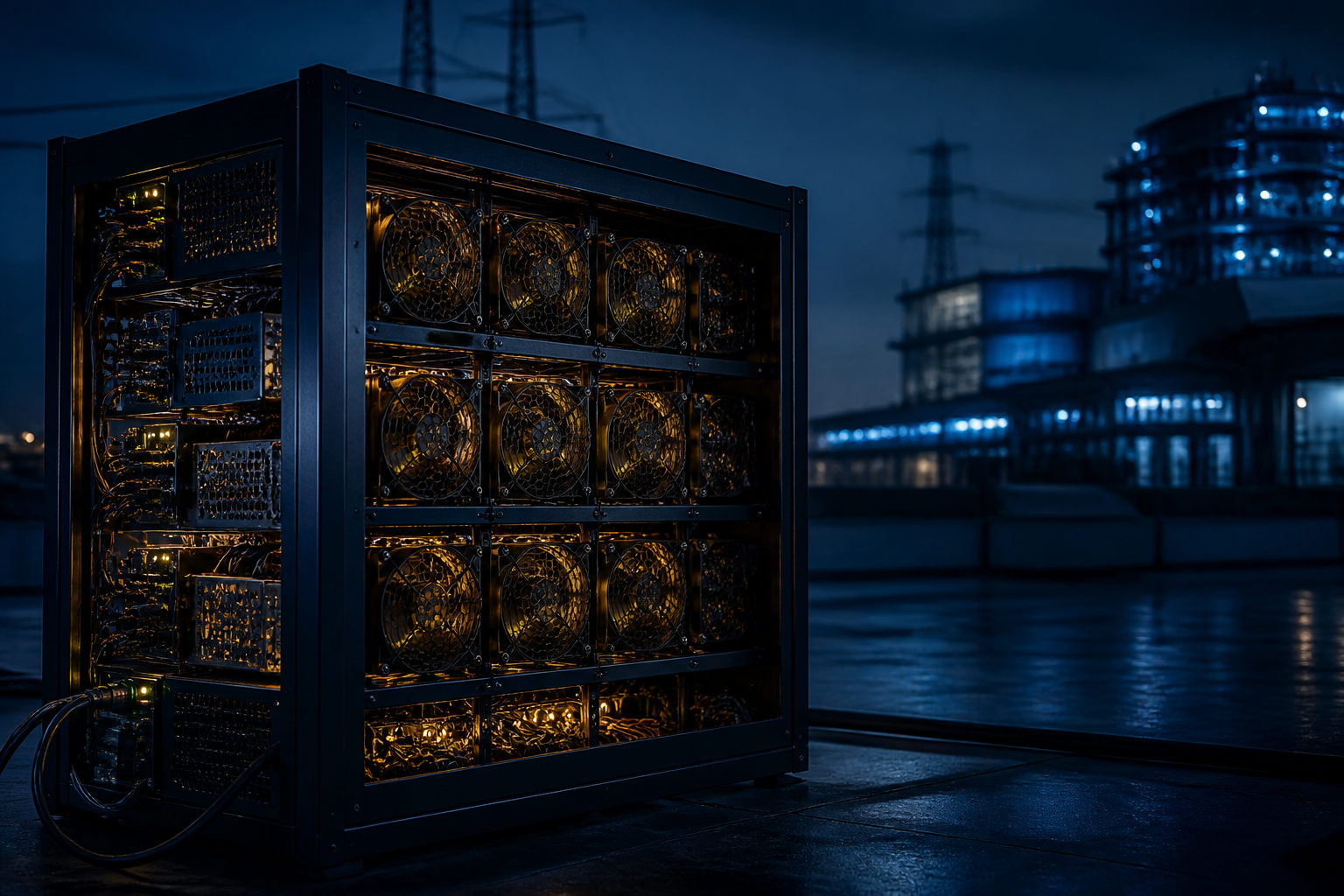
People often mix up large technology firms with Bitcoin miners because both involve servers, chips, data centers, and heavy computing. The overlap in vocabulary creates confusion. A cloud company sells infrastructure or software services. A miner deploys specialized machines, secures power, manages heat, and aims directly at finding blocks.
| Category | Large tech company | Bitcoin miner |
|---|---|---|
| Main objective | Operate products, platforms, or computing services | Compete to produce blocks |
| Core resources | Software systems, cloud capacity, hardware research | Mining machines, power, cooling, operations |
| Direct goal on the Bitcoin network | May be indirect or unrelated | Add blocks to the chain |
| Main revenue source | Business lines outside mining | Block rewards and fees |
| Operational focus | Service delivery and product performance | Machine efficiency and energy economics |
So, having huge computing resources does not automatically mean Google mines bitcoins. A company can run powerful servers and still have no direct role in proof-of-work mining. It can design hardware, support blockchain-related tools, or provide cloud services without becoming a miner in the practical sense readers usually mean.
Another reason this matters: modern Bitcoin mining depends on specialized hardware. General-purpose servers are not the same thing as dedicated mining machines. Even a company with deep engineering talent would still need the right power setup, thermal design, operating model, and business case before public mining would make sense.
Can anyone mine Bitcoin? In theory yes, in practice it is demanding
At the protocol level, Bitcoin is open. Anyone can download software, run a node, buy mining hardware, and connect to a mining pool. That openness is real. The practical hurdles are real too.
One of the biggest beginner mistakes is treating “running a node” and “mining” as if they were the same activity. They are not. A node verifies blocks and transactions, checks the rules independently, and helps relay data across the network. A miner commits computing power to compete for the next block. Both matter, but they serve different purposes and require different setups.
| Way to participate | What you do on the network | Typical equipment need | Best fit |
|---|---|---|---|
| Run a node | Verify transactions and blocks | Regular computing hardware can be enough to start | Users who want independent verification |
| Mine solo | Contribute hash power and try to find blocks directly | Usually needs specialized mining hardware | People prepared for infrastructure demands |
| Join a pool | Combine hash power with others and share rewards by pool rules | Still needs mining hardware and stable uptime | Participants who want smoother payout patterns |
For most people today, using a home computer to mine Bitcoin is not a competitive path. The machine is only part of the story. You also have to deal with power draw, heat, noise, downtime, maintenance, and hardware aging. Many newcomers ask whether a laptop, desktop, or phone can mine Bitcoin. You may be able to run software for learning purposes, but that is very different from running a setup that can compete with specialized operators.
If your goal is understanding Bitcoin, mining does not have to be your entry point. Learning how wallets work, understanding private keys, and running a node can teach you much more about the network before you take on the operational burden of mining.
If you want to mine, focus on cost structure before anything else
The common mistake is to look only at the machine and ignore the system around it. Mining is tied to electricity, cooling, uptime, repairs, pool configuration, and day-to-day operating discipline. If one of those pieces fails, the whole plan can break down quickly.
| Cost or constraint | Why it matters | Typical real-world issue |
|---|---|---|
| Mining hardware | Determines efficiency and service needs | Fast obsolescence, noise, and hardware faults |
| Electricity | Often the key ongoing expense | Power price, reliability, and site limits |
| Cooling | Affects uptime and equipment life | Heat buildup and added infrastructure needs |
| Operations | Keeps machines online and configured | Monitoring, repairs, and technical overhead |
| Pool choice | Shapes payout method and workflow | Different rules, interfaces, and settlement terms |
This is also where the Google question becomes easier to frame. A large company may have data centers, but data centers built for cloud workloads are not automatically suitable for rows of mining machines that run continuously under high thermal load. There are also business priorities, compliance questions, and reputation concerns. A company might be fully capable of understanding mining and still choose not to be a public mining operator.
For an individual, the useful question is not whether mining sounds exciting. It is whether you can handle the physical and operational reality: heat, noise, maintenance, machine replacement, and the need for stable power. If any one of those is a deal-breaker, mining may not be the right way for you to engage with Bitcoin.
FAQ
Can Google’s servers be used to mine Bitcoin directly?
Computing resources can run many kinds of workloads, but Bitcoin mining depends heavily on specialized efficiency. General cloud or server environments are usually not designed around the same economics as dedicated mining hardware.
Can I mine Bitcoin with a home PC today?
You can experiment to understand the process, but that does not mean the setup is competitive. In practice, home PCs usually struggle on efficiency, and heat plus power demands become obvious quickly.
Is running a node the same as mining?
No. A node checks and relays network data, while a miner spends hash power trying to produce the next block. Both support the network in different ways.
Does joining a mining pool remove the technical burden?
Not really. A pool can smooth reward distribution, but you still need to manage hardware, uptime, networking, and cooling on your side.
What is a better first step if I do not want to mine yet?
Start with a wallet, learn what private keys do, and run a node if you want a deeper view of the system. That path teaches you how Bitcoin works without forcing you into mining costs from day one.
If you started with “does Google mine bitcoins,” the clearest takeaway is this: being a major computing company is not the same thing as being a Bitcoin miner. If you want to understand who really mines, follow the ledger race, the hardware, and the cost structure rather than the brand name.
Disclaimer: This article is for informational and educational purposes only and is not investment, financial, or legal advice. Crypto assets are highly volatile and you could lose your entire investment. Do your own research and decide carefully.