
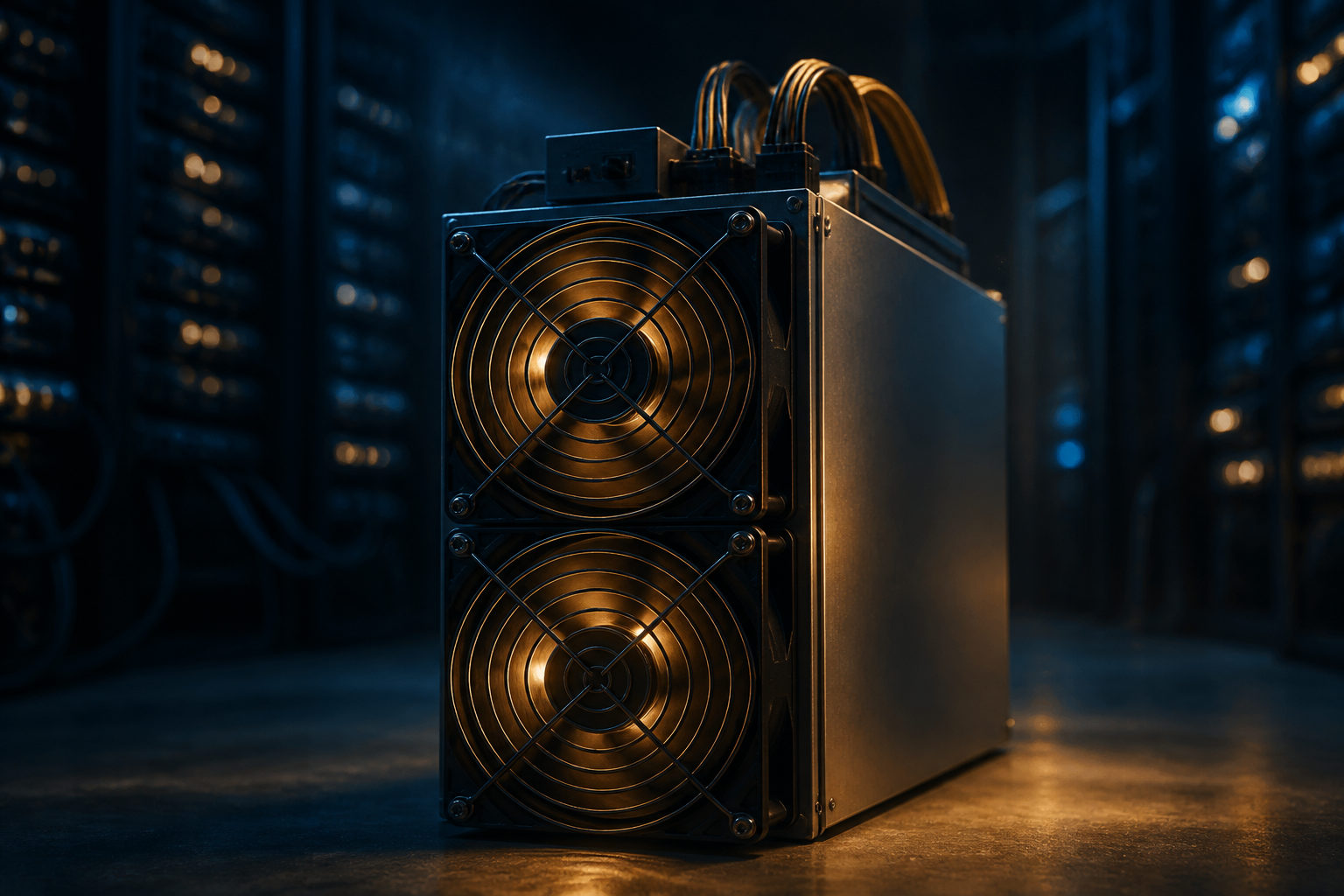
How is bitcoin mined? Bitcoin mining is a competition to add new blocks to the blockchain, where miners use specialized machines to perform repeated calculations until one block meets the network’s rules.
What bitcoin mining actually does
The word “mining” can be misleading. Bitcoin is not dug out of a hidden digital vault. In practice, miners gather pending transactions, package them into a candidate block, and compete for the right to confirm that block on the network.
This matters because Bitcoin does not rely on one company or bank to update its ledger. It uses proof of work, which means miners must spend real computing effort before a new block is accepted. The network produces a block about every 10 minutes, and the successful miner receives a block reward plus transaction fees.
How bitcoin is mined step by step
A simple way to picture it is to imagine a giant lock with a rule-based combination. Miners keep trying new inputs until one of them produces a hash that fits the current difficulty target. There is no practical shortcut, so the process depends on repeated trial and error at very high speed.
Each candidate block includes a set of transactions, a reference to the previous block, and other block data. The mining machine changes certain fields and recalculates the hash again and again. When a valid result appears, the miner broadcasts the block, and other nodes check whether it follows the protocol.
If the block is valid, it becomes part of the blockchain. That is the moment people usually mean when they say new bitcoin was “mined.” The new coins are not pulled from storage; they are issued by the protocol as part of the accepted block.
Why proof of work matters
Proof of work makes rewriting the ledger extremely hard. Anyone trying to alter older records would need to redo a huge amount of computation and keep up with the rest of the network at the same time.
Where new bitcoin comes from
Bitcoin’s supply schedule is built into the protocol. The total cap is 21 million coins, and new issuance is released through block rewards. Over time, that issuance slows because the reward is cut in half about every 4 years, or every 210,000 blocks.
What miners need to participate
In theory, anyone can try bitcoin mining. In reality, participation depends on equipment, electricity, cooling, noise control, internet reliability, and ongoing maintenance. That is why mining is closer to operating hardware infrastructure than clicking a button in an app.
Modern bitcoin mining usually uses ASIC machines, which are built for one purpose: performing the hash calculations used by the network. A normal home computer can run software related to Bitcoin, but it is not competitive for mining under current conditions.
Miners also need a wallet address to receive payouts and, in many cases, access to a mining pool. A pool combines computing power from many participants and distributes rewards according to its own rules, which helps reduce the randomness of mining alone.
- Solo mining: You run your own setup and try to find blocks independently.
- Pool mining: You contribute hash power to a group and receive a share of payouts.
- Hosted mining: A third party handles the physical setup and maintenance.
None of these options removes the basic realities of mining. Machine efficiency, downtime, facility conditions, and fee structure all affect the result.
The cost side most beginners miss
Many newcomers focus only on the machine. That is rarely enough. Mining hardware runs continuously, so power quality, heat removal, repair access, and operating discipline all matter. If one weak point causes frequent shutdowns, the setup can lose effectiveness fast.
Security is another part of the process. Miners often need to configure firmware, connect to pool servers, manage account access, and protect wallet credentials. A poor setup can expose the operation to payout redirection, unauthorized control, or simple avoidable errors.
- Get specialized mining hardware rather than relying on a standard PC.
- Set up a wallet you control for receiving distributions.
- Choose a pool or solo approach and complete the required configuration.
- Monitor temperature, connectivity, power stability, and restarts.
- Protect account access and wallet keys from the start.
There is also a basic business reality here. Mining is not automatic income. Hardware ages, machines generate heat and noise, and day-to-day oversight still matters even when part of the work is outsourced.
Halving and miner incentives
Bitcoin began with the genesis block in January 2009, after the 2008 white paper, Bitcoin: A Peer-to-Peer Electronic Cash System, introduced the design under the name Satoshi Nakamoto. Since then, issuance has followed fixed rules rather than discretionary policy.
The block reward halves roughly every 4 years. Known halving years include 2012, 2016, 2020, and 2024. As that reward declines, transaction fees become a more important part of miner incentives, which is one reason efficiency remains central to participation.
Bitcoin also has a smallest unit: 1 satoshi equals one hundred millionth of 1 BTC. That unit matters for transactions and accounting, though mining itself happens at the block level rather than by producing one named coin at a time.
FAQ
Does mining create a bitcoin inside a computer?
Not in that sense. Mining is the process of winning the right to add a block, and the protocol issues new bitcoin through that accepted block. The machine is doing computation, not manufacturing a coin file by itself.
Can a regular computer still mine bitcoin?
It can run related software, but it is not realistically competitive for mining today. Bitcoin mining is now dominated by specialized hardware built for this exact task.
Is pool mining a guaranteed way to earn?
No. A mining pool can smooth out the randomness of solo mining, but it does not remove costs or operational risk. Pool rules, machine efficiency, outages, and power conditions still matter.
Is one bitcoin mined all at once?
Not as a single labeled unit pulled out in one step. Miners compete for block rewards, and those rewards are then assigned by protocol rules or pool distribution rules. The process works at the block level.
Where should I check live mining and price data?
Use established market data sites, block explorers, and official pool dashboards for current information. When you compare sources, separate promotional claims from on-chain records and published pool statistics.
If you are thinking about joining bitcoin mining, check hardware source, power conditions, wallet security, pool terms, and maintenance plans before you switch anything on.
Disclaimer: This article is for informational and educational purposes only and is not investment, financial, or legal advice. Crypto assets are highly volatile and you could lose your entire investment. Do your own research and decide carefully.