
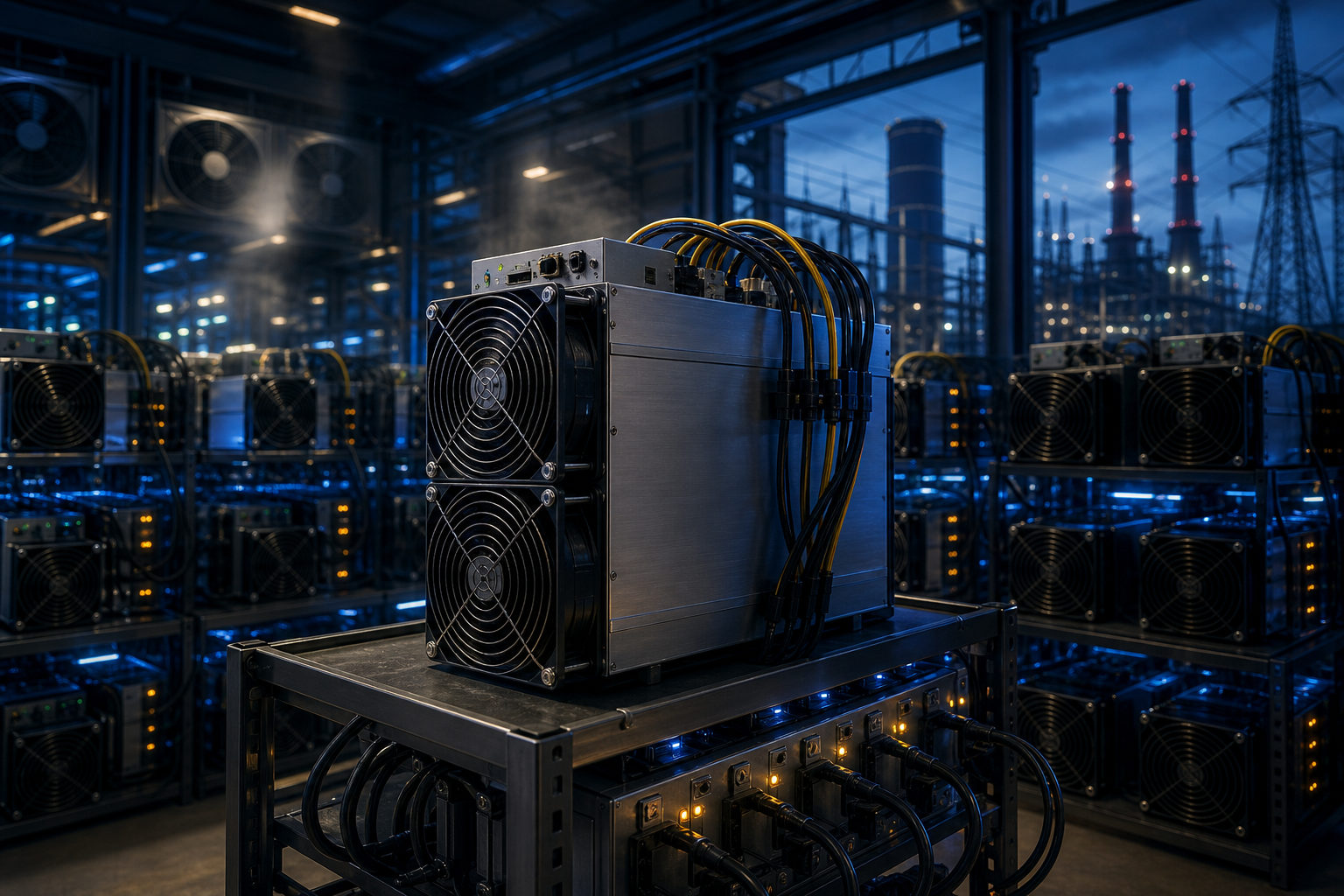
As of August 2, 2026, mining Bitcoin is hard for most people. The challenge is not just computing power; it is also about electricity, hardware efficiency, cooling, maintenance, and the ability to keep machines running without interruptions.
Bitcoin price and market mood as of August 2, 2026
| Metric | Value |
|---|---|
| Price | 62499 USD |
| 24-hour change | -0.69% |
| Market cap | about $1.25 trillion |
| Fear & Greed Index | 27 (Fear) |
| Data time | August 2, 2026 |
According to CoinGecko and alternative.me data, Bitcoin traded at 62499 USD that day, with a 24-hour change of -0.69%, while sentiment sat in Fear at 27. Those numbers do not tell you mining difficulty on their own, but they shape how miners think about revenue pressure and operating risk.
For anyone asking “how hard is it to mine bitcoin now,” the plain answer is this: it is technically possible to join, but doing it in a way that makes operational sense is much harder than many first-time miners expect.
Why Bitcoin mining is difficult now
Bitcoin mining has moved far beyond the era of general-purpose computers. A person cannot treat it like running ordinary software on spare hardware. It depends on specialized machines, stable power, and steady management over time.
The first barrier is equipment. Bitcoin uses proof of work, so miners compete by contributing hash power. In practice, that means dedicated mining hardware. Owning a machine is only the starting point, though. Once the machine arrives, the real work begins: installation, airflow planning, monitoring, cleaning, and handling downtime.
The second barrier is electricity. Mining hardware is meant to run for long periods, so power costs keep accumulating. A miner without an electricity advantage is usually competing from a weaker position than larger operations. This is one reason new entrants often focus on headline revenue and miss the daily cost pressure that follows.
The third barrier is the physical environment. Mining machines generate heat and noise. In a home setting, that can become a serious issue very quickly. Even if the device is online, poor ventilation, dust, unstable power delivery, and high room temperature can reduce stability and raise the odds of shutdowns.
The fourth barrier is operations. Bitcoin mining is not a buy-once, forget-about-it activity. Machines can fail, internet connections can drop, cooling performance can change, and configuration issues can affect uptime. For many people, the hard part is not starting. It is staying online consistently.
What matters most when judging mining difficulty
If you want a realistic view, do not begin with the question of whether mining is still possible. Start with whether you can support the conditions that make continuous mining possible. The difference matters.
Power conditions
Electricity is usually one of the main deciding factors. A machine that runs for extended periods turns power into a constant operating cost. Without favorable power conditions, a solo newcomer is often at a disadvantage before anything else is considered.
Hardware efficiency and aging
Mining hardware is not static. Efficiency matters, and hardware also ages. Fans wear down, dust builds up, temperatures change, and older units can lose competitiveness against newer equipment. Looking only at gross output without thinking about wear and maintenance leads to a distorted picture.
Cooling, noise, and space
This is where many home setups run into reality. Mining hardware can be loud, hot, and demanding on airflow. A spare room may sound fine in theory, yet still be a poor fit once the machine is running day after day. Space is not just about square footage; it is about heat removal and practical livability.
Operational discipline
Most individual miners join pools instead of trying to mine alone. That can smooth earnings, but it does not remove the need for monitoring and upkeep. Uptime still matters. If your machine is offline, your theoretical capacity has no value during that period.
Why people often underestimate how hard it is
Bitcoin mining is easy to simplify from the outside. Buy a machine, plug it in, join a pool, wait for payouts. Real operation is more demanding because each of those steps depends on a chain of details that must hold together over time.
Another common misunderstanding is confusing open network access with practical suitability. Bitcoin is open to participation, but that does not mean everyone is equally prepared to mine it directly. Open access is a property of the system. Viability depends on costs, setup quality, and maintenance capacity.
There is also a gap between theory and daily friction. Heat that does not leave the room, noise that affects sleep, dust that builds up faster than expected, and occasional connectivity issues are not dramatic topics, yet they often decide whether a setup is sustainable.
So if the question is “how hard is it to mine bitcoin now,” the practical answer is this: for a person without cheap power, suitable space, and the willingness to manage hardware regularly, it is very hard. For someone who does have those conditions, the hard part shifts toward cost control, machine efficiency, and downtime management.
Who is most likely to misjudge the difficulty
- People who focus only on the Bitcoin price and ignore ongoing operating costs
- People who treat a mining machine like a normal consumer device
- People without a plan for noise, airflow, and cleaning
- People expecting passive income with little hands-on work
- People who do not think about uptime and maintenance as part of mining
Each of these mistakes comes from the same source: seeing mining as a one-time purchase instead of an ongoing operation. Mining rewards are tied to consistent performance, and consistent performance depends on many small decisions that repeat every day.
FAQ
Can a regular person still mine Bitcoin now?
Yes, participation is still possible, but that is different from saying it is easy. Without strong power conditions, suitable space, and some ability to manage hardware, the real-world difficulty is high.
Is the hardest part the machine or the electricity bill?
Usually it is the combination, not one isolated factor. Hardware determines whether you can compete at all, while electricity shapes whether you can keep running without pressure from recurring costs.
Can I mine Bitcoin from home?
It can be done, but home mining is often harder than it first appears. Noise, heat, dust, and power delivery all affect whether a setup is workable over time.
Does joining a mining pool make Bitcoin mining easy?
A pool can smooth the distribution of rewards, but it does not remove operational demands. Cooling, stability, internet reliability, and machine uptime still matter every day.
What should I check before deciding whether mining suits me?
Start with power, space, cooling, noise tolerance, and the time you can devote to maintenance. If those basics are not clear yet, buying hardware first is usually the wrong order.
If you want a useful test, make a short checklist of your power setup, space limits, heat handling, noise tolerance, and maintenance time before you think about buying any machine. That list will tell you more about how hard Bitcoin mining is for you than the market price alone.
Disclaimer: This article is for informational and educational purposes only and is not investment, financial, or legal advice. Crypto assets are highly volatile and you could lose your entire investment. Do your own research and decide carefully.