
How long to mine bitcoin has no single answer. The timeline depends on whether you mine solo or through a pool, how much hashrate you control, what the network difficulty is doing, and whether your setup can keep running without cost pressure forcing it offline.
Start with the right question
People often ask how long it takes to mine 1 bitcoin as if mining were a steady production line. It is closer to a nonstop bookkeeping race. Miners around the world compete to add the next block, and any one participant's result is shaped by probability rather than a fixed schedule.
The Bitcoin network produces a block about every 10 minutes, but that does not mean one miner gets paid every 10 minutes. For an individual, the wait can be short, long, or extremely uneven, depending on equipment and participation method.
Mining one bitcoin is not the same as finding one block
This is where many beginners get tripped up. One scenario is solo mining, where you try to find a block on your own. The other is pool mining, where many miners combine hashrate and split rewards according to contribution.
Those paths feel very different in practice. Solo mining can mean long stretches with nothing at all, followed by a large reward if a block is found. Pool mining smooths that experience out by turning a rare event into smaller, more regular payouts. So when someone asks how long does it take to mine one bitcoin, the first step is to ask what kind of mining they mean.
Without that distinction, any answer sounds simple but misses the point.
What actually determines the timeline
Hashrate
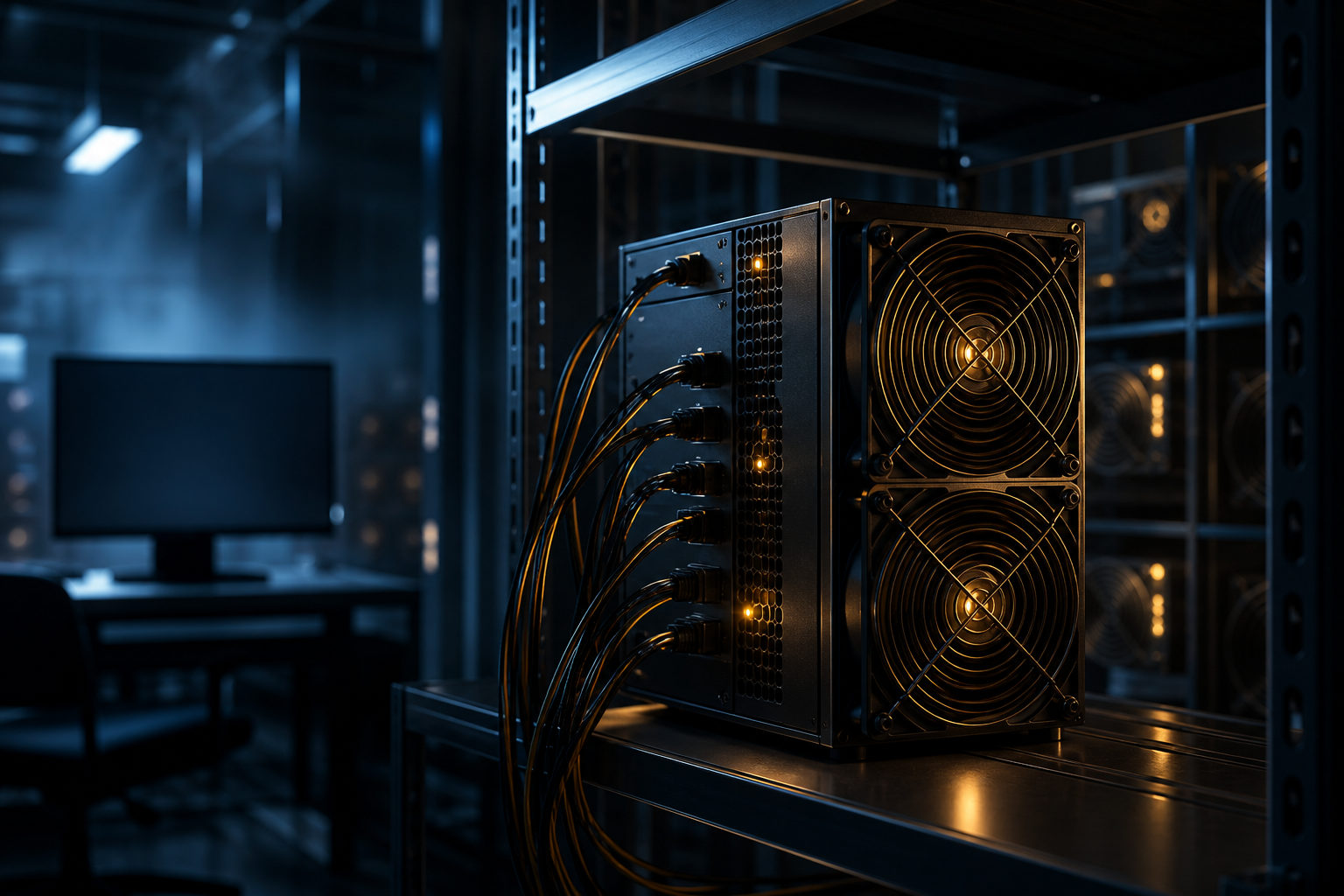
Hashrate is the speed at which your machine can make attempts in the block race. More hashrate means more chances over time, though never a guarantee. In today's environment, general-purpose home computers are usually not competitive for Bitcoin mining, which is why dedicated machines are common.
Network difficulty
Bitcoin adjusts difficulty so block production stays near one block every 10 minutes. That means more miners joining the network does not automatically make it easier for you to mine faster. The system adapts, and your personal share of the race is what matters.
Solo mining or pool mining
Solo mining is high variance. You may wait a very long time before seeing a result. Pool mining gathers many participants into one larger effort, then distributes rewards by rule. For most individuals, that changes the payout pattern far more than it changes the underlying difficulty of competing for bitcoin.
Pool payout rules
Not all pools handle payouts the same way. Fees, payout methods, thresholds, and timing can all affect how quickly your balance grows toward one whole bitcoin. Two miners with similar hardware may come away with very different expectations if they join different pools.
Power and operating conditions
Time is only part of the question. Mining also depends on whether you can afford to keep the machine online. Electricity costs, heat, noise, maintenance, and downtime all matter. A setup that looks workable on paper may stop making sense if it cannot run consistently.
Why the bookkeeping race analogy helps
Think of Bitcoin as a public ledger that needs new pages added on a steady basis. Miners are competing for the right to write the next page. They do that by performing repeated calculations in search of a valid result that meets the network's rules.
If you join a pool, you are no longer trying to win the whole race alone. You are helping a team, and when that team finds blocks, the reward gets divided. That can make the wait feel shorter because your balance may update more often, but it does not turn bitcoin mining into easy output on demand.
Supply rules matter too. Bitcoin has a maximum supply of 21 million coins. It started with the genesis block in January 2009, following the 2008 white paper titled Bitcoin: A Peer-to-Peer Electronic Cash System. New issuance follows the protocol, and the block subsidy halves about every 4 years, or every 210,000 blocks. Past halving years include 2012, 2016, 2020, and 2024.
That is why many miners think in fractions rather than in whole coins. The smallest unit is the satoshi, and 1 satoshi equals one hundred millionth of a BTC. In real use, mining progress is often a slow accumulation of small parts, not a dramatic moment when one full bitcoin appears at once.
FAQ
How long does it take to mine 1 bitcoin for one person
There is no fixed timeline because mining is a probability-based competition, not a guaranteed hourly output. Your hardware, your uptime, and your choice between solo mining and a pool all shape the wait.
Is solo mining faster than joining a pool
Solo mining can deliver a full block reward if you succeed, but the wait may be very long and uneven. A pool usually gives smaller, steadier payouts, which feels faster on a day-to-day basis even though reaching one whole bitcoin can still take a long time.
Can a home computer mine one bitcoin
In theory, any machine that can perform the required calculations can take part. In practice, home computers are usually not efficient enough for Bitcoin mining under current competitive conditions.
Will mining 1 bitcoin in 2026 take less time
No one can state that with certainty without future network conditions in hand. Difficulty, hardware efficiency, pool structure, and electricity costs can all change, so it is better to focus on the variables than on the calendar year.
What should I check if I want to estimate my own mining time
Look at your machine's hashrate, your pool's payout terms, your power costs, and how reliably your setup stays online. If you also want the live market price of bitcoin, check a major market data platform separately rather than mixing price moves with mining progress.
Before you switch anything on, confirm your wallet setup, pool rules, cooling plan, and power limits. For most people, getting those basics right is more useful than chasing a single number for how long to mine bitcoin.
Disclaimer: This article is for informational and educational purposes only and is not investment, financial, or legal advice. Crypto assets are highly volatile and you could lose your entire investment. Do your own research and decide carefully.