
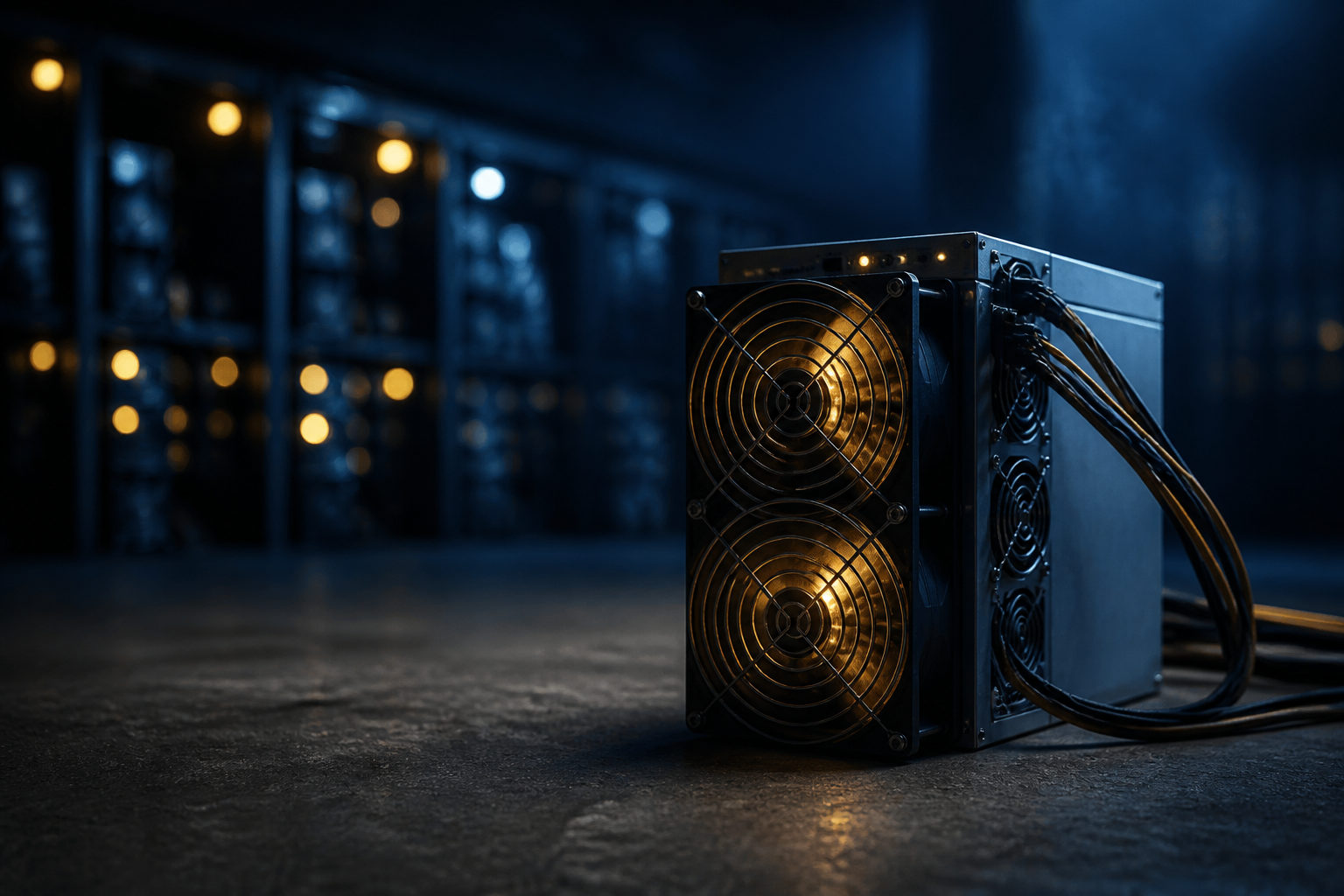
How many bitcoins can I mine depends on your hardware, your mining setup, and your operating costs. There is no fixed daily amount you can expect without knowing your hashrate, pool choice, uptime, and power bill.
What bitcoin mining is actually competing for
A simple way to think about bitcoin mining is a bookkeeping race. Transactions wait to be confirmed, miners run specialized machines that keep making guesses, and the winner gets to add the next block to the blockchain while collecting the block reward and transaction fees.
This is not a casual process where any computer has a fair shot. The Bitcoin network produces a new block about every 10 minutes, and miners around the world compete at the same time, so your output depends on how much useful computing power you control compared with everyone else.
The main factors that decide how much you can mine
Your hardware matters first
If you want to estimate how many bitcoins you can mine, start with the machine. Modern bitcoin mining usually relies on ASIC hardware built for hashing, not on a standard desktop or laptop.
Two miners can use the same amount of electricity and get very different results if one machine is more efficient. That gap often decides whether mining feels viable or simply expensive.
Solo mining and pool mining work very differently
Solo mining means you compete on your own. If you win, you receive the full block reward, but the wait can be long and unpredictable.
Pool mining is closer to joining a team. You contribute hashrate with many other miners, and the pool distributes rewards based on its rules, so payouts are smaller but usually arrive more regularly.
Network difficulty changes the game
Your result is not set by your machine alone. As more miners join, Bitcoin adjusts mining difficulty so that blocks still appear about every 10 minutes on average.
That means new competition does not make coins appear faster. It simply makes each participant fight harder for a share of the same issuance.
Block rewards do not stay the same forever
Bitcoin has a capped supply of 21 million coins. New issuance falls over time because the protocol halves the block reward about every 4 years, or every 210,000 blocks.
The halving years so far are 2012, 2016, 2020, and 2024. So even if your hardware stays the same, the broader reward structure around it changes.
Uptime and operating conditions shape real output
Many beginners focus on gross production and forget about interruptions. Heat, dust, unstable internet, power issues, maintenance, and pool downtime can all reduce what you actually receive.
On paper, a miner may look productive. In practice, a machine that disconnects often can underperform badly.
Can an individual still mine bitcoin today?
Yes, but the answer is different from the early years. Bitcoin began with the genesis block in January 2009, and the network was far less competitive then.
Today, mining is much closer to a specialized business. An individual can still take part, though it usually means making careful choices about hardware, hosting, cooling, noise, and electricity rather than just downloading software and pressing start.
If your real question is how many bitcoins you can mine in a day, the better question is whether your setup is built to run consistently. A miner with cheaper power and stable uptime can outperform a stronger machine that spends too much time offline.
How to estimate your own mining potential
- Check the machine specifications. Focus on hashrate and efficiency, not on marketing claims alone.
- Pick a mining model. Solo mining offers rare, larger wins; pool mining offers more frequent, smaller distributions.
- List every cost. Power, cooling, repairs, pool fees, and hosting fees all matter.
- Review your uptime risks. Internet drops, overheating, and shutdowns reduce real output.
- Use live tools for current estimates. If you want a real-time production estimate or the current bitcoin price, check a trusted mining calculator and a major market data platform that day.
This order matters. It forces you to start with the factors you control before you get distracted by output estimates that may change as soon as conditions shift.
Common mistakes people make
- Confusing learning with profitability. You can learn how mining works without running a competitive operation.
- Ignoring power cost. Mining output is only half the story if electricity is expensive.
- Expecting a fixed daily amount. Pool luck, fees, and difficulty changes can move your result around.
- Using old screenshots as proof. Mining estimates are time-sensitive and should be checked with current data.
FAQ
How much bitcoin can I mine in a day?
There is no universal daily figure. Your daily share depends on hashrate, mining difficulty, pool rules, fees, and whether your machine stays online without interruptions.
Any answer that gives a number without those inputs leaves out the parts that matter most.
Can I mine bitcoin at home?
Yes, in theory. In practice, home mining often runs into high electricity costs, noise, heat, and maintenance issues.
For many people, the question is not whether home mining is possible, but whether it makes sense for their living situation and budget.
Is pool mining better than mining alone?
It depends on what you want. Pool mining usually gives more regular payouts, while solo mining is far more volatile and may involve long stretches with nothing at all.
A pool does not create extra bitcoin for you. It changes how rewards are shared and when you are likely to receive them.
Can a regular computer mine bitcoin?
A regular computer can run mining software, but that is very different from mining competitively. Against ASIC machines and professional operations, standard consumer hardware is usually outmatched.
If your goal is education, it can still be useful. If your goal is steady output, dedicated hardware is the starting point.
Where should I check live mining estimates and price?
Use a mining calculator for production estimates and a major market data site for the current bitcoin price. Both should be checked with live data because the answer can change as network conditions move.
That is especially important when someone asks “how many bitcoins can I mine in a day” or wants to know what bitcoin is worth right now.
What to verify before you start
Before committing money, confirm your hardware source, warranty terms, repair options, power quality, cooling setup, noise tolerance, and the payout rules of any mining pool or hosting provider. Mining is not only about whether you can join the race; it is also about whether you can keep running long enough for the setup to make operational sense.
Disclaimer: This article is for informational and educational purposes only and is not investment, financial, or legal advice. Crypto assets are highly volatile and you could lose your entire investment. Do your own research and decide carefully.