
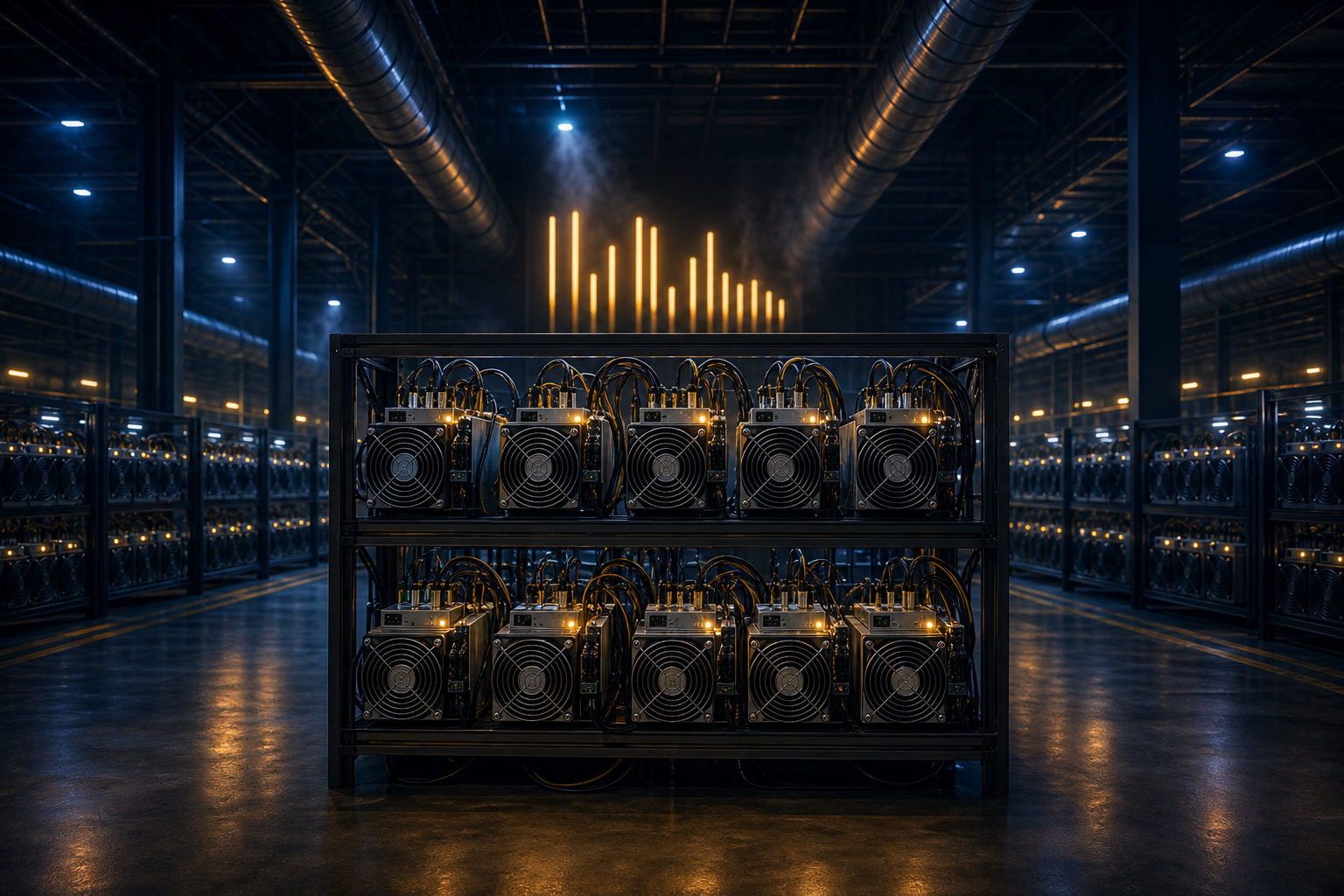
There is no single kWh figure for how many kWh to mine 1 Bitcoin in 2026. The answer depends on machine efficiency, network competition, whether you mine solo or in a pool, and how long your hardware can run without interruption.
Why there is no fixed electricity number
A simple way to picture Bitcoin mining is to think of it as a nonstop bookkeeping race. Miners run specialized machines to compete for the right to add the next block, and the winner gets the block reward plus transaction fees.
The problem is that most people do not mine until a machine spits out one whole bitcoin for them alone. In practice, many participants join a mining pool and receive a fraction of bitcoin based on the share of computing power they contribute. That makes the question less about one neat total and more about how much electricity is used to earn a certain amount over time.
That is why any claim about a fixed number of kilowatt-hours should be treated carefully. If someone gives one exact figure without explaining the miner model, efficiency, difficulty conditions, and payout method, that figure may not match your situation at all.
How electricity turns into bitcoin output
The Bitcoin network produces a block about every 10 minutes. Mining hardware does not solve a normal office-style task. It performs repeated hash calculations at very high speed, trying huge numbers of possible results until one machine or pool finds a valid block first.
So the real contest is not about solving one puzzle once. It is about doing a massive amount of trial and error over and over again. Miners care about two things above all: how much computing power a machine can produce, and how much electricity it burns to produce that power.
A more efficient miner can turn the same amount of electricity into more useful hash rate. A less efficient unit needs more power to stay in the same race. If total network competition rises, it can take longer to earn the same amount of bitcoin, which can push electricity use higher for the same target output.
Main factors that affect the estimate
- Miner efficiency: Different generations of hardware can vary a lot in how much power they need for the same work.
- Network difficulty: Stronger competition means more work is needed for a similar share of output.
- Mining method: Solo mining is highly uneven, while pools spread payouts over time.
- Operating conditions: Cooling, dust, heat, and power quality can change actual consumption.
- Downtime: Repairs, throttling, and outages affect how much electricity is tied to each unit of bitcoin earned.
What “mine 1 bitcoin” really means in 2026
In 2026, the phrase still needs context. You do not usually receive one full bitcoin first and then calculate the electricity after the fact. A more realistic picture is that you run mining equipment for an extended period and collect small amounts through pool payouts.
In other words, the idea of how many kWh to mine one bitcoin in 2026 is usually a ratio. You take the total electricity used over a period and compare it with the bitcoin earned during that same period. That ratio can shift with difficulty, fee conditions, pool rules, and the health of your machines.
Many beginners make a simple mistake. They take the power draw of one miner, multiply it by time, and assume that this tells them how much electricity is needed to get one whole bitcoin. What that misses is the most important part: output is shaped by your share of the network, not by runtime alone.
There is also a structural reason this stays fluid. Bitcoin has a supply cap of 21 million coins, and the block subsidy declines on a schedule. The halving years so far are 2012, 2016, 2020, and 2024. When the reward structure changes, the time and electricity linked to earning the same amount of bitcoin can change as well, even if your machine stays the same.
If you want to participate, what should you calculate first?
If your real question is whether mining makes sense for you, the better approach is to stop focusing on one full coin and start with your own setup. Ask how much power your machine uses in a day, how stable your cooling is, and whether you expect to mine through a pool or on your own.
Start with the rated power draw of the miner, then compare that with realistic operating conditions. A machine running in a hot room may not behave the same way as one in a controlled environment. Pool mining is often the more practical route for individuals because solo mining can involve long stretches of uncertainty.
Electricity is only one part of the cost picture. Noise, ventilation, maintenance, internet stability, hardware wear, and unplanned downtime all matter. A mining rig is not like a regular household appliance that you plug in and forget.
If your goal is simply to gain Bitcoin exposure, buying bitcoin and mining bitcoin are very different decisions. One is mainly about market execution and storage. The other is closer to operating high-load hardware over long periods.
Common misconceptions
Does a higher-power miner always make it easier to mine 1 bitcoin?
No. Higher power draw by itself does not guarantee better results. What matters is how much effective hash rate you get for that power and how that hash rate compares with the rest of the network.
If I keep a miner running, will I eventually reach 1 bitcoin?
Not automatically. You earn based on your contribution relative to total competition, and the outcome depends on efficiency, uptime, and changing network conditions.
Is solo mining more power-efficient than pool mining?
Usually not in any meaningful way. The machine still consumes electricity in the same basic manner. The main difference is payout timing and variance, not a special reduction in power use.
Can home mining work for most people?
It can be harder than it looks. Heat, sound, airflow, and power constraints often become the real bottlenecks long before a simple spreadsheet estimate feels reliable.
FAQ
How should I estimate electricity to mine one bitcoin in 2026?
Use your miner efficiency, expected uptime, pool method, and the level of network competition at that time. Without those inputs, any kWh estimate is only a rough headline, not a usable answer.
Why do online estimates for mining power use look so different?
They often rely on different assumptions. Some look at a single machine, while others spread broader network power use across total bitcoin output, so they are not measuring the same thing.
What should I check if I only care about cost?
Start with miner power draw, hash rate, pool payout rules, and a live Bitcoin price page on a major market tracker. Price helps you judge pressure on costs, but it does not answer the electricity question on its own.
Is buying a miner the first step for a beginner?
Usually, it is smarter to evaluate electricity pricing, cooling, noise tolerance, and maintenance capacity first. Many new entrants do not fail on theory; they underestimate the practical burden of running mining hardware day after day.
If you want a useful answer to how many kWh to mine 1 Bitcoin in 2026, do not memorize a viral number. Define the miner, the operating setup, and the participation method first, then estimate from your own conditions.
Disclaimer: This article is for informational and educational purposes only and is not investment, financial, or legal advice. Crypto assets are highly volatile and you could lose your entire investment. Do your own research and decide carefully.