
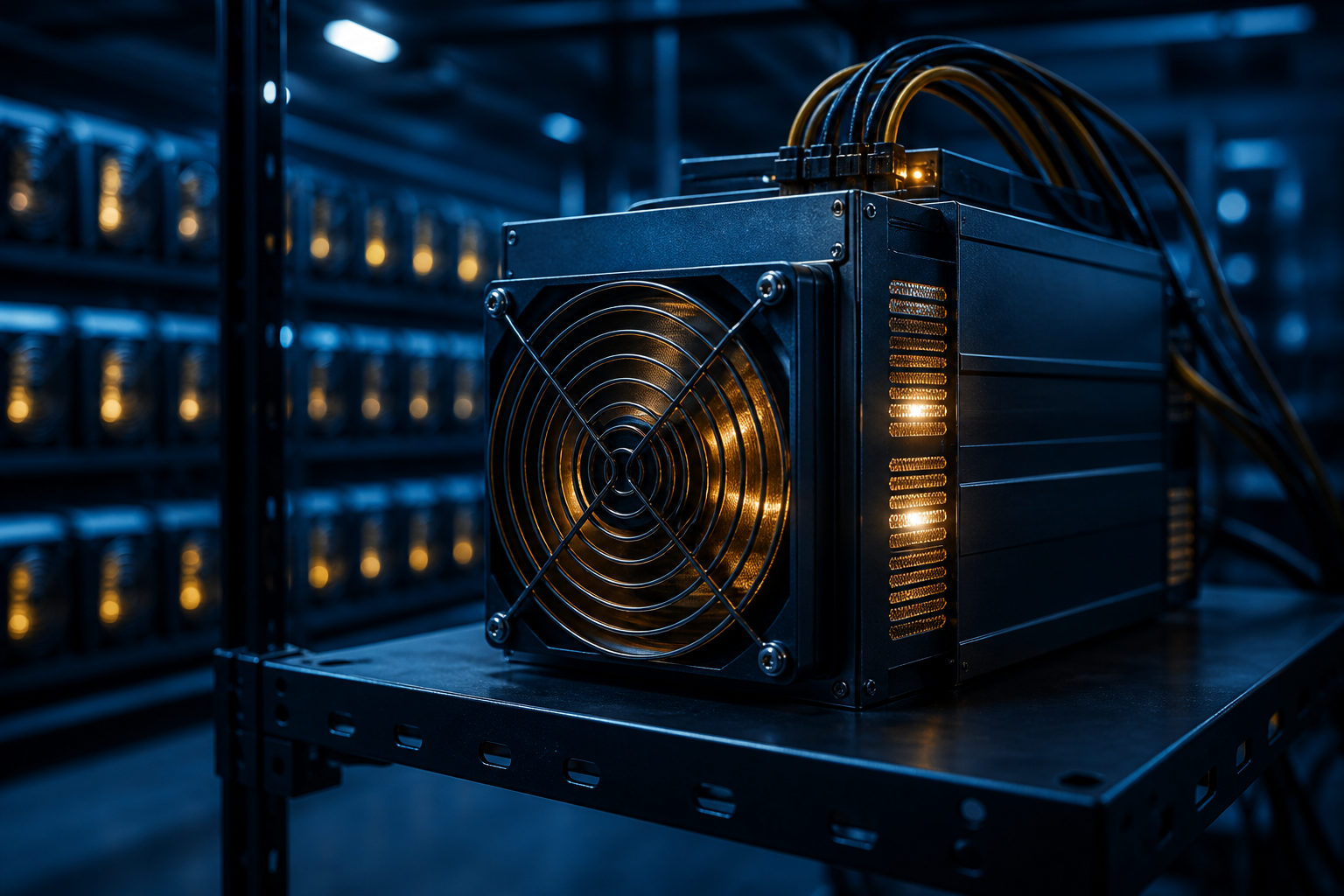
How much electricity to mine 1 bitcoin in 2026 does not have a fixed answer. The total depends on miner efficiency, network competition, uptime, cooling needs, and how much bitcoin you actually receive from solo mining or a pool.
Think of mining as a bookkeeping race
A simple way to understand mining is to picture a nonstop contest for the right to add the next page to a public ledger. Machines around the world keep making guesses through hash calculations, trying to find a result that meets the network rule first. The winner does not manufacture a coin in the usual sense; the winner earns the right to package transactions into a block and receive the block reward plus fees.
That distinction matters. When people ask how much electricity to mine 1 bitcoin in 2026, they often imagine a clean one-to-one process: one machine, one task, one power bill. Bitcoin mining does not work like that. You burn electricity over time, then compare that power use with the amount of bitcoin you managed to earn during the same period.
Why there is no universal power number
Bitcoin uses proof of work. Miners perform massive amounts of computation, and the network adjusts difficulty so that a new block appears about every 10 minutes. If more miners join and total hash power rises, an individual machine may need to run longer to earn the same share of bitcoin as before.
That is why a single electricity figure can be misleading. One operator may use a newer machine with better efficiency and stable cooling. Another may run older hardware, face more downtime, or lose performance because the room is too hot. Both are mining bitcoin, but the power required to accumulate the same amount of BTC can be very different.
The mining method also changes the picture. Solo mining is highly variable because one miner may wait a long time before finding a block. Pool mining smooths the income stream by combining many miners and splitting rewards by contribution. In practice, most people are not “mining one whole bitcoin” in a single event. They are collecting small fractions over time and then asking how much electricity was spent to reach a full BTC in total.
What affects electricity use in 2026
Miner efficiency
This is the first thing to check. A more efficient ASIC can deliver more hash power for the same electricity draw. An older unit can still run, but it may need far more power over a long stretch to produce the same amount of bitcoin.
Network difficulty and competition
Difficulty rises or falls with overall network conditions. As more hash power competes for the same block schedule, less efficient miners feel pressure first. Even if your hardware stays the same, the power needed to accumulate a target amount of bitcoin can change because the network changed around you.
Halving effects
Bitcoin has a supply cap of 21 million coins. The issuance schedule changes through halvings, which happen about every 4 years, or every 210,000 blocks. Known halving years include 2012, 2016, 2020, and 2024. After a halving, miners usually pay even closer attention to efficiency, uptime, and operating discipline because new issuance is lower than before.
Cooling and site conditions
Power use is not limited to the machine itself. Fans, ventilation, air handling, and other support systems can add meaningful load. Dust, heat, poor airflow, and unstable power can all cut output or increase downtime, which pushes up the electricity spent per bitcoin earned.
Pool payout structure
A mining pool does not make your machine consume less power. What it changes is payout timing and variance. If you are trying to estimate the electricity needed to reach a full bitcoin, the pool method affects how steadily BTC accumulates in your account, which changes your tracking and planning.
How to estimate your own electricity needs
If you want a realistic answer, do not start with a number copied from someone else. Start with your own setup. Measure total power draw, including the miner and any supporting equipment tied to operation. Then track how much bitcoin you receive over a meaningful period.
- Identify the actual power draw of the miner under real operating conditions.
- Add supporting electricity use such as cooling or ventilation if those systems are dedicated to mining.
- Record uptime rather than assuming the machine runs without interruption.
- Check pool statements or your own wallet inflow to see how much BTC you are actually earning.
- Divide total electricity consumed over that period by the bitcoin earned during the same period.
This approach gives you a working estimate for your situation. It will still change with difficulty, hardware performance, and operating quality, but it is far more useful than a generic claim floating around online.
The cost reality most beginners miss
For many people, the deeper question is not just how much electricity to mine 1 bitcoin in 2026. It is whether they can handle a process that keeps consuming power day after day. Mining is not a one-time purchase. It is a continuous operating activity with noise, heat, maintenance, and equipment stress.
Home mining can look simple at first, yet the practical problems show up fast. Residential power limits, sound levels, room temperature, and long-run stability all affect outcomes. A setup that works on paper may perform poorly in real life if it cannot stay online under consistent conditions.
Cloud mining and hosting can reduce hands-on work, but they also add a different problem: you are one step removed from the machines. That makes it harder to confirm true power use, uptime quality, and whether the contract terms match your assumptions.
FAQ
Can one machine tell me the exact electricity needed for one bitcoin?
No. A machine can tell you its own power draw, but the electricity needed to reach one bitcoin depends on how much BTC that machine earns over time. Network difficulty and downtime can change the result even if the hardware stays the same.
Does joining a mining pool reduce electricity use?
No. A pool changes how rewards are shared and how often you get paid. Your hardware still consumes power based on its operating load and support systems.
Why do estimates online vary so much?
People often use different assumptions. Some count only the miner itself, while others include cooling, power losses, maintenance interruptions, and pool performance.
Is home mining a practical way to reach one bitcoin?
It can be done, but the real constraints are often noise, heat, and stable power delivery. Those limits can drag down efficiency and make the electricity required per bitcoin much worse than expected.
What should I check before making any mining plan?
Check miner efficiency, total site power draw, uptime, pool payout rules, and your electricity price. Without those pieces, any answer to the question of how much electricity to mine 1 bitcoin in 2026 is only a rough guess.
Before you commit, log real power usage, uptime, and BTC payouts for a trial period, then recalculate from your own records. That is the most practical way to judge whether a mining setup is workable.
Disclaimer: This article is for informational and educational purposes only and is not investment, financial, or legal advice. Crypto assets are highly volatile and you could lose your entire investment. Do your own research and decide carefully.