
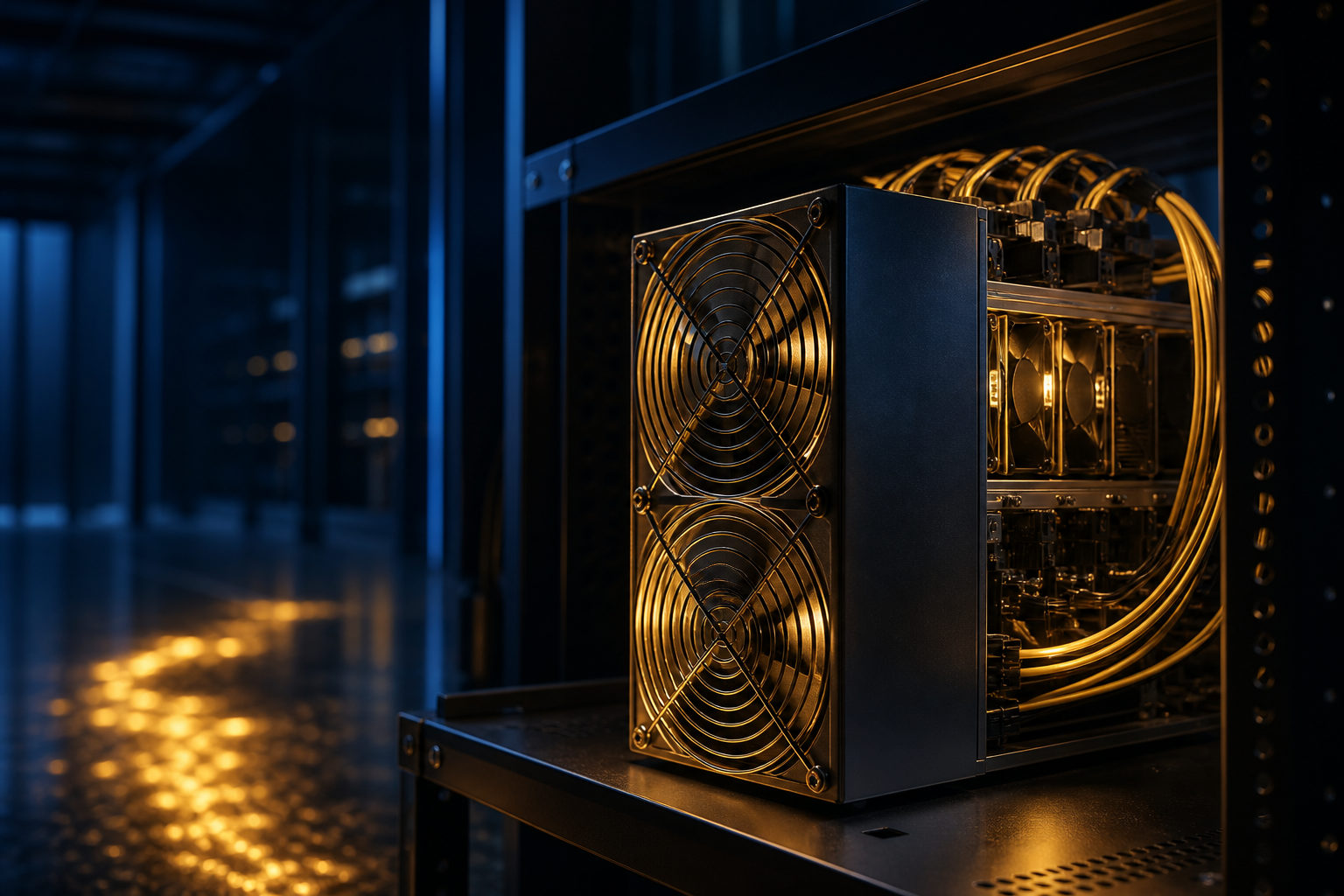
How to do bitcoin mining comes down to one practical idea: use specialized machines to compete for the right to add blocks, connect them to a wallet and usually a mining pool, and make sure your power, cooling, and maintenance plan make sense first.
A lot of beginners picture mining as installing software on a home computer and waiting for coins to appear. That is not how bitcoin mining works today. It is closer to an ongoing accounting race where participants commit hardware, electricity, and time.
What bitcoin mining is really doing
Think of the Bitcoin network as a public ledger with no central bookkeeper. New transactions need to be checked, grouped into blocks, and added to the chain under a shared set of rules.
Bitcoin mining is the process of using computing power to compete for that job. A miner that finds a valid result first gets the chance to add the next block and receive the block reward plus transaction fees. Bitcoin began with the genesis block in January 2009, and the system is designed to produce a new block about every 10 minutes.
That matters because mining is not simply “creating bitcoin out of thin air.” It is a security and record-keeping system. Miners spend resources to help the network stay ordered and hard to rewrite.
What you need before you start mining bitcoin
If you are asking how to start mining bitcoin, the first reality check is cost. Modern bitcoin mining usually relies on ASIC machines built for this single task. A regular desktop or laptop may run software, but that does not mean it is a practical way to compete.
Before buying anything, look at these points:
- Power cost: Electricity is one of the first things that determines whether mining is workable for you.
- Hardware setup: The machine itself is only part of the picture. Power supplies, cables, placement, and airflow matter too.
- Heat and noise: Mining machines can run hot and loud, which makes many home settings difficult.
- Operational work: Disconnects, overheating, pool changes, and hardware issues all need attention.
The better question is not “Can I mine?” but “Can I keep a machine running in a stable and manageable way?” Many people skip that step and regret it later.
How to start bitcoin mining step by step
The setup process is fairly simple on paper. In practice, each step affects security, uptime, and your day-to-day workload.
Set up a BTC wallet first
You need a wallet address to receive payouts. Some people use custodial services, while others prefer self-custody. Either way, backups, seed phrase storage, and account protection should come before convenience.
Choose hardware and a suitable location
Bitcoin uses proof of work, so serious miners usually rely on ASIC hardware. When comparing options, focus on power draw, cooling demands, repair access, and whether your location can handle continuous operation.
Join a mining pool
Solo mining is possible, but it can be hard for an individual to deal with the uneven timing of results. That is why many beginners join a mining pool, combine their hash power with others, and receive payouts based on the pool’s rules.
Configure the machine
Once the unit is online, you generally enter the pool server details, worker name, and payout settings in the machine dashboard. Interfaces differ by manufacturer, though the basic goal stays the same: send your machine’s work to the right destination.
Monitor performance after launch
The real work starts after the machine turns on. You need to watch for unstable hash rate, excess heat, network interruptions, and payout issues. Mining is not a one-time setup that runs perfectly forever.
Why bitcoin mining now depends on specialized equipment
Bitcoin mining runs on proof of work. In simple terms, miners keep trying new outputs until one meets the network’s difficulty target. There is no shortcut. Success depends on sustained computing work and operating efficiency.
In earlier years, the barrier to entry was lower. As competition increased, general-purpose computers became far less useful for bitcoin mining. That shift is why the activity is now tied so closely to ASIC machines, organized cooling, and more disciplined operations.
Another part of the system is the halving cycle. Bitcoin has a maximum supply of 21 million coins, and the block reward is cut roughly every 4 years, or every 210,000 blocks. Halvings took place in 2012, 2016, 2020, and 2024. For miners, that means revenue conditions can change while costs remain a constant concern.
FAQ
Can I mine Bitcoin with a normal computer?
In theory, you can run mining-related software on a normal computer. In practice, current competition makes that route weak for anyone who wants a meaningful role in bitcoin mining.
Is solo mining still possible?
Yes, solo mining is still possible under the network rules. The issue is variance, since an individual may wait a long time for a result, which is why many people start with a pool.
Do I start earning as soon as I buy a miner?
No. Buying hardware only gets you to the starting line. Power bills, downtime, repairs, heat control, and machine management all affect what happens next.
Can I run a miner at home?
Maybe, but you need to think about noise, ventilation, heat output, and electrical capacity. Many home users underestimate those practical limits until the machine is running.
Where should I check the live bitcoin price and network status?
You can check live prices on major market data platforms and network activity through block explorers or mining pool dashboards. If you do not have current market data in front of you, focus on what price swings do to mining costs rather than chasing a single quote.
Who should think twice before getting started
If you do not have a suitable place for a loud, hot machine, if your power setup is weak, or if you do not want to deal with hardware and network issues, bitcoin mining may not fit your situation. For many newcomers, learning how Bitcoin works and how to secure BTC is a better first move than rushing into equipment purchases.
Before you begin, make a short checklist: wallet backup, cooling plan, stable internet, and a clear response for downtime or hardware failure. Those basics matter more than the excitement of simply getting a machine online.
Disclaimer: This article is for informational and educational purposes only and is not investment, financial, or legal advice. Crypto assets are highly volatile and you could lose your entire investment. Do your own research and decide carefully.