
To check for bitcoin miners, start by separating two questions: who produced a block on the Bitcoin network, and whether a specific machine is actually mining. The first is an on-chain verification task; the second is a hardware and network inspection task.
Think of miners as competitors in a public bookkeeping race
Bitcoin miners gather pending transactions into candidate blocks and then perform repeated hash calculations in an attempt to find a valid result before everyone else. When a miner finds one, the block is broadcast to the network, and full nodes verify it under Bitcoin’s consensus rules.
This is easiest to understand as an open bookkeeping contest. Everyone works on the same kind of puzzle, everyone can verify a winning answer, and the winner earns the right to publish the next block. Miners do not decide what bitcoin should be worth in the market; they compete to extend the chain in a way that other nodes can validate.
That distinction matters because people often ask how to check for bitcoin miners when they actually mean very different things. Some want to know who mined a specific block. Others want to inspect a machine, a server room, or a network and see whether mining is taking place at all.
How to identify bitcoin miners on-chain
If your goal is to see who mined a given block, the main source is the block data itself. A block explorer or a full node interface can show the block details, transaction list, header information, and the special reward transaction created with each new block.
Start with the block reward transaction
The first transaction in a mined block is the coinbase transaction. It creates the block reward and assigns the fees from included transactions. This transaction often contains a recognizable marker that points to a mining pool or operator.
Many public tools label blocks with a pool name for convenience. That can save time, but it is still a presentation layer built on top of raw chain data. If you want a cleaner check, compare the label with the actual block contents rather than treating the label as final proof.
What to look for in practice
- Coinbase transaction data: This is the first place to look for a miner or pool signature.
- Pool attribution: A readable pool name may appear in explorer interfaces or in recognizable transaction markers.
- Node validation: A block counts only after nodes accept it under consensus rules, so validation status matters more than a website description.
- Block propagation clues: Some monitoring tools show how a newly found block moved through the network, which can help you understand who broadcast it first.
There is a limit to what outside observers can confirm. In many cases, you can identify a mining pool, but you cannot tell which physical machine produced the winning hash. Pool-level attribution is common; individual device attribution usually is not.
How to inspect whether a device is mining bitcoin
If your question is about a machine rather than a block, shift from chain data to system behavior. A real bitcoin mining setup leaves traces in processing activity, thermal output, network connections, and management software.
Check what kind of work the machine is doing
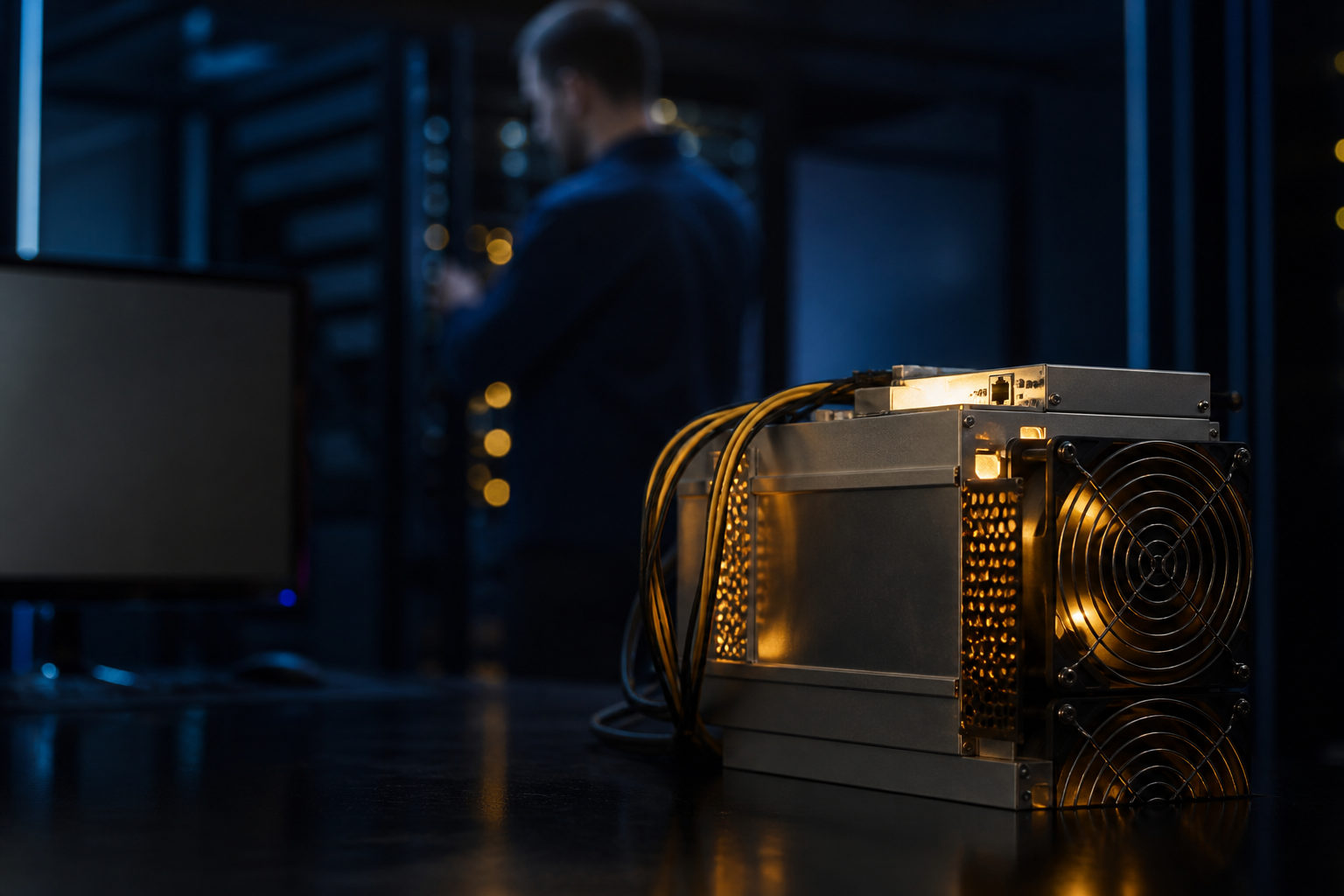
Bitcoin mining relies on continuous hash computation. Dedicated mining hardware is built for that single purpose and usually exposes status data through a management dashboard. That dashboard may show hash board condition, fan activity, temperature, frequency settings, pool connection details, and whether work submissions are being accepted.
A standard personal computer can help you inspect mining activity, but that does not make it an effective bitcoin miner. Bitcoin mining today is associated with specialized hardware, so a general-purpose machine running hot is not enough evidence on its own.
If you are auditing an office, home network, or hosting environment, look for persistent high load, unusual heat, steady fan noise, unexplained background processes, and regular outbound communication to mining infrastructure. Even then, keep your judgment narrow: those signs show heavy computation or suspicious behavior, not automatic proof of bitcoin mining.
Check where it connects
Mining hardware typically connects to a pool or to an operator’s own system to receive work and submit results. Useful inspection points include pool addresses in the device settings, worker names, network logs, and long-lived external connections from a machine that otherwise has no obvious reason to maintain them.
A single network connection is weak evidence. A better check combines connection data with the device dashboard, cooling behavior, and evidence of regular work submissions. Cross-checking matters because normal infrastructure services can also create constant outbound traffic.
Check whether output can be verified
A machine that is truly mining should be able to show ongoing submission activity to a pool or to local management software. You are not looking for a specific performance number here. You are looking for continuity: does it keep receiving work, producing results, and staying online without repeated failure states?
This is also where many false positives fall apart. A loud machine with high power draw may be doing something intensive, but if there is no corresponding mining dashboard data or no record of accepted work, the case for active bitcoin mining becomes much weaker.
If you want to participate, check the setup before you check the dream
People new to mining often focus on whether software can be installed. That is rarely the hard part. The real gatekeepers are hardware type, power conditions, cooling, noise tolerance, maintenance capacity, and your willingness to deal with downtime and component failure.
Common ways to take part
- Run dedicated mining hardware yourself: You control the equipment and environment, but you also handle power, heat, networking, maintenance, and failures.
- Join a mining pool: Your hardware contributes hash power to a coordinated group, and the pool handles work distribution and payout rules.
- Run a full node first: This is not mining, yet it is one of the best ways to understand how blocks and transactions are verified.
For many beginners, running a full node is a better first move than buying hardware right away. It teaches you how block validation works, what the coinbase transaction looks like, and how to tell raw chain data from polished interface labels. That knowledge makes later equipment decisions far less naive.
Mining also has a harsh operational side. Buying hardware is only the first commitment. You still need stable power, adequate cooling, network reliability, firmware management, physical space, and a plan for noise and wear. A machine can be active without being suitable for your situation.
FAQ
How can I see who mined a bitcoin block?
Open the block details in a block explorer or full node interface and inspect the coinbase transaction for identifying markers. If a tool shows a mining pool name, treat it as a useful clue and compare it with the underlying block data.
Can a normal computer check for bitcoin miners?
Yes. A normal computer can inspect block data, run a full node, review network logs, and help you spot suspicious devices on a local network. It can also help you determine whether heavy system activity is tied to mining software or to something else.
Does high CPU or GPU use mean a device is mining bitcoin?
No. High load can come from many legitimate or unrelated tasks. To make a stronger case, combine resource usage with pool connection data, device dashboard information, and records of accepted work submissions.
Is running a full node the same as being a miner?
No. A full node validates rules and relays data, while a miner competes to produce blocks through proof of work. Both are important to the network, but they do different jobs.
Should a beginner buy mining hardware first?
It is usually smarter to learn how to read block data before making a hardware decision. Once you understand how blocks are validated and how miners are identified, you can judge equipment claims with a much clearer eye.
A practical order for checking
If you want to check a block, start with the block record and the coinbase transaction. If you want to check a machine, go straight to the management dashboard, connection targets, and evidence of regular work submission; if you have not yet learned to verify blocks with a full node, do that before treating any mining interface as trustworthy.