
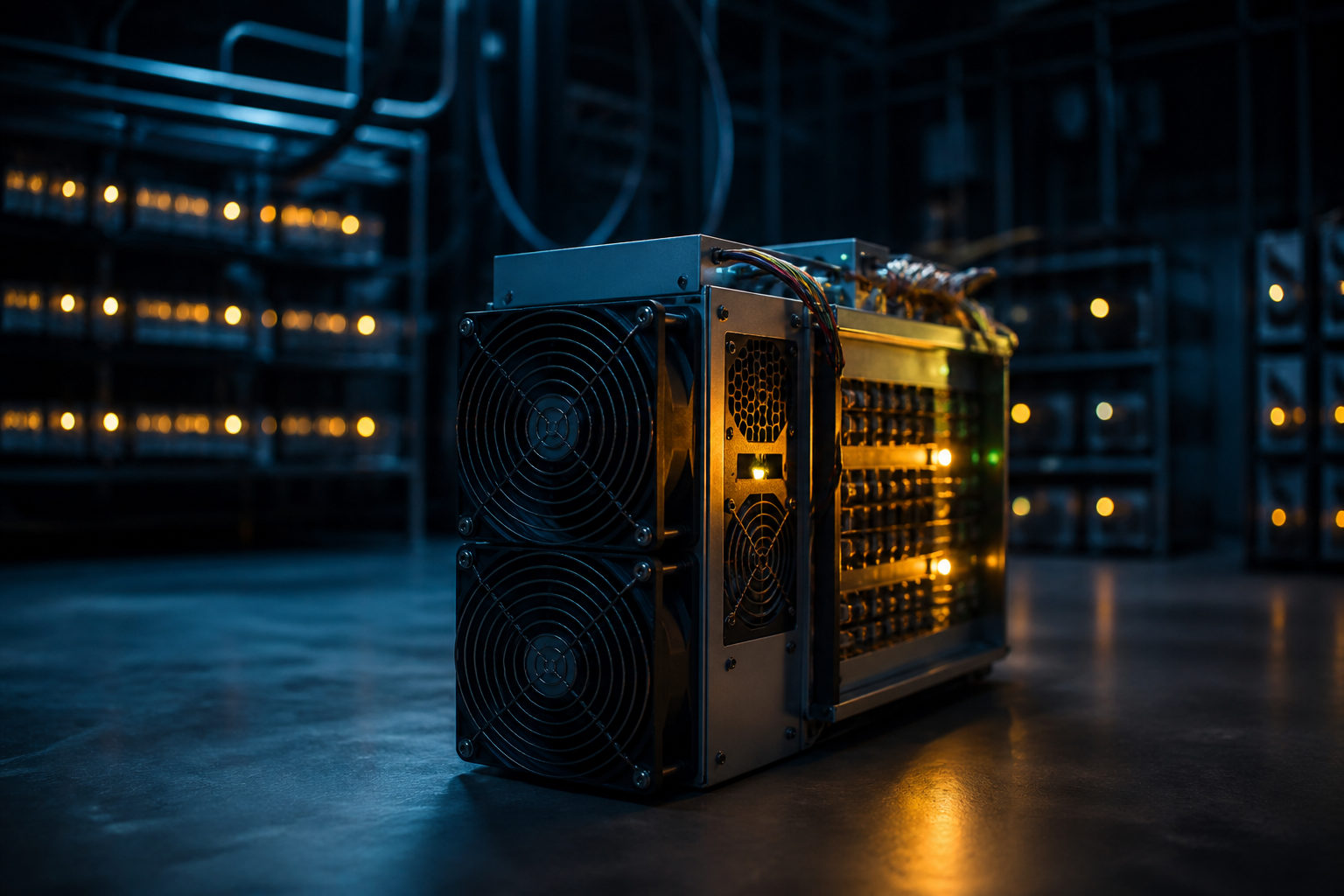
How to earn bitcoins from mining comes down to joining Bitcoin’s block-finding race with specialized hardware. If your setup stays online, runs efficiently, and keeps costs under control, you can receive bitcoin through block rewards and mining pool payouts.
What bitcoin mining actually does
Think of Bitcoin as a public ledger that needs constant updates. New transactions arrive, and miners compete to package them into the next valid block. The winner gets that block accepted by the network and receives the reward attached to it.
Mining machines do not “create money” in a casual sense. They perform repeated calculations to find a valid result under Bitcoin’s rules. That work uses electricity, generates heat, and puts wear on hardware, which is why mining is always tied to operating costs.
Bitcoin produces a new block about every 10 minutes. When a block is found, newly issued bitcoin is released, and the miner or pool that found it also collects the transaction fees included in that block. Bitcoin’s total supply is capped at 21 million coins, and the block subsidy is reduced about every 4 years, or every 210,000 blocks. That schedule is one reason mining economics keep changing over time.
The system started with the 2009 genesis block and follows the design described in the 2008 white paper, Bitcoin: A Peer-to-Peer Electronic Cash System. You do not need to read the paper to mine, but knowing that mining is part of Bitcoin’s security model helps you judge the process more clearly.
Ways people take part in mining today
If you want to earn bitcoin from mining, you need to choose a participation model before you think about possible output. The main options differ in control, complexity, and counterparty risk.
| Method | How it works | Who it suits | Main drawback |
|---|---|---|---|
| Home or self-hosted mining | You buy hardware and manage power, cooling, network, and maintenance yourself | People willing to handle daily operations | Noise, heat, upkeep, and setup burden |
| Hosted mining | You own the machines, but they run at a third-party site | People who want hardware exposure without keeping machines on-site | Dependence on the host’s reliability and terms |
| Mining pool participation | Many miners combine hashpower and share payouts based on pool rules | Most individual miners | Pool fees and payout formulas affect results |
| Cloud mining | You buy a contract tied to someone else’s mining operation | People avoiding hardware management | Low transparency and high counterparty risk |
For most individuals, solo mining is hard because finding an entire block on your own can take a very long time. That is why many miners join a pool. A mining pool combines the hashpower of many participants, finds blocks more often than one small miner could, and then splits payouts according to its own rules.
Pools smooth the experience, but they do not remove risk. You still need to read the fee model, minimum payout threshold, account settings, and operational history of the service. Cloud mining goes a step further away from direct control, since you may never see or verify the machines behind the contract in a meaningful way.
From setup to payout: the practical workflow
The first thing you need is a bitcoin wallet that can receive BTC. Mining earnings have to be paid somewhere, and entering the wrong address can turn a simple setup mistake into a permanent loss.
| Step | What you do | What matters most |
|---|---|---|
| Set up a wallet | Create a BTC receiving address and back it up properly | Check address accuracy and control of keys or recovery data |
| Choose a model | Decide between self-hosting, hosting, or pool-first participation | Understand fees, responsibilities, and how payouts work |
| Prepare hardware | Install the mining machine, power supply, cooling, and network connection | Stable operation matters more than short bursts of performance |
| Connect to a pool | Enter pool server details, worker name, and payout settings | Read the pool’s threshold and payment cycle |
| Monitor the system | Watch uptime, temperature, error rates, and fan behavior | Downtime directly reduces actual output |
| Receive bitcoin | Get BTC payouts once the pool’s conditions are met | Move funds to storage you understand and control |
Many beginners assume the hard part is buying a machine. In practice, operation is where mining becomes real. Hardware that looks acceptable on paper can still disappoint if cooling is poor, internet interruptions are frequent, or the machine spends too much time offline.
Your wallet choice also affects security. Some people use a custodial service for convenience, while others prefer a wallet they control directly. If you plan to keep mined bitcoin for more than a short period, it helps to understand who controls the private keys and how recovery works before payouts start arriving.
What decides whether mining is worth it
People searching for how to earn bitcoins from mining are often asking a different question underneath: can I actually come out ahead? The answer depends less on one headline spec and more on the combined effect of costs, uptime, and the changing value of bitcoin.
| Factor | Why it matters | Common mistake |
|---|---|---|
| Electricity cost | Ongoing power use can define the whole economics of a setup | Focusing only on hardware purchase price |
| Machine efficiency | More efficient hardware can produce more hashpower for the same energy use | Assuming any working machine is good enough |
| Cooling and environment | Heat affects stability, hardware stress, and operating comfort | Treating a home room like a long-term mining site |
| Pool rules | Fees and payout design shape the flow of earnings | Ignoring terms and trusting the front page summary |
| Maintenance ability | Fast recovery from faults keeps uptime higher | Thinking mining runs itself after initial setup |
| Bitcoin price | The market price changes the value of what you mine | Assuming a favorable market move will last |
That last point matters even when no live price is quoted. Mining pays in bitcoin, but your costs are continuous and immediate. The market value of the BTC you receive can rise or fall after payout, so your experience of “profit” depends on timing as well as operational discipline.
If you want a live price, check a major market data platform and compare it with your own mining records. Do not judge a setup from screenshots, marketing claims, or someone else’s best day. The useful question is whether your own operation can stay efficient over time.
Halving changes the picture too. Bitcoin halvings took place in 2012, 2016, 2020, and 2024. Each one reduced the block subsidy, which means assumptions that seemed reasonable in one period may stop working later. A mining plan that ignores that built-in schedule is incomplete from the start.
There is also a unit question beginners often miss. Bitcoin can be divided into smaller units, and 1 satoshi is one hundred millionth of 1 BTC. Pool payouts may arrive in amounts that look tiny at first, but that is normal for smaller participants sharing rewards across many miners.
FAQ
Can I still mine bitcoin at home?
Yes, you can participate from home if you have suitable power, cooling, and network conditions. The harder question is whether your space can handle constant heat and noise well enough for long-term operation.
Do mining pools pay bitcoin every day?
Some pools pay on a frequent schedule, but actual timing depends on the pool’s rules and payout threshold. You need to read how rewards are calculated, when balances are settled, and when a withdrawal is triggered.
Is cloud mining a good way to start?
It may look simple because you avoid hardware management. The tradeoff is that you rely heavily on the provider’s honesty, reporting, and contract terms, which can be hard to verify from the outside.
What should I set up before buying any mining hardware?
Start with a wallet that can receive BTC and make sure you understand its backup method. After that, review power conditions, cooling limits, and the pool’s payout structure before spending on equipment.
Should I leave mined bitcoin on the pool account?
That may be convenient for short-term handling, but it adds platform risk if funds sit there for too long. If the amount matters to you, move it to storage you understand and control.
If you are serious about mining, make a checklist before spending anything: wallet setup, power cost, cooling plan, pool terms, and your ability to deal with downtime. That practical review tells you more about how to earn bitcoins from mining than any sales page ever will.
Disclaimer: This article is for informational and educational purposes only and is not investment, financial, or legal advice. Crypto assets are highly volatile and you could lose your entire investment. Do your own research and decide carefully.