
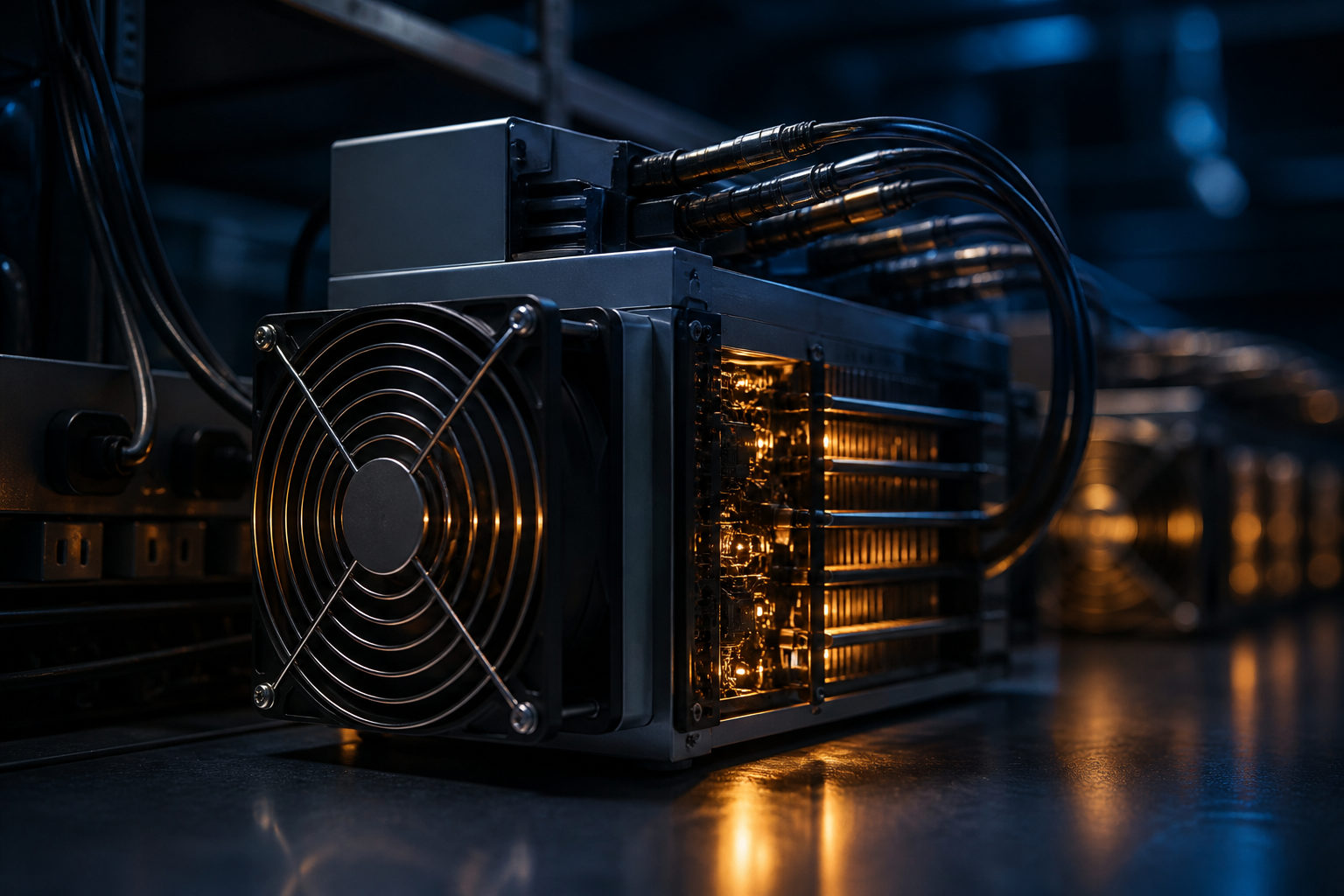
If you want to know how to earn money mining bitcoins, the short answer is this: miners get paid for competing to add new blocks to the Bitcoin network, but actual profit depends on electricity, hardware efficiency, uptime, and operational discipline.
Why bitcoin mining can generate income
A simple way to picture mining is to imagine a global bookkeeping race. The Bitcoin network is an open ledger, and miners use specialized machines to compete for the right to write the next page. The winner gets the block reward plus the transaction fees included in that block.
That is the source of mining revenue. It sounds clean on paper, but it does not mean every miner makes money. Mining is a business with constant input costs. Machines must run around the clock, power bills keep coming, equipment produces heat and noise, and technical issues can cut output at any time.
Bitcoin launched with the genesis block in January 2009, and its monetary design is fixed. The total supply is capped at 21 million coins. A new block is produced about every 10 minutes, and the block subsidy is reduced roughly every 4 years, or every 210,000 blocks. That schedule matters because miners compete for a reward that becomes scarcer over time.
The smallest unit of Bitcoin is 1 satoshi, equal to one hundred millionth of a BTC. That detail matters less for mining economics than many beginners assume. What matters more is whether your share of network work is large enough, and cheap enough, to leave room after expenses.
What actually determines whether mining is profitable
Many beginners focus on setup guides: pick a wallet, plug in a machine, connect to a pool, and start hashing. Those steps get you into the race, but they do not answer the real question. Profit comes from cost structure.
| Factor | Why it matters | What it does to your outcome |
|---|---|---|
| Electricity cost | Mining draws power continuously | High power rates can wipe out margin fast |
| Hardware efficiency | Better machines do more work for less power | Improves competitiveness under the same conditions |
| Network difficulty | More competition means more work is needed to earn the same share | Reduces the output potential of weaker setups |
| Cooling and environment | Heat, dust, and airflow affect stability | Poor conditions lead to throttling, downtime, or damage |
| Operational skill | Configuration, monitoring, and maintenance affect uptime | Weak execution turns expected income into missed revenue |
| Bitcoin price movement | Revenue is earned in BTC while expenses keep arriving | Market swings can change the economics quickly |
A common mistake is to confuse mined coins with profit. Mined bitcoin is gross revenue. Real performance only appears after you account for electricity, hardware wear, repairs, hosting charges if any, and the cost of capital tied up in equipment. In home settings, another issue appears fast: a machine can run, yet still be a poor fit for the place where you live.
Noise is one reason. Heat is another. Residential wiring and ventilation can also become limiting factors. A setup that looks easy in a product listing may become difficult once it has to run steadily day after day.
The main ways people participate in bitcoin mining
For individuals, participation usually falls into three buckets: running your own machines, joining a mining pool, or using a hosted arrangement where someone else handles the site and maintenance. All three connect hashpower to Bitcoin, but the trade-offs are very different.
| Approach | Best fit | Advantages | Main drawback |
|---|---|---|---|
| Self-operated mining | People with suitable space, power access, and technical ability | Direct control over hardware and operating decisions | Heavy setup burden, plus noise, heat, and maintenance |
| Mining pool participation | Smaller miners who want steadier payout patterns | Reduces the waiting game of solo mining | Pool rules and fees affect your final result |
| Hosted mining | Users who do not want to manage the site themselves | Less hands-on operational work | Greater dependence on a third party |
Solo mining gives the most control, but for most people it is hard to compete that way. The network is crowded with professional operators. A single machine has a very small chance of finding blocks on its own, so income can be highly irregular. That is why many miners choose pools. Pools combine the work of many participants and split the proceeds according to set rules, making payouts more predictable.
Hosted mining can sound attractive because it removes much of the physical work. Still, it shifts key risks to trust and transparency. If you cannot clearly verify where the machines are, how they are run, and how payout calculations are handled, you are giving up visibility over the part of the business that matters most.
How to decide whether mining suits your situation
Before asking how much you can make, ask whether your environment supports mining at all. Start with power cost and power stability. Then move to airflow, ambient temperature, dust control, noise tolerance, and your ability to deal with technical faults. Hardware choice comes after that, not before.
| Checkpoint | What to examine | If it is weak |
|---|---|---|
| Power setup | Rate, stability, and electrical capacity | Operating cost rises and safety issues may appear |
| Physical space | Ventilation, cooling, dust levels, noise isolation | Machines run less efficiently or stop more often |
| Technical readiness | Pool setup, wallet handling, monitoring, troubleshooting | Problems stay unnoticed and uptime drops |
| Financial tolerance | Ability to handle uncertainty in payback and equipment value | Short-term pressure can force a bad exit |
| Local compliance awareness | Rules related to power use, noise, and business activity | Restrictions or disputes may add hidden costs |
If these basics are not in your favor, mining may not be the best route. Some people are better served by learning how Bitcoin works, buying and holding directly if that fits their goals, or taking a different role in the crypto market. Mining is closer to operating specialized infrastructure than clicking a button in an app.
Costs and risks that beginners often miss
The first overlooked item is depreciation. Mining machines are specialized devices that run under heavy load. Their value can fall because of wear, because newer hardware is more efficient, or because market demand for older units softens. Your entry timing matters, and so does your exit plan.
The second is downtime. A miner that is offline earns nothing. Internet issues, overheating, fan failure, power supply faults, or poor configuration can all interrupt work. Even short disruptions add up when mining depends on continuous operation.
The third is management overhead. A small setup may feel easy at first, but routine tasks expand quickly. You need to monitor temperatures, clean dust, replace worn parts, confirm pool connectivity, and keep an eye on wallet and payout settings. None of that looks exciting, yet all of it affects whether your operation performs as expected.
There is also market risk. Expenses such as electricity and hosting do not wait for favorable conditions. If bitcoin price weakens while your costs stay fixed, a plan that looked sensible can lose appeal very fast. Good miners do not just buy hardware; they manage risk across the whole operation.
FAQ
Can an individual still make money mining bitcoin?
Yes, but the answer depends on operating conditions, not on the machine alone. If your power is expensive, your environment is poor, or you cannot keep uptime high, your edge is limited.
Is joining a mining pool better than mining alone?
For most small operators, a pool makes income patterns less erratic. You trade some control and fees for a steadier payout structure.
Can I mine bitcoin at home with one machine?
You can, but home mining often runs into practical issues very quickly. Heat, noise, wiring limits, and ventilation can turn a simple idea into an ongoing operational problem.
Is cloud mining a safe shortcut?
It can be risky because you are trusting someone else to own, run, and report on the hardware. If the provider is vague about equipment, fees, or payout terms, caution is the better move.
Should I keep the bitcoin I mine or sell it right away?
That depends on your cash-flow needs and risk tolerance. If your operation has ongoing bills to pay, your selling schedule becomes part of your mining strategy.
If you are serious about how to earn money mining bitcoins, do the hard review before buying hardware. Check power cost, site conditions, maintenance demands, hosting transparency if relevant, and your exit options. That review often tells you more than any marketing page for a miner ever will.
Disclaimer: This article is for informational and educational purposes only and is not investment, financial, or legal advice. Crypto assets are highly volatile and you could lose your entire investment. Do your own research and decide carefully.