
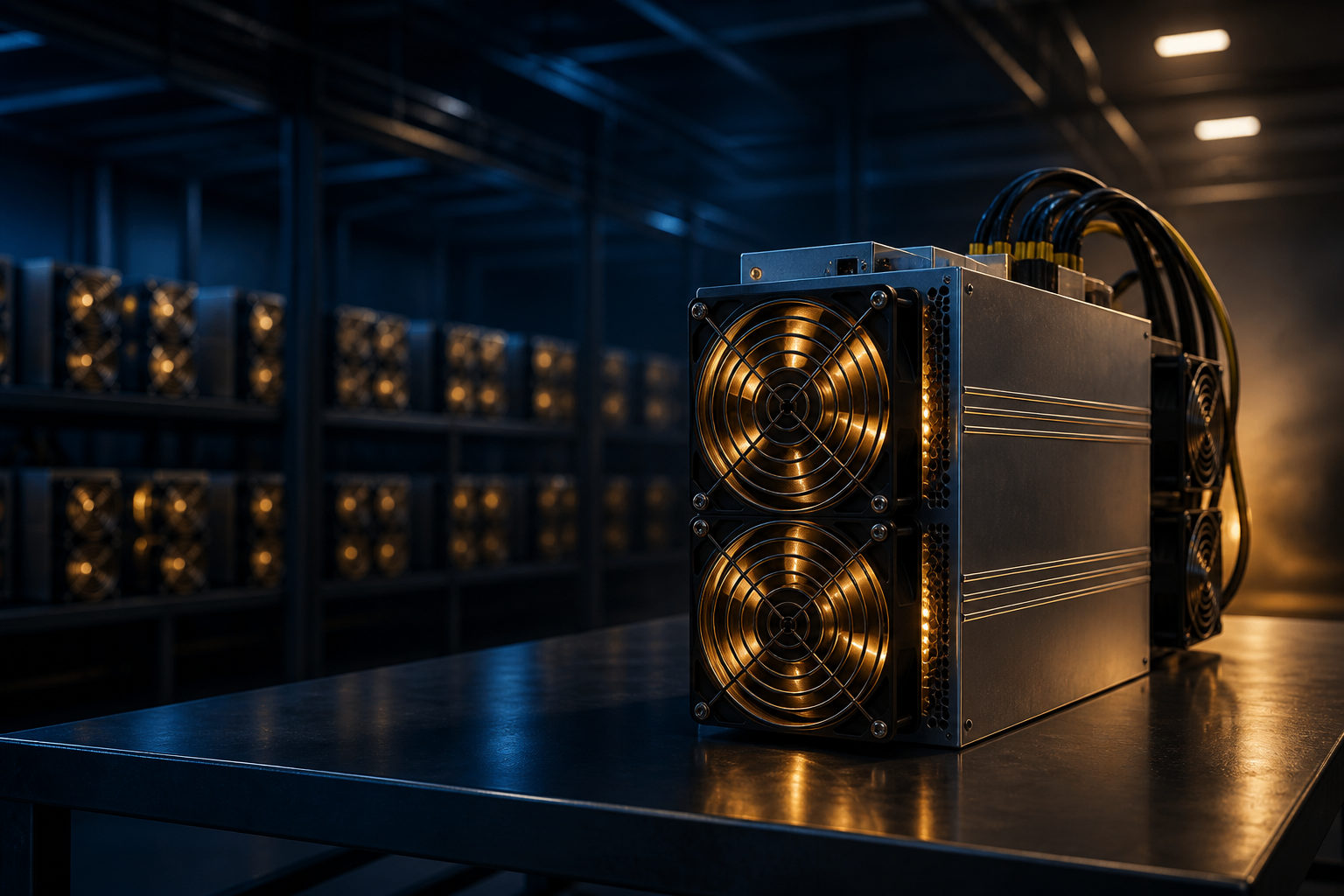
How to farm bitcoin comes down to one thing: you join Bitcoin’s ledger race with computing power, not by clicking a button and waiting for coins to appear.
People often use the word “farm” as if bitcoin were sitting somewhere ready to be collected. In practice, mining means helping process transactions and competing to add the next block to the chain. If your setup contributes valid work, you may receive a share of block rewards and fees, depending on how you participate.
What bitcoin mining is actually doing
Think of Bitcoin as a public ledger that anyone can inspect. New transactions need to be checked, grouped, and written into the next block.
Mining is the competition over who gets to write that next page. Miners run repeated calculations under Bitcoin’s proof-of-work rules, trying to find a valid result before others do. Bitcoin produces a new block about every 10 minutes, and the network adjusts mining difficulty so block production stays on schedule as conditions change.
This is why mining has a cost base from the start. Hardware runs continuously, power is consumed the whole time, and only valid work matters.
How people usually participate today
If you ask “how do I farm bitcoins,” the answer depends on whether you want full control, steadier payouts, or less hands-on management. The methods are not equal in cost, risk, or complexity.
Solo mining
Solo mining means running your own machine and competing directly with the rest of the network. The appeal is simple: if you mine a block yourself, the reward is yours. The trade-off is hard to ignore, since your wait time can be very long and your equipment still has to run the entire time.
Mining pools
A mining pool combines the work of many miners. Instead of waiting on your own for a rare success, you contribute hash power to a group and receive a share based on the pool’s payout rules. For many individuals, this is the most practical starting point because the process is easier to monitor and payout patterns are less erratic.
Hosted mining
Some miners buy equipment but place it in a professional facility rather than running it at home. That can help with heat, noise, uptime, and power setup. It also adds counterparty risk, since you depend on the operator’s service quality, maintenance practices, and billing terms.
Cloud mining needs extra caution
Cloud mining is often presented as the easy path. You pay for access to mining capacity without owning the machine yourself. The problem is transparency: beginners may not know whether the hardware is real, whether fees are reasonable, or whether contract terms leave much room for actual returns.
What you need before you start
If you are wondering “how can I farm bitcoins,” begin with the equipment and operating setup, not with profit expectations. Mining is closer to running a machine business than installing a casual app.
- ASIC hardware: Bitcoin mining is usually done with specialized mining machines. A normal home computer is not competitive in most real-world conditions.
- Bitcoin wallet: You need a wallet address to receive payouts from a pool or other mining arrangement.
- Pool account: If you join a pool, you will usually create an account, set a payout address, and enter the pool connection details into the machine.
- Stable internet: If the device drops offline often, it cannot submit useful work consistently.
- Power and cooling: Mining hardware creates noise and heat. You need suitable electrical capacity and a place that can handle sustained operation.
Ongoing monitoring matters as much as initial setup. A miner can appear to be online while producing less useful work than expected because of overheating, connection issues, or hardware faults.
The cost reality most beginners miss
Many people searching “how do you farm bitcoins” are really asking whether mining is still realistic for an individual. It can be, but the answer depends far more on costs than on the basic setup steps.
- Electricity: This is the most obvious recurring expense, and it can decide whether a setup is workable at all.
- Machine efficiency: Not all miners convert power into hash rate equally well. Older equipment can lose ground quickly.
- Network competition: As more miners participate, the chance of earning block rewards with the same hardware changes.
- Pool fees and payout rules: The way a pool calculates shares and distributes payouts affects what you actually receive.
- Downtime and maintenance: Heat, dust, connection failures, and hardware wear can all reduce effective output.
Bitcoin’s issuance schedule also matters. The total supply is capped at 21 million coins. New issuance falls over time because the block subsidy halves about every 4 years, or every 210,000 blocks. Past halving years were 2012, 2016, 2020, and 2024. Mining does not get simpler as the system matures.
Common mistakes to avoid
The first mistake is treating mining like passive income. It is an operational activity with hardware, heat, noise, maintenance, and power bills. Even a good setup needs attention.
The second mistake is confusing mining with buying bitcoin. Mining means managing machines and expenses. Buying bitcoin is a separate decision with a different risk profile.
The third mistake is focusing only on the machine price. A cheap unit can still be a poor choice if it is inefficient, loud, unstable, or hard to maintain.
FAQ
Can I mine bitcoin with a regular computer?
In theory, yes, because any compatible machine can perform calculations. In practice, regular computers are usually not competitive against specialized ASIC miners and may consume power inefficiently for the work produced.
Is solo mining better than joining a pool?
That depends on your goals. Solo mining gives full control and full exposure to long waiting periods, while pools usually offer a steadier experience and simpler entry for beginners.
Can I run a bitcoin miner at home?
You can if your power, ventilation, and noise conditions allow it. The real question is not whether the machine turns on, but whether your space can support continuous operation without major issues.
Is cloud mining a good way to start?
It may look simple, but simplicity on the surface does not remove contract risk. If you cannot verify how the service works, what fees apply, and how payouts are calculated, caution makes sense.
How do I receive mined bitcoin?
You usually set up a bitcoin wallet first and then add that wallet address to your pool or mining account. If you use a pool, you normally receive allocated payouts rather than mining entire blocks on your own.
What to check before spending money
Review your power setup, cooling options, internet stability, wallet security, and the fee structure of any pool or hosting provider. If the contract terms are unclear or the operating costs do not make sense, pause there first; understanding the setup beats rushing into hardware you may regret.
Disclaimer: This article is for informational and educational purposes only and is not investment, financial, or legal advice. Crypto assets are highly volatile and you could lose your entire investment. Do your own research and decide carefully.