
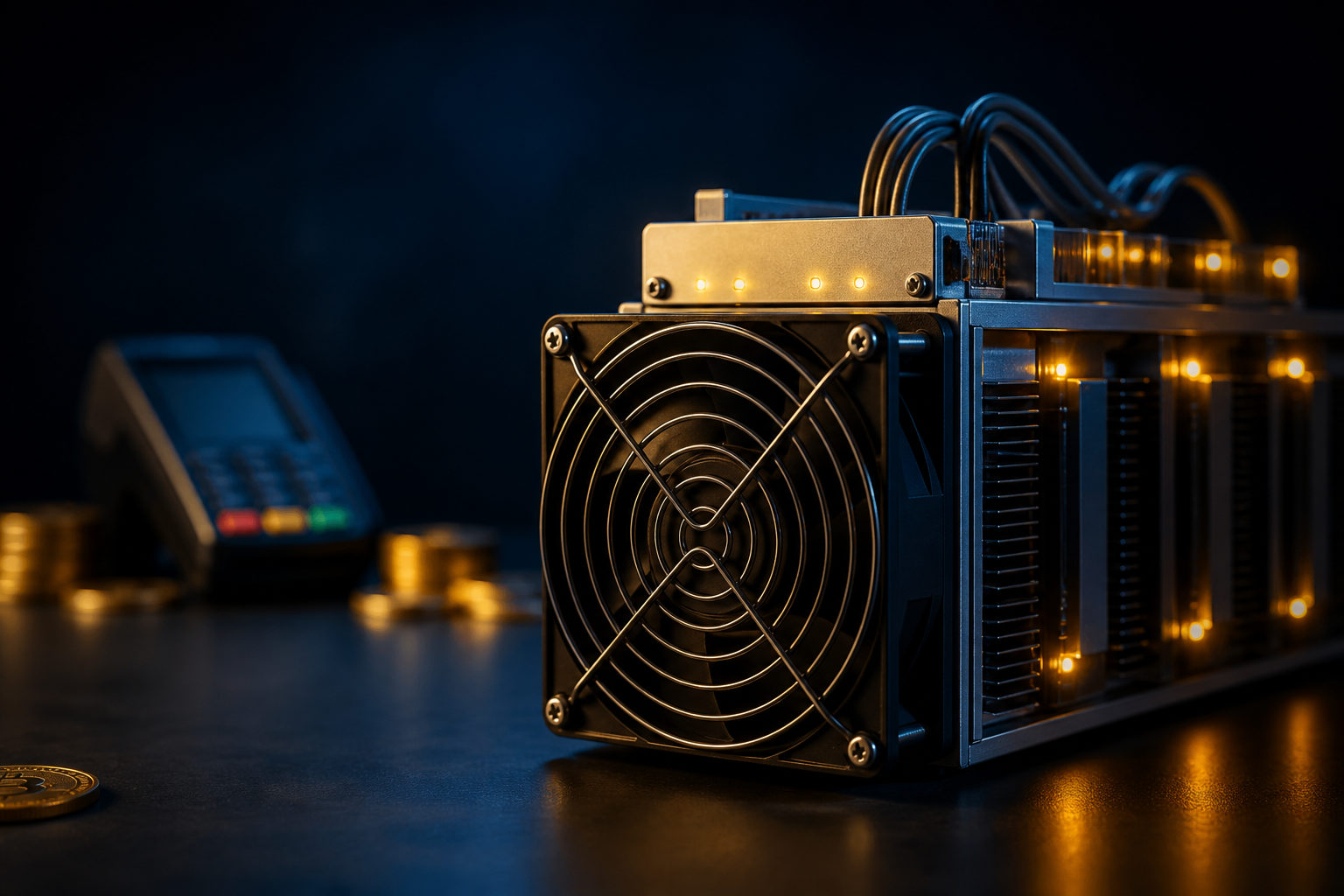
If you want to get bitcoins, mining is only one route. When people ask how to get bitcoins by themselves, they usually mean joining Bitcoin’s block-writing race and dealing with the hardware, power, and operating demands that come with it.
What Bitcoin mining actually does
A simple way to picture Bitcoin is to treat it like a public ledger shared across a network. Transactions keep coming in, and someone has to gather a batch of them into a new block that the network can verify. Mining is the competition for that right to add the next block.
This is a computing contest, not a manual task. Mining machines keep making calculations, and the participant that finds a valid result first gets the chance to propose the next block. Bitcoin is designed to produce a block about every 10 minutes. When a block is accepted by the network, the successful miner may receive the block reward and transaction fees. That is how new bitcoins enter circulation.
Two misunderstandings show up again and again. First, miners are not digging coins out of a computer. Second, winning a block does not let anyone rewrite the ledger however they want. Other participants still check whether the block follows the rules. That shared verification is a big part of why Bitcoin works as a distributed system.
Ways to get bitcoins are not all the same
Many searches around how to get mine bitcoins are really asking a broader question: how do I end up with BTC that I control? Mining is one answer, but it is far from the only one. If your real goal is ownership rather than technical participation, a different path may fit better.
| Method | What you are doing | Main hurdle | Best fit |
|---|---|---|---|
| Solo mining | Running your own machine and competing for blocks | High hardware, power, noise, and cooling demands | People willing to manage equipment directly |
| Mining pool | Combining hash power with others and sharing results by rule | You still carry costs and need to study the payout model | People who want mining exposure without pure luck |
| Buying BTC | Exchanging fiat or other assets for bitcoin | Platform choice and storage habits matter most | People focused on holding bitcoin |
| Accepting BTC payments | Selling goods or services and taking bitcoin as payment | You need a real payment use case | Merchants, freelancers, creators |
| Earning BTC through work | Getting paid in bitcoin for labor or contracts | This depends on clients or counterparties | People with marketable skills or business ties |
If your question is specifically about mining, the next sections are the useful ones. If you mainly want to own bitcoin, buying or accepting BTC can be a much more direct route.
The hard reality of personal mining today
Bitcoin mining used to be associated with hobbyist setups, but serious participation now is much more specialized. In practice, people looking to mine usually end up dealing with purpose-built machines, stable electricity, internet reliability, heat management, and ongoing maintenance. It is closer to equipment operations than casual software use.
The machine itself is only part of the picture. Long-running hardware generates heat and noise, and that changes what is practical in a home or office. Ventilation matters. Uptime matters. Dust, temperature swings, and connection failures matter. A setup that looks fine on paper can become difficult once it has to run day after day.
You are also competing with global hash power, not a handful of local users. That is why many participants choose mining pools instead of mining alone. A pool combines the work of many miners and distributes results under its own rules. This can make payouts less random, but it also means you need to understand pool fees, payout conditions, thresholds, and account settings before you connect anything.
| Factor | Why it matters | Common mistake |
|---|---|---|
| Mining hardware | It shapes computing performance and power use | Focusing on marketing claims while ignoring upkeep |
| Electricity setup | Mining depends on stable continuous power | Overlooking household wiring and operating pressure |
| Cooling and noise | These affect both machine stability and living conditions | Treating a miner like a regular desktop computer |
| Pool rules | They control how and when BTC is distributed | Joining before reading the payout structure |
| Storage | Your bitcoin still needs secure custody after payout | Leaving everything in a third-party account |
If you want to start, think in stages
Start with the goal, not the gear. Some people want hands-on exposure to how Bitcoin mining works. Others want to run equipment for the long term. Those are different projects. If you only want to learn the mechanism, begin with the basics: blocks, rewards, transaction fees, wallet addresses, and how a mining pool coordinates participants.
Next comes the difference between a miner and a wallet. The miner performs calculations. The wallet receives and stores bitcoin. New users often blur those two roles together, which causes problems later. Before setting up a machine or a pool account, make sure you have a wallet that you control. If your recovery phrase or private keys are exposed, control of the coins can be lost.
Then decide whether solo mining or a pool makes sense. For most people, pools are the more realistic starting point because solo mining adds much more uncertainty. During setup, check the server details, worker naming format, fee terms, payout rules, and the destination address for your BTC. A machine can be running without producing a result that reaches you in the way you expected.
After launch, the job is not over. You still need to watch for downtime, heat issues, dust buildup, firmware updates, and payout handling. Receiving bitcoin is only one part of the process; keeping it under proper control is the other part.
Who should mine, and who may be better off using another route
Mining can make sense for people who are comfortable with hardware, willing to learn pool mechanics, and prepared for an ongoing operating routine. It suits users who want direct participation in the network and do not mind the physical realities of equipment running for long periods.
If your real objective is simply to accumulate BTC, the best answer may be much less technical. Buying bitcoin, accepting it as payment, or earning it through work can all be cleaner paths to ownership. The useful question is not whether you got the coins in the most dramatic way. The useful question is whether the method matches your time, space, costs, and control needs.
| Your goal | Better route | Why |
|---|---|---|
| Learn how Bitcoin records transactions | Study mining and pool mechanics first | This explains blocks, validation, and reward flow |
| Hold BTC over time | Buy or earn bitcoin directly | You avoid hardware and operating burdens |
| Use BTC in business | Accept bitcoin payments | Bitcoin becomes part of your payment stack |
| Participate technically | Evaluate conditions before deploying miners | Preparation matters more than impulse buying |
FAQ
Can I mine bitcoin at home?
You can try, but whether it is practical depends on power, ventilation, noise tolerance, and the kind of equipment you plan to run. The real issue is usually not starting the machine; it is keeping it running in a stable way.
Does joining a mining pool still count as getting bitcoin through mining?
Yes. You are still contributing hash power to the mining process. The difference is that the result is shared according to pool rules instead of depending on a solo block win.
Can a normal computer mine bitcoin today?
In a technical sense, a computer can perform calculations. In practical terms, ordinary consumer hardware is generally not meaningful for modern Bitcoin mining. People who take mining seriously usually look at dedicated machines.
Will mined bitcoin go straight to my bank account?
No. Mining payouts are generally sent to a wallet address or an account within a service system. Converting BTC into fiat is a separate step and should not be confused with receiving bitcoin from mining.
Where should I keep bitcoin after I get it?
The key issue is control. If you hold your own recovery phrase or private keys, you control the coins directly. If you leave everything with a third party, you depend on that service for access.
If you are about to start, split the problem in two parts: how you will get bitcoin, and how you will store it after that. Decide whether mining truly fits your situation before you spend time on machines, pool settings, and operating plans.
Disclaimer: This article is for informational and educational purposes only and is not investment, financial, or legal advice. Crypto assets are highly volatile and you could lose your entire investment. Do your own research and decide carefully.