
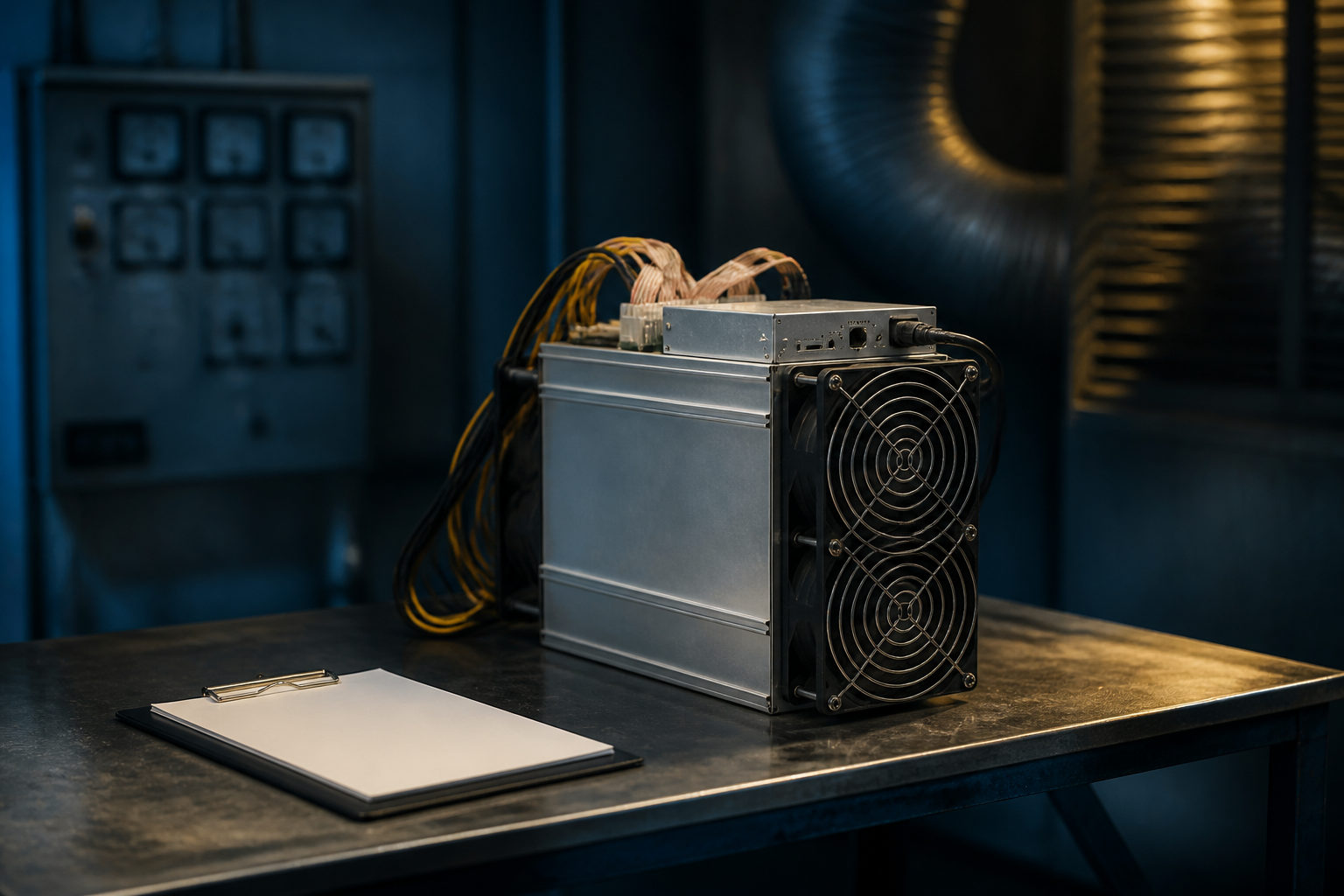
To mine Bitcoin in Iran, you need to treat it as a running operation, not a quick hardware purchase. Bitcoin mining is a race to earn block-writing rights, and your real constraints are usually power, cooling, maintenance, noise, downtime, and local compliance.
What Bitcoin mining actually means
People often picture mining as if coins are pulled out of a system. In practice, miners compete to add the next block to the blockchain. The Bitcoin network produces a new block about every 10 minutes, and mining machines keep running hash calculations in search of a valid result that meets the network target.
When a miner finds that result, the new block can be proposed to the network and accepted by other nodes. That process helps secure the chain and confirms transactions. New bitcoin enters circulation through mining, and the supply cap is 21 million coins, which is why mining matters for both issuance and network security.
A simple way to think about it is a constant raffle with rules. More hash power means more chances to produce a valid result, but luck still plays a role. That is one reason many participants join mining pools instead of trying to mine alone.
What to evaluate in Iran before buying any miner
If you are asking how to mine bitcoin in Iran, start with conditions on the ground. A mining machine is only one part of the setup. You also need stable power delivery, a place that can handle heat and noise, a plan for dust and maintenance, and a clear view of what local rules may require.
Power quality matters as much as power access. A machine can run at high load for long periods, so repeated outages, unstable voltage, or weak wiring can turn a promising setup into a constant repair problem. Many beginners focus on advertised hash rate and ignore the fact that uptime is what keeps the whole plan alive.
Cooling is another practical limit. Mining hardware throws off a lot of heat, and poor airflow can lead to throttling, shutdowns, and extra wear. A space that looks large enough may still fail if hot air has nowhere to go or if dust buildup is hard to control.
You also need to think about legal and operational boundaries. Rules tied to power use, business activity, imported equipment, or mining itself can vary by place and can change over time. This article does not replace local legal or tax advice, but it does point to a basic rule: do not commit serious money before you understand what responsibilities and restrictions may apply.
| Decision area | Common beginner mistake | Better way to judge it |
|---|---|---|
| Entry order | Buy miners first, solve logistics later | Check power, cooling, noise, and local rules first |
| Hardware choice | Look only at headline hash rate | Compare efficiency, repairability, and spare part access too |
| Profit expectations | Assume machines will run at full pace all the time | Allow for downtime, maintenance, and environmental limits |
| Site selection | Any room with electricity will work | Review airflow, dust, cable load, and service access |
| Compliance | Rely on rumors and informal advice | Verify local requirements before deployment |
Ways to participate: solo mining, pools, or hosting
There is more than one way to take part in Bitcoin mining. You can run your own machines and connect them to a mining pool. You can try solo mining. Or you can own the hardware and place it with a third-party hosting provider that handles the site and day-to-day operation.
For most individuals, solo mining is the hardest route. The network is highly competitive, so a small setup may face long stretches without finding a block on its own. A mining pool groups the hash power of many miners, then distributes rewards according to the pool’s rules, which usually makes results less uneven.
Hosting can make sense if you do not have a suitable location or do not want to manage cooling, power, and repair work yourself. The tradeoff is dependence on the operator. You need to trust their reporting, their handling of downtime, and the terms under which you can monitor or recover your equipment.
A cautious path for beginners is to learn the workflow before spending heavily. That means understanding wallet setup, pool dashboards, machine monitoring, and site requirements first. Once those pieces make sense, hardware decisions become easier to judge.
| Method | Best fit | Main advantage | Main challenge |
|---|---|---|---|
| Own machines + pool | People willing to manage a site directly | More control over hardware and operations | You handle power, heat, noise, and repairs |
| Solo mining | People who want full independence | No reward sharing with a pool in theory | Very uneven results with a small setup |
| Third-party hosting | People without a suitable site | No need to build and run your own mining space | Higher reliance on the host’s transparency and execution |
| Research first | Complete beginners | Lower risk of rushed buying decisions | No substitute for real operating experience |
A practical step-by-step checklist before you switch anything on
Start with power. Ask whether the supply is stable over time, whether the wiring can handle continuous high load, and what happens when outages or voltage swings occur. If this part is weak, every later estimate becomes less reliable.
Then move to the site itself. You need a place where hot air can be removed, dust can be managed, and repairs can be done without difficulty. Noise is part of the decision too. Mining hardware is not well suited to every residential setting, even if there is enough floor space.
After that, look at the miner and the pool together. Hardware should be judged by efficiency, serviceability, firmware management, and access to replacement parts, not by hash rate alone. A pool should be judged by payout rules, dashboard clarity, alerting tools, and how easy it is to notice if a machine has gone offline.
Wallet setup comes next. Mining rewards need a receiving address, and you should be clear about who controls that address and how backups are stored. This should be settled before the machine goes live, not after rewards begin to arrive.
Last, think in terms of operations, not just setup. Someone has to watch temperatures, fan health, connectivity, and machine performance. Small faults can turn into long outages when no one notices them quickly.
| Step | What to confirm | What can go wrong if skipped |
|---|---|---|
| Check power | Stability, cable load, outage risk | Frequent shutdowns and extra hardware stress |
| Review site | Airflow, dust control, repair access, noise | Overheating, throttling, difficult maintenance |
| Choose hardware | Efficiency, repair path, spare parts, firmware | A machine that looks strong on paper but is hard to run |
| Pick a pool | Payout rules, alerts, reporting clarity | Offline periods that go unnoticed |
| Prepare a wallet | Address control, backup plan, access management | Weak control over mined bitcoin |
The cost reality: more than the power bill
Many people reduce mining economics to electricity alone. That is too narrow. Real operating cost can also include site preparation, airflow equipment, dust cleaning, fan replacement, power supply failures, internet interruptions, and the time needed to inspect and maintain machines.
Hardware changes over time as well. Newer models can shift competitive pressure, and network difficulty can change the margin for older equipment. A machine that seems acceptable at the start may feel much tighter later if it is less efficient or harder to maintain.
Downtime is where many plans break. A broken fan or unstable connection may sound minor, but if no one catches it fast, a machine can sit idle far longer than expected. Bitcoin mining is an operational business. The small details often decide whether a setup stays manageable.
FAQ
Can I mine Bitcoin at home in Iran?
It may be possible from a technical standpoint, but that does not mean it is practical. Home setups often run into trouble with noise, heat, wiring limits, and ventilation long before the software side becomes difficult.
Am I still mining on my own if I join a pool?
Yes. Your machine is still providing hash power, but the reward flow is shared under the pool’s payout method. That usually makes results less uneven than trying to find blocks by yourself.
Do I need cheap electricity to make Bitcoin mining worth considering?
You should be very careful if your power situation is weak or expensive. Mining is highly sensitive to recurring operating costs, so it makes sense to model your setup conservatively before buying hardware.
Is cloud mining a substitute for owning a machine?
It can remove the need to handle equipment directly, but it also reduces what you can verify. You may have less visibility into the actual hardware, uptime, and settlement process, so extra caution is needed.
Should mined bitcoin stay in the pool account?
Leaving assets with a third party means you do not fully control them. It is better to decide on your own wallet setup, backup plan, and access procedures before rewards start accumulating.
What should a beginner do first?
Begin with power, site conditions, and your ability to maintain equipment over time. If those basics are unclear, spend time learning pool dashboards, wallet handling, and machine monitoring before making a purchase.
If you want to move from research to action, write down your plan for power, site, hardware, pool, wallet, and monitoring in one checklist. If any one of those items remains vague, pause there before ordering miners.
Disclaimer: This article is for informational and educational purposes only and is not investment, financial, or legal advice. Crypto assets are highly volatile and you could lose your entire investment. Do your own research and decide carefully.