
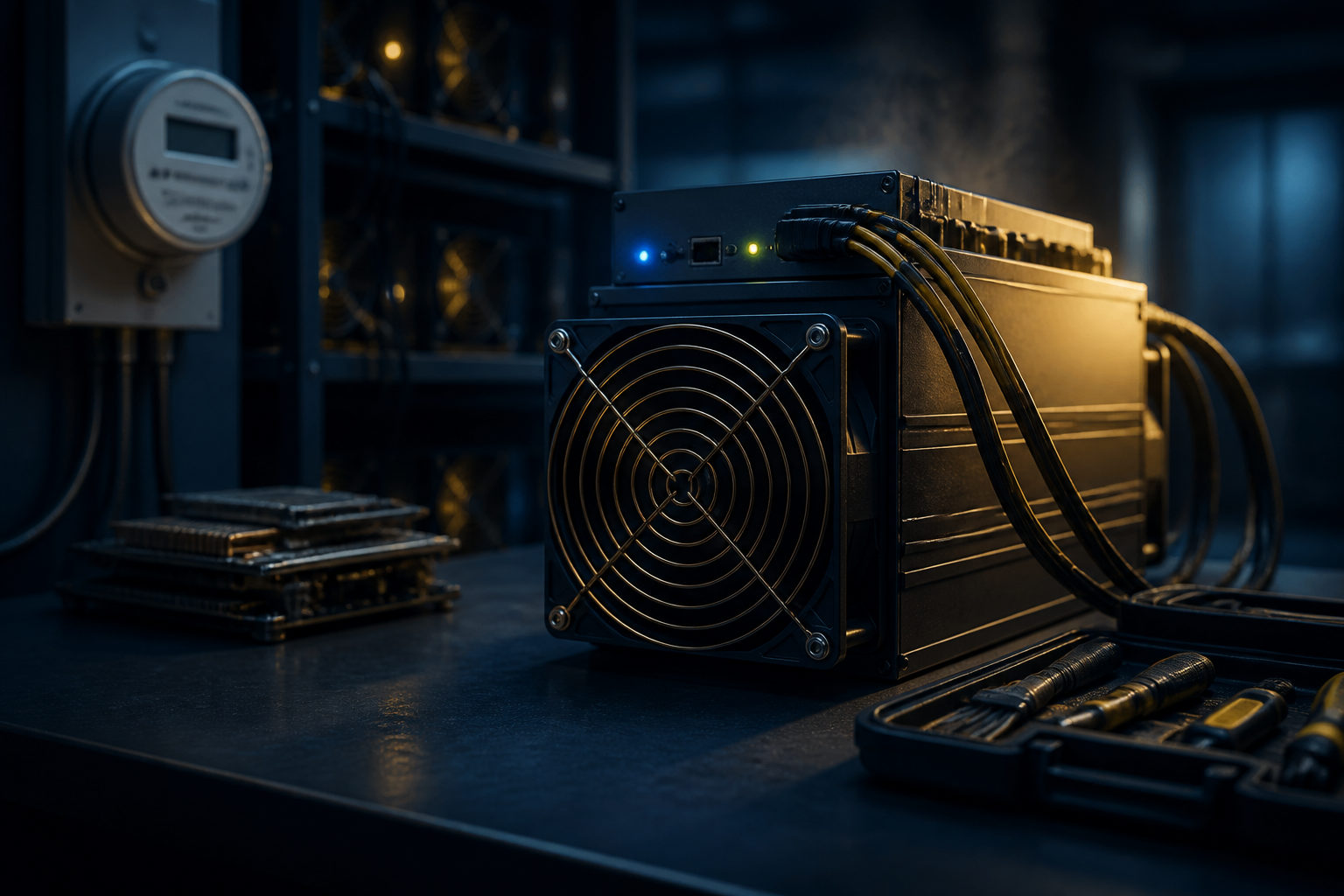
Bitcoin mining is not free. Even if you do not buy your own machine, the costs still show up through hardware use, electricity, maintenance, time, or platform rules.
Think of mining as a bookkeeping race
To answer “is it free to mine bitcoin,” it helps to start with the basic idea. Bitcoin mining is a race to add new transaction data into blocks, with many participants trying at the same time to meet the network’s proof-of-work rules.
The winner of that round gets the block reward and transaction fees. Bitcoin began with the genesis block in January 2009, and the network produces a new block about every 10 minutes, so mining is an ongoing contest rather than a one-time task.
Once you see it as a contest, the cost question becomes clearer. A race may look open to anyone, but the gear, energy, and preparation always have to come from somewhere.
Why bitcoin mining is not truly free
People often confuse “no upfront payment” with “no cost at all.” In bitcoin mining, those are very different things, because the expense can be direct, delayed, or hidden inside another service.
Hardware still matters
In the early days, ordinary computers had a role. Today, competition is far tougher, and bitcoin mining is generally tied to specialized machines. If you are not buying hardware yourself, you may be renting hash power, joining a hosting plan, or giving a third party access to your device resources.
That is still a form of payment. You are either paying with money, with machine capacity, or with control over your setup.
Electricity and cooling are ongoing costs
Mining equipment runs for long periods, which means power use does not stop after setup. Heat, noise, space, and maintenance also matter. A service can advertise a free starting point, but it cannot erase the underlying energy cost; it can only move that burden to another place in the business model.
Your time has value too
Mining is not just pressing a button. You need time to learn wallets, backup practices, pool settings, device management, and basic security. If your computer is tied up for mining-related tasks, that device is not fully available for other work, which creates an opportunity cost.
What “free mining” usually means in practice
Many offers online use the phrase “free bitcoin mining,” but the details matter more than the headline. In most cases, free does not mean costless. It means the cost is paid in another form.
- Task or reward apps: These platforms may give users small bitcoin-related rewards for check-ins, watching content, or completing tasks. What you are really trading is attention, usage time, or personal data.
- Cloud mining trials: Some providers offer a short free trial of mining power. That can be a marketing tool meant to push users into a paid plan later, rather than a long-term free way to mine bitcoin.
- Background software on your device: A program that runs in the background may use processing power, battery life, electricity, and device lifespan. You may not pay cash first, but the cost is still real.
- Referral or promotional rewards: These rewards often come from a platform budget or user acquisition campaign. Before joining, check withdrawal rules, account limits, and any condition that can change after signup.
So when someone asks “can I mine bitcoin for free,” the better question is this: who is covering the cost, and what does that service want from me in return?
What beginners should check before trying anything
For most people, the smarter filter is not whether a service says “free.” It is whether the model is clear, the tradeoff is acceptable, and the security risk is manageable.
- Separate real mining from platform rewards. Some products call almost any earning feature “mining,” including points, check-in bonuses, or token-style distributions. That is not the same as taking part in Bitcoin’s block production.
- Check the device claim. If a mobile app says your phone can efficiently mine bitcoin for free, be careful. In many cases, the app is showing a reward system or a simulation rather than meaningful participation in the Bitcoin network.
- Read withdrawal conditions. A service may seem free until you try to take funds out. Minimum withdrawal thresholds, identity checks, fees, or upgrade prompts can change the picture fast.
- Put security first. Avoid tools that ask for excessive permissions, push unknown downloads, or request wallet recovery phrases. Any service asking for your seed phrase should be treated as unsafe.
If your real goal is to understand Bitcoin, it may be more useful to learn how wallets work, how private key backups are handled, and how mining pools fit into the system. That foundation will help you judge claims about free mining more clearly.
FAQ
Can an individual mine bitcoin without spending money?
In the strict sense, that is very hard. Even without buying a machine, you usually still give up electricity, device resources, time, or accept platform conditions that carry a cost.
Is there any completely free way to mine bitcoin?
If “completely free” means no tradeoff of any kind, the answer is usually no. Most offers labeled free are shifting the cost into ads, data collection, device use, or later upsells.
Can I use my phone to mine bitcoin for free?
A phone app may present rewards or a mining-style dashboard, but that does not always mean it is doing effective Bitcoin mining. The key is to check whether it connects to real mining activity or just displays numbers inside the app.
Are free cloud mining trials worth trying?
A free trial is not automatically a problem, but it should be treated with caution. Look at the withdrawal rules, account requirements, and whether the service makes promises that sound too easy.
If I only want to get started with Bitcoin, what should I learn first?
Start with wallet basics, private key safety, and backup habits. Then learn the difference between buying bitcoin, sending bitcoin, joining a mining pool, and using a platform that hands out rewards.
Before joining any service that claims to offer free bitcoin mining, check its device usage, power impact, withdrawal terms, permissions, and wallet safety practices one by one.
Disclaimer: This article is for informational and educational purposes only and is not investment, financial, or legal advice. Crypto assets are highly volatile and you could lose your entire investment. Do your own research and decide carefully.