
Yes, it is possible to make a living mining bitcoins in some situations, but it is far from automatic. The real question is whether your share of a nonstop bookkeeping race can keep covering power, hardware, maintenance, and cash-flow pressure over time.
Mining is a contest for the next page of the ledger
Bitcoin mining makes more sense when you stop thinking of it as “creating coins from a computer” and start thinking of it as a race to win the right to add the next block of transactions. Miners run specialized machines that keep trying cryptographic guesses. When one participant finds a valid result, that block can be added to the chain, and the winning miner or pool receives the block reward plus transaction fees.
The network aims for a new block about every 10 minutes. To keep that pace from drifting too far, Bitcoin adjusts mining difficulty as competition changes. Your odds depend on how much effective hash power you control relative to the rest of the network and whether you can keep that equipment online consistently.
The Bitcoin network currently issues about 450 BTC per day in total, based on a block reward of 3.125 BTC and roughly 144 blocks per day. That is a network-wide figure, not a promise to any individual miner, company, or farm. Your slice depends on your hardware efficiency, your pool arrangement, your uptime, and the level of competition at that time.
The block reward is cut in half every 210,000 blocks, roughly every 4 years. Those halvings happened on 2012-11-28, 2016-07-09, 2020-05-11, and 2024-04-19. After the 2024 halving, the current block reward is 3.125 BTC, with the next halving expected around 2028. If your business barely works before a halving, that change can hit hard unless your costs improve.
How people actually participate today
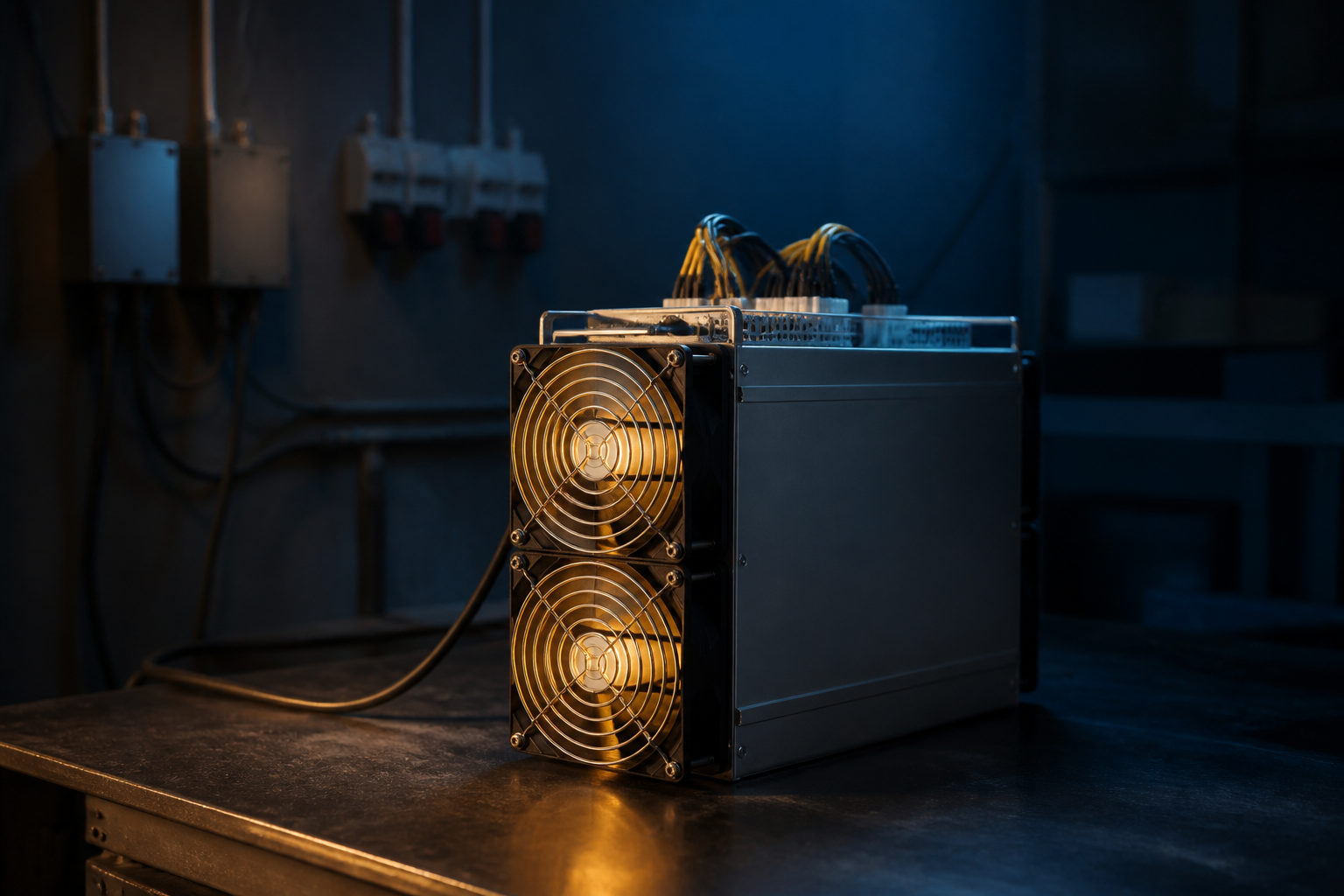
For most people, mining bitcoins does not mean using a normal home PC. Competition is now specialized, so participation usually falls into a few practical models, each with its own trade-offs.
| Method | Who it fits | Main advantage | Main problem |
|---|---|---|---|
| Run your own ASIC miners locally | People with suitable space, power, and technical ability | Direct control over machines and operations | You handle noise, heat, downtime, repairs, and power bills |
| Join a mining pool | Most independent miners | Smoother payouts than solo mining | You must accept pool rules, fees, and payout logic |
| Hosted mining | People who cannot place machines at home or work | The host manages the site and routine operations | You depend heavily on the operator’s honesty and competence |
| Cloud mining contracts | People seeking the lowest setup burden | Looks easy on the surface | Terms are often hard to verify and contract risk is high |
For small participants, mining pools are usually the practical path. Solo mining can, in theory, land a full block reward, but you may run for a long time without finding a block at all. A pool distributes rewards according to contributed work, which makes income less lumpy.
Less lumpy does not mean stable enough to live on. Seeing BTC arrive in a wallet is not the same as proving that net income can support rent, food, equipment replacement, and other daily costs.
The issue is not “Do you mine?” but “Can your operation survive?”
Once you move past the basic mechanism, mining becomes an operating business. It has fixed pressure points, recurring costs, and technical failure modes. That is where the question of making a living is decided.
| Factor | Why it matters | Impact on earning a living |
|---|---|---|
| Power cost | Mining hardware runs continuously | High electricity rates can squeeze or erase your margin |
| Hardware efficiency | Not all machines turn power into hash rate equally well | Older units lose competitiveness faster |
| Heat and noise | ASICs produce both in large amounts | Many home settings are poor long-term environments |
| Maintenance and uptime | Dust, fan issues, network interruptions, and failures reduce output | Every outage means lost participation in the race |
| Pool payout model | Different pools distribute rewards in different ways | Cash-flow timing can feel very different |
| Bitcoin price swings | Revenue is in BTC while living costs are ongoing | Your ability to pay bills can change quickly |
| Halving cycle | Block rewards fall by design | An operation that once worked can become strained later |
A miner is not like a home appliance you plug in once and forget. It runs under sustained load, which puts constant demands on power quality, airflow, cleaning, and network stability. Reboots, thermal stress, or connection drops can make real-world performance much worse than a simple estimate on paper.
There is also the capital side. Money goes out before money comes back in. If your setup needs repairs, replacement parts, or periods of downtime, those interruptions do not pause your living expenses.
Bitcoin’s total supply is capped at 21,000,000 BTC, with issuance expected to continue until around 2140. The smallest unit is 1 satoshi, equal to 0.00000001 BTC. Those facts explain why very small payouts are possible and normal, but they do not answer whether those payouts are enough for a household budget.
So, can you make a living mining bitcoins? In some cases, yes. Usually that means access to favorable power conditions, disciplined operations, careful equipment selection, and enough financial breathing room to handle weak periods. If you are imagining a casual side setup that quickly becomes a dependable paycheck, that picture is often too optimistic.
A better framework for deciding whether mining is viable for you
Start with three questions. Do you have power costs and physical space that make long-term operation realistic? Can you handle noise, heat, firmware setup, troubleshooting, and periodic maintenance without turning every small issue into days of lost uptime? If mining income becomes weaker for a while, can your normal life keep running without stress?
If the answer to the last question is no, caution matters. Mining revenue can be uneven even when the protocol rules are clear and public. Your operation might still produce bitcoin, yet fail the more important test: keeping your personal finances stable month after month.
Treat mining as a business test, not a dream of easy income. Learn how pools calculate rewards, how hosting contracts define downtime, how wallets are secured, and how equipment support works before you assume the operation can replace a salary.
FAQ
Can a regular person still mine bitcoin today?
Yes, but usually through specialized ASIC hardware rather than a standard computer. Most small miners join pools because solo mining can leave them with very long dry spells.
Does joining a pool make mining income stable?
It makes payouts smoother, which is different from making them truly stable. Your net result can still shift because of electricity costs, downtime, hardware efficiency, and bitcoin price moves.
Is home mining realistic?
It can be, but the practical issues are often bigger than beginners expect. Heat, noise, dust, and unreliable internet can turn a simple idea into a hard daily routine.
Why does the halving matter so much?
Because the protocol reduces block rewards on a fixed schedule. After the 2024-04-19 halving, the current reward is 3.125 BTC per block, so miners need stronger cost control than before to keep the same operation attractive.
Are cloud mining deals a good shortcut?
They may look simple, but simplicity on the front end can hide contract risk on the back end. You need to know who operates the machines, how downtime is handled, and how payouts are calculated before trusting the offer.
What should I check first if I want to test mining?
Check your power situation, your location, your tolerance for equipment noise and heat, and your ability to manage operational problems. After that, review pool terms and wallet security so you understand the whole setup, not just the hardware.
If you want a practical next step, make a written checklist before buying anything: power conditions, machine placement, cooling, expected maintenance, pool rules, hosting terms if any, and wallet custody.
Disclaimer: This article is for informational and educational purposes only and is not investment, financial, or legal advice. Crypto assets are highly volatile and you could lose your entire investment. Do your own research and decide carefully.