
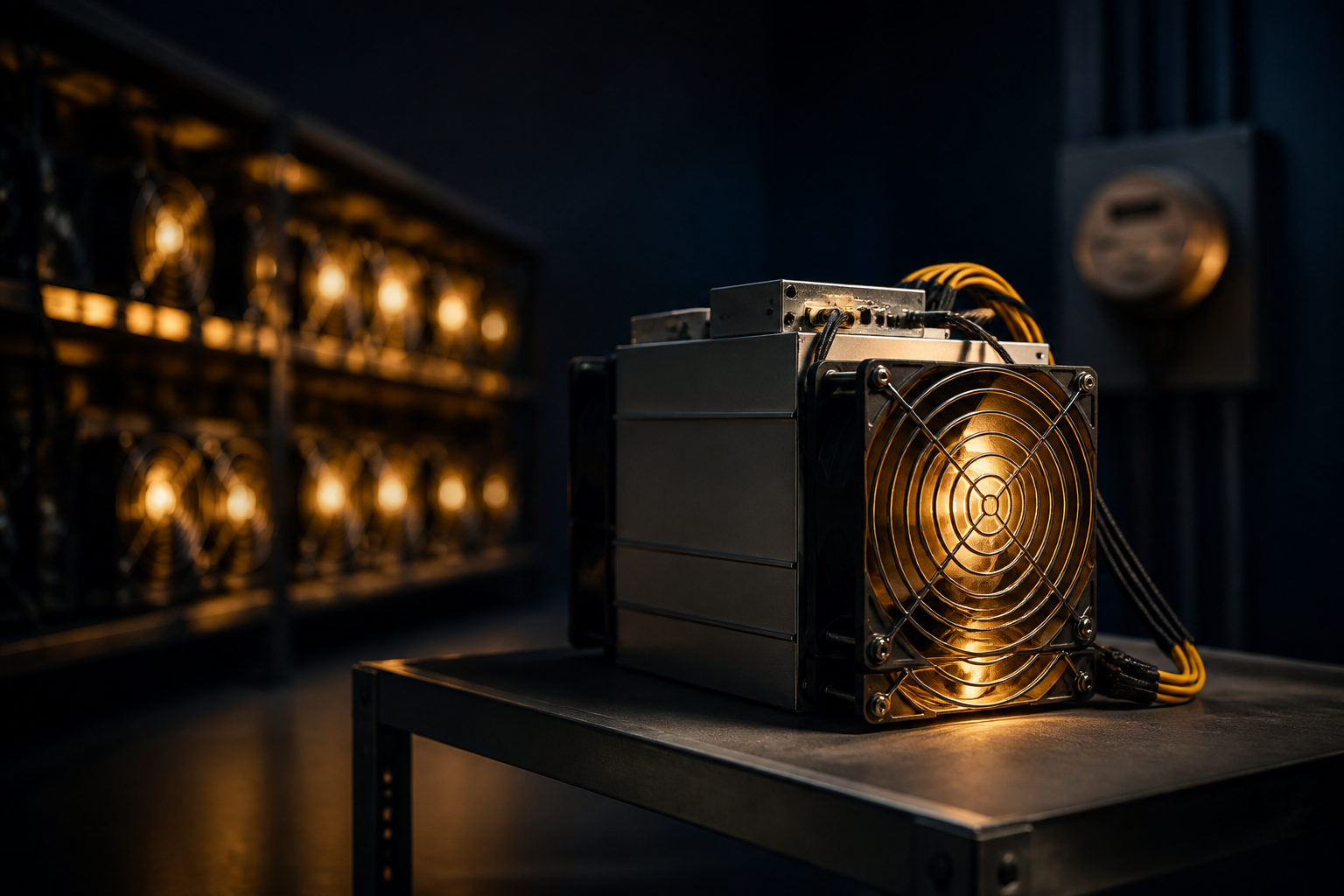
How much can you make per day mining bitcoins has no single daily answer. Your result depends on how you mine, what your electricity costs, how efficient your hardware is, and how mining rewards are shared after fees and downtime are counted.
Think of bitcoin mining as a nonstop bookkeeping race
Bitcoin mining helps the network group transactions into blocks and confirm them under a fixed set of rules. Miners compete to find a valid result first, and the winner of that round can receive the block reward plus transaction fees.
A simple way to picture it is a race where everyone is solving the same challenge at the same time. If other participants use faster machines or cheaper power, your share of the opportunity gets smaller. That is why the question of how much you can make per day mining bitcoins cannot be answered with one number that fits everyone.
Within well-known basics, Bitcoin produces a block about every 10 minutes, and the block subsidy is cut in half about every 4 years, or every 210,000 blocks. That structure matters because mining income changes over time even if your own setup stays the same.
What actually determines daily mining income
Many beginners focus on output alone, as if the only thing that matters is how much bitcoin a machine can produce. In practice, the cost side is just as important. A setup can generate bitcoin and still fail to make economic sense once electricity, wear, and interruptions are included.
| Factor | What it changes | Why it matters |
|---|---|---|
| Hashrate | Your share of total mining competition | More hashrate usually means a larger chance of earning rewards or pool payouts |
| Energy efficiency | Power cost per unit of work | Two machines with similar output can have very different operating costs |
| Electricity price | Daily cash expense | Mining runs for long periods, so power rates have a direct effect on profitability |
| Network difficulty | How hard it is to earn the same share as before | When competition grows, older hardware tends to lose ground faster |
| Pool fees and payout method | Your actual take-home share | Identical hardware can lead to different payout patterns across pools |
| Hardware depreciation | Long-term real cost | A miner is not a one-time purchase if its value and usefulness fall over time |
| Cooling and maintenance | Stability and uptime | Heat, dust, fan issues, and repairs can reduce output and add expense |
People often miss the costs that do not show up in a marketing pitch. A machine may look productive on paper, yet the full picture includes ventilation, noise control, replacement parts, and periods when the unit is offline. Those details can change the answer far more than a headline estimate.
How people usually participate today
For most individuals, mining bitcoin is no longer a matter of running ordinary consumer hardware and waiting for coins to appear. The field is specialized, and serious participation usually involves dedicated ASIC miners, a suitable power setup, and ongoing operational attention.
| Approach | Barrier to entry | Main traits | Best fit |
|---|---|---|---|
| Run your own ASIC miners | High | You handle purchase, power, cooling, noise, setup, and repairs | People with space, technical comfort, and stable operating conditions |
| Join a mining pool | Medium | Your hashrate joins a group, and rewards are shared by pool rules | Miners who want smoother payout timing |
| Use hosted mining | Medium to high | Your hardware runs at a third-party site and you pay related charges | People who cannot host equipment themselves |
Mining pools matter because they reduce payout variance. A solo miner may wait a very long time for a favorable result, while a pool spreads the outcome across many participants. That does not create profit by itself; it only changes how rewards arrive.
Hosted mining can look easier because someone else handles the physical site. Still, it adds another layer of risk. You need to understand fees, operating terms, payout conditions, and what happens if the provider underperforms or shuts down.
Why there is no fixed daily number
The moving parts do not stay still. Bitcoin's market price changes, network difficulty changes, hardware performance can drift, and pool policies can differ from one operator to another. Even the same machine can produce a different economic outcome from one day to the next if uptime or power conditions change.
Another common mistake is treating mined bitcoin and realized profit as the same thing. They are related, but they are not identical. Mined bitcoin is output; profit is what remains after power, maintenance, depreciation, and other operating costs are removed from the picture.
If what you really want to know is the dollar value of your mined coins on a given day, split the question into two parts. First, determine how much bitcoin your setup actually earned under its payout method. Then check a live market data platform for the current bitcoin price. Without that separation, daily income claims can be misleading.
A practical reality check before you start
Before buying hardware, it helps to test whether your conditions make mining viable at all. Many bad decisions happen because people start with a machine and only later discover that the surrounding costs are the real problem.
| Checkpoint | What to verify | Why it matters |
|---|---|---|
| Power setup | Stable supply and power costs you can carry over time | Frequent outages or expensive electricity can wipe out returns |
| Physical environment | Cooling, airflow, noise limits, and safe placement | Poor conditions can reduce performance and shorten equipment life |
| Hardware source | Condition, warranty terms, and repair options | Weak support can turn a small issue into a long shutdown |
| Pool structure | Fees, payout timing, and withdrawal rules | These details affect how much of your output you actually keep |
| Exit plan | What you will do if mining stops making sense | Capital can get stuck in hardware that is hard to resell |
For many people, the right answer is not to mine at all. If you do not have suitable power pricing, enough space, tolerance for noise and heat, or the patience to manage hardware problems, the daily revenue question may distract you from the more important issue: whether your setup has a realistic path to positive cash flow.
FAQ
Can I still mine bitcoin with a home PC?
In theory, a home PC can take part in mining activity. In practice, standard consumer hardware usually cannot compete with dedicated ASIC miners on efficiency or output, so the economics are often poor.
Does joining a mining pool make income stable?
A pool usually makes payouts more regular than solo mining because rewards are shared across many participants. That smooths variance, but it does not guarantee profit if your electricity and hardware costs are too high.
Is hosted mining easier for beginners?
It can be easier on the physical side because you do not manage the machines on site. The tradeoff is that you must evaluate contract terms, operator reliability, fees, and payout rules with extra care.
Should I sell mined bitcoin right away?
That depends on your cash flow needs rather than a universal mining rule. Some miners sell part of their coins to cover operating costs, while others prefer to hold, but both choices require a clear plan.
Can I judge profitability from miner specs alone?
No. Specifications show theoretical capability, yet your real outcome also depends on electricity rates, uptime, cooling, maintenance, pool fees, and how quickly the machine loses competitiveness.
If you want a grounded estimate, start by listing every cost your setup would face, then compare hardware efficiency and pool terms side by side. That process gives a far better answer than chasing a generic promise about how much you can make per day mining bitcoins.
Disclaimer: This article is for informational and educational purposes only and is not investment, financial, or legal advice. Crypto assets are highly volatile and you could lose your entire investment. Do your own research and decide carefully.