
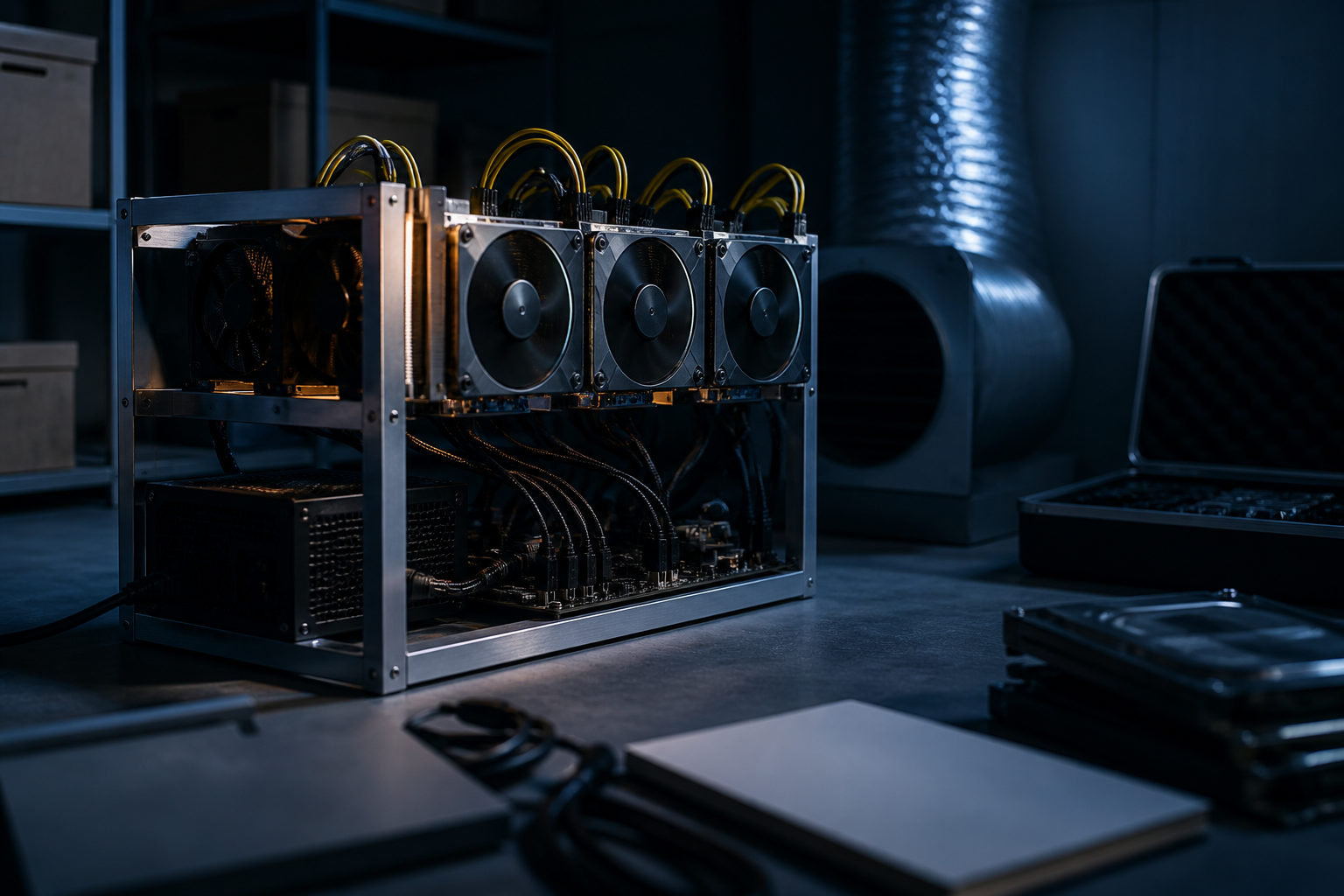
Free power does not automatically make bitcoin mining worth it. The real decision comes down to hardware cost, machine efficiency, cooling, noise, uptime, maintenance effort, and how easy it is to stop without being stuck with bad equipment.
Free electricity solves one cost, not the whole project
If electricity is the biggest operating expense, removing it improves the economics. But bitcoin mining is also an equipment business that has to run for long periods without too many interruptions.
Bitcoin mining uses specialized machines to compete for block rewards on the Bitcoin network. A new block is produced about every 10 minutes, and the reward schedule halves every 210,000 blocks, or roughly every 4 years. Revenue is still exposed to network competition, hardware generation shifts, and the halving cycle even if your power bill is zero.
| Factor | Does free electricity solve it? | Why it still matters |
|---|---|---|
| Power cost | Yes | It lowers ongoing operating expense |
| Hardware purchase cost | No | Upfront capital can still be hard to recover |
| Machine efficiency | No | Older units may stay uncompetitive even with zero power cost |
| Cooling and noise | No | A bad environment can limit runtime or make the setup unusable |
| Downtime and repairs | No | Failures, dust, and unstable connections cut production |
| Site stability | No | If the free power arrangement changes, the plan can collapse fast |
What you should evaluate before thinking about returns
Start with the electricity source itself. Is it stable, long term, and actually available for sustained heavy use? Many “free power” situations are temporary, informal, or tied to a location not designed for high continuous load. If the arrangement can disappear quickly, the savings may never cover transport, setup, configuration, and monitoring.
Then look at the machine. Bitcoin mining usually means ASIC hardware, which is highly specialized and has limited fallback value. If the setup stops making sense, you are not left with a flexible computer; resale value depends on demand, condition, and the state of the market.
Time is another major input. Someone has to manage networking, pool settings, temperature checks, airflow, cleaning, restarts, and basic troubleshooting. For someone who wants a passive way to get bitcoin exposure, the day-to-day burden can outweigh the benefit of free electricity.
| Decision area | Question to ask | If the answer is weak |
|---|---|---|
| Power quality | Can it run reliably for long periods under heavy load? | Frequent reboots, instability, and more wear on equipment |
| Location | Can the space handle heat, airflow, and constant noise? | Reduced runtime, lower performance, or forced shutdowns |
| Machine source | Do you understand the condition and repair history? | Lower purchase price may turn into constant maintenance |
| Support ability | Can you handle basic faults yourself? | More outsourced repair time and longer downtime |
| Exit path | If you stop mining, can you sell the machine easily? | Capital may stay trapped in depreciating hardware |
Where free electricity often fails to save the idea
Small operators often run into physical limits first: too much noise, too much heat, poor ventilation, unstable internet, weak wiring, complaints from other people in the space, or rules that do not allow constant operation. These can decide whether the project survives at all.
Free electricity can keep older machines running longer than they otherwise would, but it does not make them efficient. If network competition rises, an aging machine may still lose ground.
Short-term “free power” offers can be especially deceptive. You still need to move the unit, install it, configure it, and keep watch over it. If the site or power access disappears soon after deployment, the project can fail before the setup work has had time to pay for itself.
| Scenario | Why it looks attractive | What tends to go wrong |
|---|---|---|
| Free power at home | Low direct operating cost | Noise, heat, circuit limits, and quality-of-life issues show up fast |
| Space offered by a friend | No rent and little setup friction | Responsibility becomes unclear when outages or repairs happen |
| Cheap used machine | Lower upfront spending | Efficiency, wear, and fault history may erase the advantage |
| Temporary free access | Feels like low-risk experimentation | Deployment effort may not be recovered before conditions change |
A practical decision framework
Before you estimate revenue, ask whether the power source is stable, whether the site can tolerate the machine, whether cooling has a real plan, whether internet reliability is good enough, whether you can respond to faults quickly, and whether there is a realistic resale market if you quit.
Then compare mining with the alternative of simply holding bitcoin. Mining is operating a small hardware system. Holding bitcoin is taking price exposure to a volatile digital asset.
| Path | Best fit | Main pressure points |
|---|---|---|
| Mine bitcoin yourself | People with a stable site, technical comfort, and time for upkeep | Hardware depreciation, downtime, repairs, cooling, and noise |
| Hold bitcoin directly | People who want exposure without running equipment | Price swings, custody, and trading discipline |
A useful order of operations is simple: validate the site and power first, choose the machine second, and only then decide whether the project deserves more capital.
FAQ
Does free electricity always make bitcoin mining profitable faster?
No. It improves one side of the equation, but payback still depends on hardware cost, machine quality, uptime, and network competition. A zero power bill cannot fix a bad machine or a weak operating setup.
Is home bitcoin mining a good fit if electricity is free?
Only if the space can handle noise, heat, and sustained electrical load. Many home environments can run a machine for a while, but that does not mean they are suitable for continuous operation.
Are used miners a better choice when power is free?
Sometimes, because the upfront cost is lower. The tradeoff is uncertainty: used machines can come with wear, repair history, or poor efficiency that turns a cheap purchase into an ongoing maintenance problem.
What if the free electricity arrangement may not last?
That is a major warning sign. Mining requires setup work before it can run well, so unstable access can leave you with effort and hardware costs that were never given enough time to make sense.
If I only want exposure to bitcoin, should I mine instead of buy?
Not necessarily. Mining is an operational activity with hardware and maintenance demands. If your goal is simply to own bitcoin, direct ownership may be a cleaner path than running specialized equipment.
The most useful next step is to build a checklist for power stability, site tolerance, cooling, noise, maintenance ability, and resale options before you touch any hardware. If one of those pieces is weak over the long run, free electricity alone is not enough to make bitcoin mining worth it.
Disclaimer: This article is for informational and educational purposes only and is not investment, financial, or legal advice. Crypto assets are highly volatile and you could lose your entire investment. Do your own research and decide carefully.