
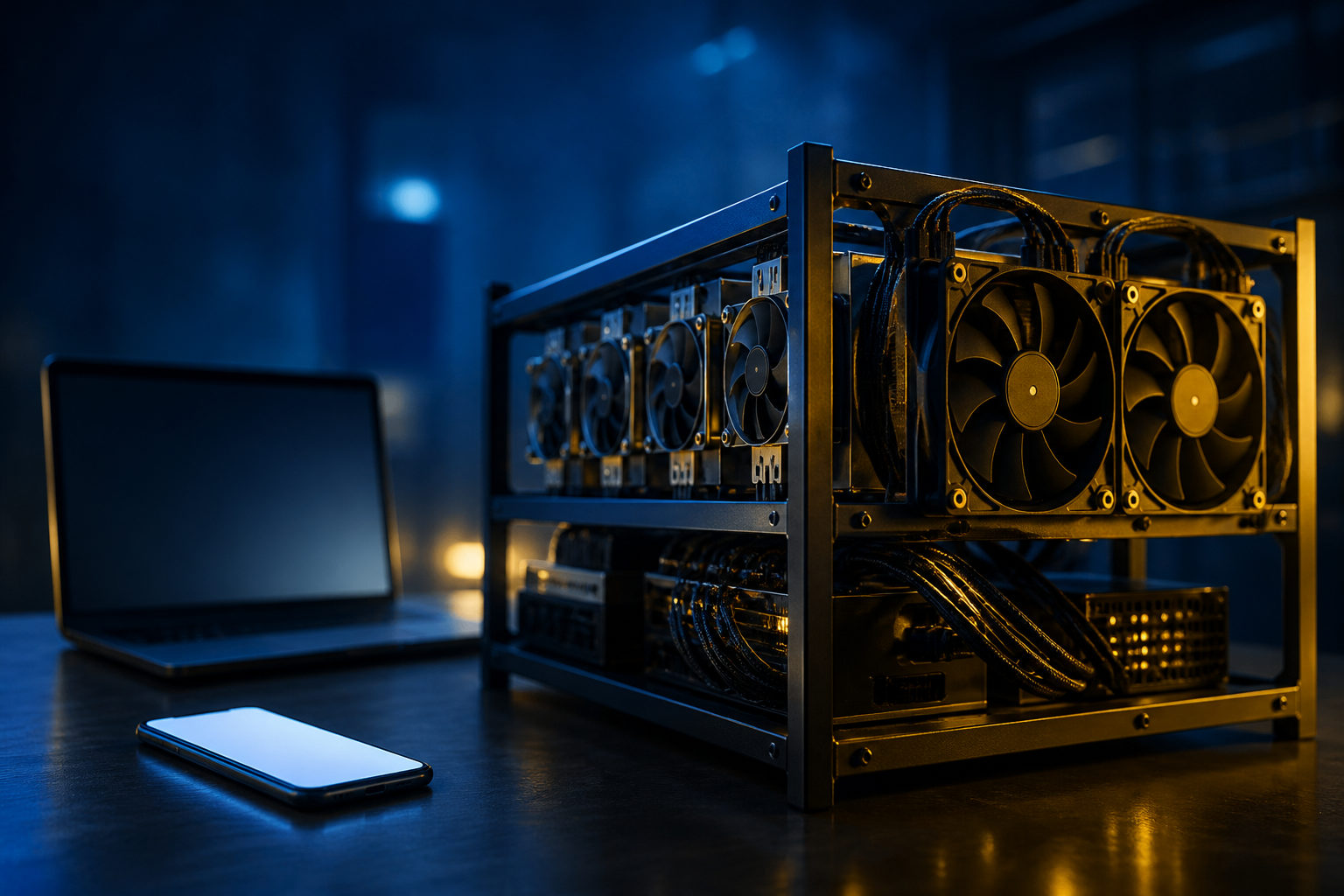
If you want to know how to mine bitcoin free, the short answer is this: truly free Bitcoin mining is rarely real. In most cases, you are looking at a trial, a learning tool, or a marketing offer rather than a sustainable way to mine BTC.
What Bitcoin mining is really doing
Think of Bitcoin as a public ledger that needs constant updates. Miners compete to add the next block of transactions, and the network accepts the valid result that meets its rules.
This process is called mining. Bitcoin launched with its genesis block in January 2009, uses proof of work, and produces a new block about every 10 minutes. The mining difficulty adjusts as network conditions change.
That is why mining is not just “run software and collect coins.” It depends on computing power, electricity, stable internet access, maintenance, and hardware wear over time.
Why “free Bitcoin mining” is usually misunderstood
If free means no money spent and no tradeoff at all, real Bitcoin mining almost never fits that definition. Even if you use a computer you already own, you still consume electricity, device lifespan, and your own time.
Many services that advertise free Bitcoin mining are not giving you direct access to Bitcoin mining on the main network. Some reward you for watching ads, completing tasks, or signing in every day. Others show a balance inside the app that may not be the same as controllable BTC in your own wallet.
You will also see offers such as bonus hashrate or a free mining starter plan. Those can be hard to verify from the outside. A dashboard may show activity, but that does not prove there is real mining equipment, a real mining pool payout flow, or a practical withdrawal process.
Ways people usually try to participate
Use mining software as a learning exercise
If your main goal is education, you can install mining-related software, connect a wallet, and study how shares are submitted to a pool. This is useful if you want to understand the moving parts without expecting meaningful output from a home machine.
For most people, a normal computer is now far better as a study tool than as a serious Bitcoin miner. You can still learn how wallets, pools, and mining clients interact.
Join a mining pool to understand shared mining
Solo mining is like trying to win on your own and waiting a long time for a result. A mining pool combines work from many participants and distributes rewards according to pool rules, which makes the process easier to follow.
That does not make mining free. You still need hardware, electricity, and a clear view of the pool’s payout method, account settings, and operating reliability.
Be careful with cloud mining and “free hashrate” offers
Cloud mining often looks like the closest answer to “how to mine bitcoin for free” because you do not buy a machine yourself. Still, long-term free computing power is rare. Many platforms offer a short trial and then push users toward deposits, upgrades, or referrals.
If you only want to see how the process is presented, that can be informative. Once money enters the picture, the free label stops mattering. Fees, contract terms, withdrawal limits, and platform trust become the real issues.
What to check before you try any low-cost option
- Set up your own wallet first: You should know how to receive BTC and back up access credentials safely.
- Confirm whether the asset is real BTC: If you cannot withdraw to a wallet you control, the balance may only exist inside a platform.
- Look for hidden costs: Electricity, membership plans, maintenance charges, and withdrawal fees can erase the idea of “free.”
- Watch device strain: Continuous mining loads hardware, creates heat, and can affect normal use.
- Protect your account: Use two-factor authentication, avoid unknown downloads, and never hand your private keys to another party.
For beginners, the smarter goal is often not free mining but low-cost learning. Study wallets, mining pools, block confirmation, transaction fees, and the halving cycle before deciding whether deeper participation makes sense.
Bitcoin has a maximum supply of 21 million coins. Its smallest unit is the satoshi, and 1 satoshi equals one hundred millionth of a BTC. The block reward halves about every 210,000 blocks, roughly every 4 years, with halvings already seen in 2012, 2016, 2020, and 2024. Those fixed rules shape how miners think about the long term.
FAQ
Can I mine Bitcoin for free without buying a miner?
You may find trials, bonus hashrate promotions, or task-based rewards. Those can give you exposure to the concept, but they are not the same as running competitive Bitcoin mining on the network over time.
Is mining Bitcoin on a home computer still possible?
It is possible in the technical sense because software can still run and submit work. In practice, a home computer is usually more useful for learning than for serious Bitcoin mining.
Are free Bitcoin mining apps on phones legitimate?
Some apps show simulated earnings, platform points, or activity that does not reflect real mainnet mining. Before using one, check whether it supports withdrawal to your own wallet and whether the rules are easy to verify.
Is cloud mining the easiest route?
It can be easier from a setup standpoint, but ease does not mean clarity. When the equipment and accounting are controlled by a platform, you need to read the fee structure, contract terms, and withdrawal conditions with care.
What should a beginner do first?
Start by creating a wallet you control and learning the basics of mining pools and mining software. If you do not yet understand the difference between wallet-controlled BTC, platform balances, and private key ownership, slow down before spending money or time on mining tools.
If your search starts with how to mine bitcoin free, the practical next move is simple: treat free offers as a way to learn the process, verify whether BTC can be withdrawn to your own wallet, and check every condition before installing software or joining a service.
Disclaimer: This article is for informational and educational purposes only and is not investment, financial, or legal advice. Crypto assets are highly volatile and you could lose your entire investment. Do your own research and decide carefully.