
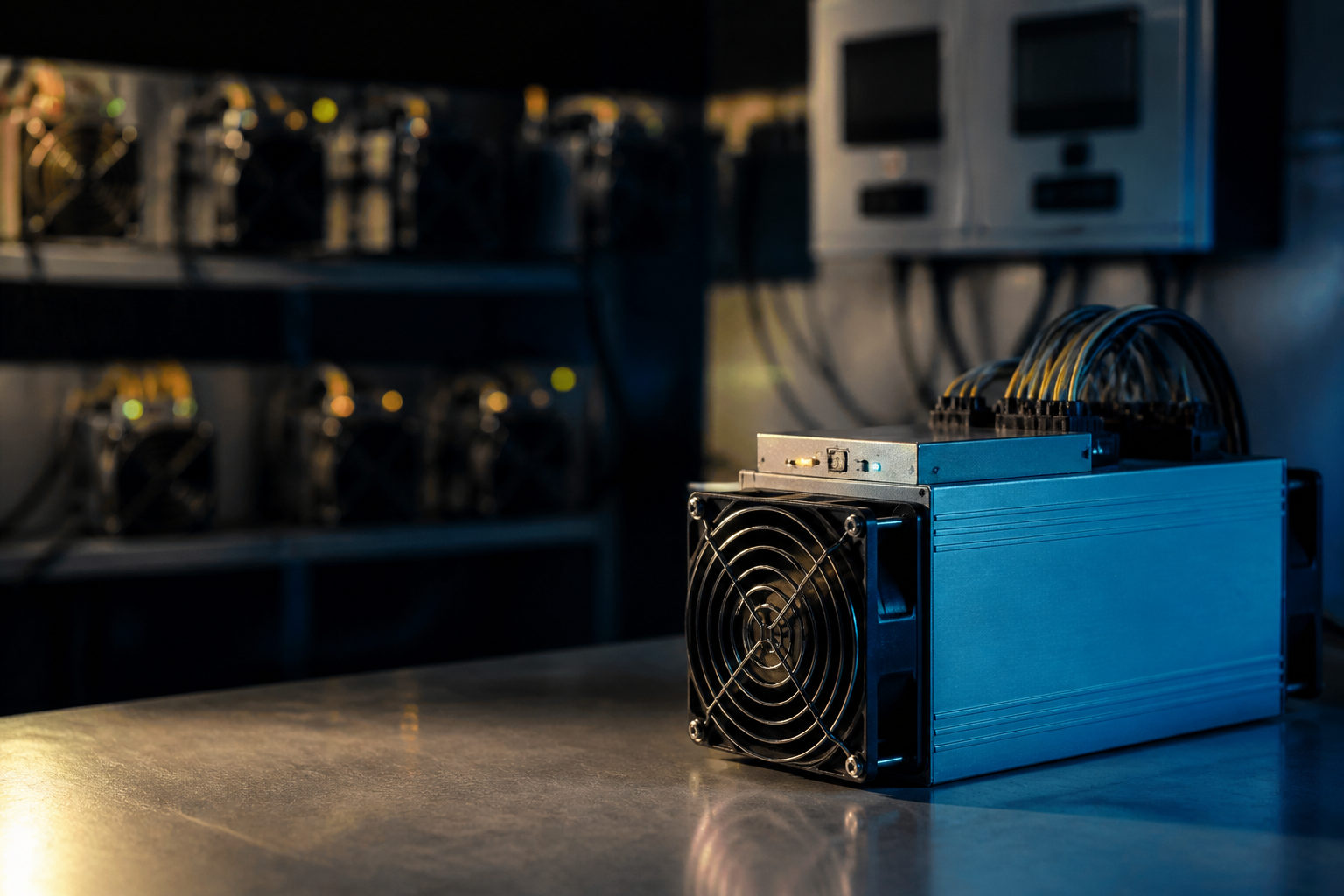
Is mining bitcoin worth it? For most people, the honest answer is: only under specific cost and operating conditions, not just because bitcoin is popular.
Start with the right question
Many beginners frame this as a simple profit question. In practice, bitcoin mining is closer to running a hardware-heavy operation than buying an asset and waiting.
You are dealing with power bills, machine uptime, cooling, noise, repairs, pool selection, and cash flow pressure at the same time. If those pieces are weak, a promising revenue estimate can fall apart quickly.
The main factors that decide whether mining makes sense
Power cost shapes the whole equation
Electricity is usually the most persistent operating expense in bitcoin mining. A setup that looks attractive on paper can become hard to justify if your power rate is high or unstable.
This is why asking whether mining bitcoin is worth it starts with your energy situation, not with market excitement. Cheap power does not guarantee profit, but expensive power can remove your margin fast.
Machine efficiency matters more than headline hype
Two miners can face the same network and get very different outcomes because their machines perform differently. Newer equipment often has better efficiency, while older units can lose competitiveness when conditions tighten.
The purchase price is only one part of the decision. Repair needs, heat output, spare parts, downtime, and resale prospects all affect the real cost of ownership.
Network difficulty keeps moving
Bitcoin produces a new block about every 10 minutes, and more competition tends to make mining harder for each participant. That means a static calculator can give a false sense of certainty.
A model that looks acceptable today may look weak later if network difficulty rises or your machines spend more time offline. Mining is not a fixed return product; it is an ongoing contest shaped by changing inputs.
The halving changes the pressure on miners
Bitcoin halves roughly every 4 years, or every 210,000 blocks. The reward structure changes at those points, which raises the importance of cost control and equipment quality.
This does not mean mining stops working after a halving. It does mean weaker operators can get squeezed faster, especially if they entered with thin margins and no room for delays.
Risks that often hurt returns more than expected
- Equipment depreciation: mining machines can lose competitive value as newer hardware arrives.
- Downtime risk: heat issues, power interruptions, firmware problems, and network outages can reduce output.
- Hosting risk: a third-party site may simplify setup, but billing, maintenance, and exit terms still need close review.
- Regulatory and compliance risk: local rules around power use, business activity, and facility operations differ by region.
- Cash flow strain: revenue can move sharply while many operating costs remain fixed.
Each risk may look manageable by itself. The real problem appears when several hit at once. That is often where a mining plan breaks down.
Who should think harder about mining
Mining may be more realistic for people who already have access to stable low-cost power, understand hardware operations, and can treat the process as a business with ongoing oversight. In that case, the question becomes operational: can you run the setup well enough to stay competitive?
For someone who simply wants exposure to bitcoin, mining may not be the cleanest route. Buying bitcoin directly, using a phased entry plan, or just keeping research focused on the market may fit better for many individuals.
That does not make mining bad. It means the activity and the goal are often mismatched. Owning bitcoin and operating mining hardware are not the same decision.
A simple decision framework before you spend anything
- Check your base conditions: confirm power reliability, site suitability, cooling, and network stability.
- Review total machine cost: include efficiency, maintenance, downtime risk, and likely depreciation.
- Stress-test the plan: ask what happens if output drops, difficulty rises, or payback takes much longer.
- Plan the exit early: know how you would shut down, resell hardware, or leave a hosting arrangement.
- Compare alternatives: if your real goal is bitcoin exposure, decide whether mining is actually the best fit.
This framework is more useful than chasing a yes-or-no answer. The better question is whether your specific setup has enough margin and resilience to survive bad periods.
FAQ
Is bitcoin mining still worth considering in the coming years?
It can be, but not for everyone. The edge usually goes to operators with lower power costs, better machines, and stronger operational discipline.
Can mining bitcoin at home make sense?
Home mining can run into expensive electricity, heat, noise, and power delivery limits. A setup that works technically may still fail economically.
Is buying a miner better than buying bitcoin directly?
They serve different goals. Buying a miner is closer to running an operation, while buying bitcoin directly is closer to holding an asset without hardware responsibility.
Does joining a mining pool make the risk much lower?
A mining pool can smooth reward distribution, but it does not remove power costs, downtime, or machine aging. It changes how rewards arrive, not the basic economics.
How should I judge whether bitcoin mining is worth it for me?
Look at your power terms, machine efficiency, hosting or site conditions, and your ability to handle weak periods without stress. If those pieces are unclear, the answer is usually not clear enough to justify spending yet.
Before making any move, write out your power arrangement, hardware plan, cooling setup, hosting terms if any, and your exit options. If that list is incomplete, you probably do not have enough to decide whether mining bitcoin is worth it for your situation.
Disclaimer: This article is for informational and educational purposes only and is not investment, financial, or legal advice. Crypto assets are highly volatile and you could lose your entire investment. Do your own research and decide carefully.