
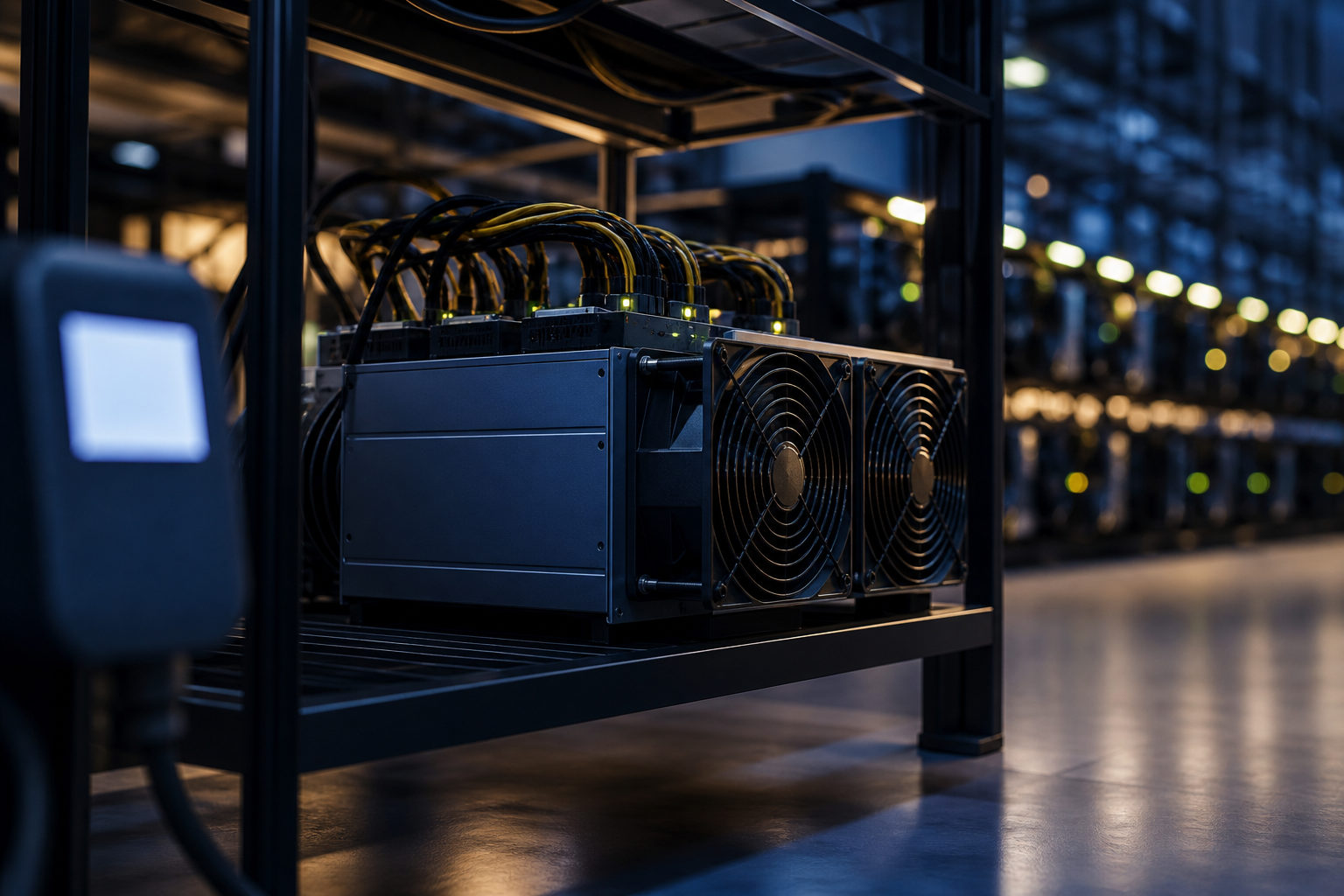
Are people still mining bitcoin? Yes. Bitcoin still depends on mining to add new blocks and confirm transactions, but the way people participate today is very different from the early years.
Why bitcoin mining still exists
A simple way to picture mining is to see it as a nonstop bookkeeping race. Many machines across the network try to solve a proof-of-work puzzle, and the winner earns the right to package a batch of transactions into a new block. The rest of the network checks that block before accepting it.
This is not a side activity. It is part of how Bitcoin stays synchronized and resistant to tampering. Since the genesis block on 2009-01-03, mining has been built into the system’s operation.
The protocol aims for a block every 10 minutes or so. That means mining is a probability game rather than a fixed-output process. Better hardware, stable uptime, and a larger share of total hash power improve your odds, but they do not create a guaranteed result on any given day.
Yes, people still mine bitcoin, but the economics changed
The short answer to the keyword is still yes, people are mining bitcoin right now. The part that often gets missed is that mining has become much more specialized. In Bitcoin’s early period, participation was less competitive. Over time, dedicated mining hardware took over, and mining turned into a business shaped by power costs, cooling, maintenance, and operational discipline.
Bitcoin’s issuance schedule is fixed in code. The block subsidy is cut in half every 210,000 blocks, which is roughly every 4 years. The halvings already happened on 2012-11-28, 2016-07-09, 2020-05-11, and 2024-04-19. After the most recent one, the current block reward is 3.125 BTC, and that stays in place until the next halving, expected around 2028.
Those dates matter because they shape the mining business directly. Lower block rewards mean miners have to pay even closer attention to machine efficiency and electricity costs. At the present reward level and an average pace of about 144 blocks per day, the network adds about 450 BTC per day in total. That figure describes the whole network, not what any individual miner or company will produce.
| Category | Earlier period | Current reality |
|---|---|---|
| Entry barrier | Relatively lower | Much higher |
| Typical equipment | General-purpose computing gear could participate | Dedicated ASIC miners dominate |
| Common approach | Solo participation was more plausible | Mining pools are the norm |
| Main cost focus | Experimenting with hardware | Electricity, cooling, uptime, and repairs |
| Output profile | More direct exposure to luck | Shaped by network difficulty, pool rules, and efficiency |
How people take part in bitcoin mining today
Most participants do not mine solo. They join mining pools. A pool combines hash power from many miners and distributes rewards according to its rules, so contributors get smaller but more regular payouts than they would from waiting to find a block alone.
That shift matters because solo mining can involve very long stretches with no block at all. For a large operator with substantial hash power, that variance may be manageable. For a small operator, it can be hard to plan around. Pools smooth the experience, even though the exact payout still changes with your effective hash rate, uptime, pool fees, and the network environment.
| Method | Who it fits | Main appeal | Main challenge |
|---|---|---|---|
| Solo mining | Operators with strong infrastructure and risk tolerance | Full exposure to a found block | Very uneven results and low odds for small setups |
| Pool mining | Most active miners | Smoother reward distribution | Need to review pool fees, payout rules, and trust factors |
| Hosted mining | People who do not want to run machines on-site | Professional facility management | Dependence on the host’s terms and operating quality |
In practical terms, joining the mining side of Bitcoin now usually means getting specialized hardware, securing a place to run it, connecting to a mining pool, and monitoring performance through software. The technical setup is only the first layer. Long-term results depend on whether the machine stays online, whether heat is managed well, and whether downtime is kept under control.
That is why the question is not only whether people are still mining bitcoin. The more useful question is how they are doing it. Today’s miners are usually running a hardware operation, not just clicking a button on a home computer.
What individuals should think about before getting involved
Individuals can still mine bitcoin, but the decision should be treated as an operating-cost question first. Electricity is often the center of that calculation. After that come equipment quality, noise, airflow, heat management, maintenance demands, and the reliability of your internet connection.
Home setups are where many first-time miners get a reality check. Specialized miners are loud, they generate a lot of heat, and they need stable power. If the environment is poor, the machine may throttle, disconnect, or stop entirely. A setup that looks fine on paper may perform badly once it runs day and night.
There is also the issue of hardware aging. Mining machines are not permanent stores of value. They wear down, efficiency matters, and support conditions vary by seller. Pool account security matters too, because payout settings and login protection are part of running the operation responsibly.
| Decision factor | Why it matters | What to verify |
|---|---|---|
| Electricity | Direct effect on recurring costs | Whether power is stable and affordable enough for continuous use |
| Hardware | Efficiency and reliability shape competitiveness | Source, condition, and after-sales support |
| Cooling and noise | Affects whether the machine can run steadily | Ventilation, heat removal, and tolerance for noise |
| Internet and uptime | Offline machines do not contribute effective work | Connection stability and your ability to respond to outages |
| Pool terms | Changes the payout experience | Fee structure, reward method, and withdrawal rules |
If your only goal is to gain exposure to BTC, mining is not the only route. Mining makes the most sense for people who are prepared to deal with machines, facilities, and ongoing operations. For everyone else, the fact that people still mine bitcoin does not automatically mean mining is the right fit.
FAQ
Can a regular home computer still mine bitcoin?
In a technical sense, you can still run mining software, but that does not mean it is competitive. Modern bitcoin mining is dominated by specialized ASIC hardware, and most serious participants connect that hardware to a mining pool.
Does joining a mining pool mean I get the same amount of bitcoin every day?
No. Pool rewards change with your effective hash rate, uptime, pool rules, and network conditions. The network may add about 450 BTC per day in total at the current reward level, but that is not a fixed personal output.
Why do people keep mining after a halving?
Because the halving reduces the block subsidy; it does not stop the network from needing miners. Since 2024-04-19, the block reward has been 3.125 BTC, so miners who can manage their costs and keep efficient operations running may choose to continue.
What should a beginner check before buying mining equipment?
Start with power, cooling, noise tolerance, and uptime expectations. If those basics do not work in your setting, the machine specs alone will not save the project.
Can mined bitcoin be withdrawn right away?
That depends on the pool or hosting provider you use. Before starting, read the payout schedule, minimum withdrawal rules, account security options, and the address settings that control where rewards are sent.
If you want to evaluate mining seriously, write down your power situation, machine source, hosting or location plan, and pool terms before spending anything. If one of those points is still vague, you are still in the research stage.
Disclaimer: This article is for informational and educational purposes only and is not investment, financial, or legal advice. Crypto assets are highly volatile and you could lose your entire investment. Do your own research and decide carefully.