
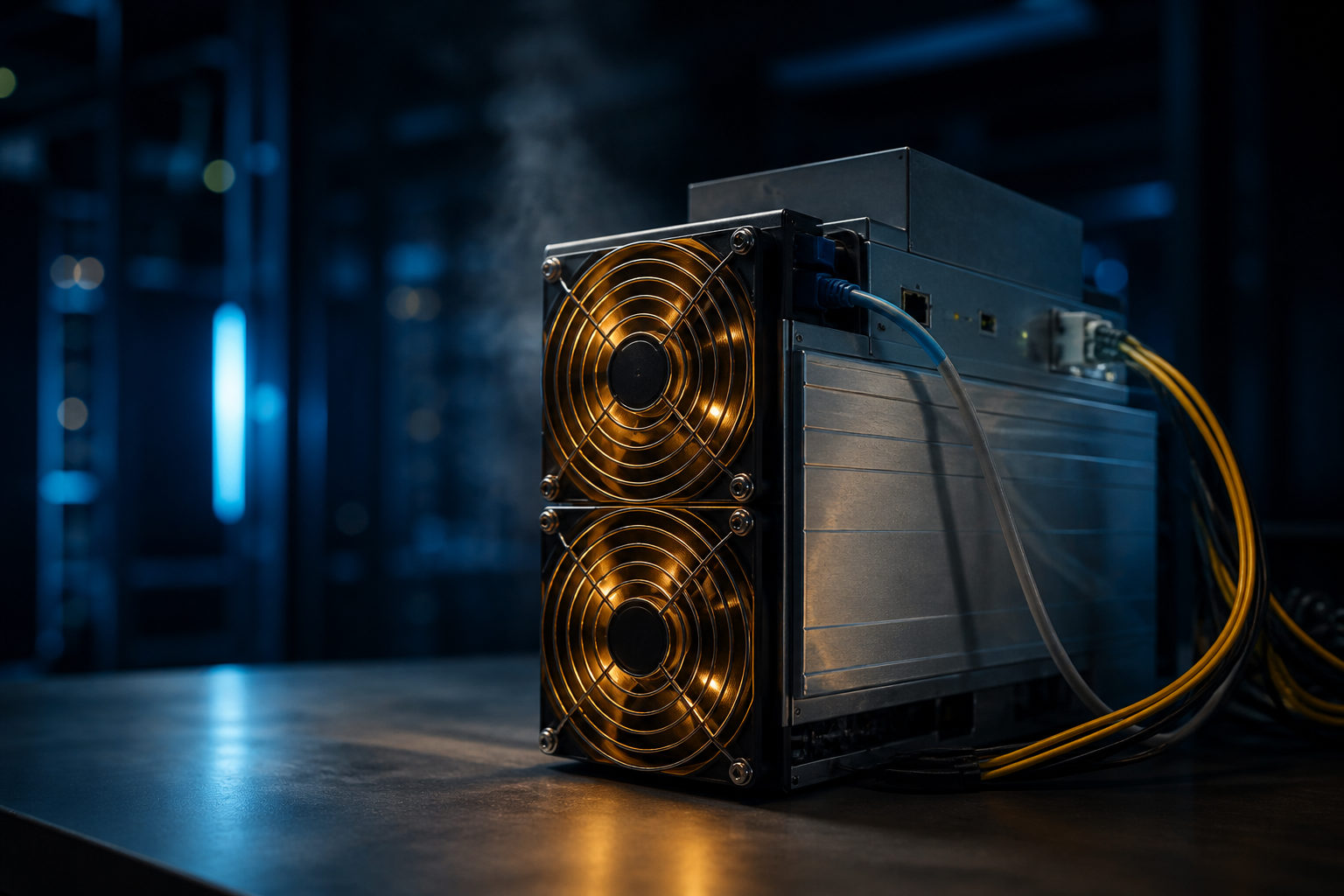
How to mine bitcoin with ASIC comes down to this: run a purpose-built SHA-256 machine, connect it to a mining pool, and keep it operating in an environment that can handle the power draw, heat, and noise.
What an ASIC miner is actually doing
Think of Bitcoin mining as a nonstop bookkeeping race. Machines across the network keep trying different hash outputs under the same rules. When one finds a valid result, that side gets the chance to propose the next block. The machine is not “earning interest” on coins. It is doing repeated proof-of-work calculations.
ASIC stands for application-specific integrated circuit. In plain language, it is hardware built for a narrow job. For Bitcoin, that job is SHA-256 computation. A normal computer can perform many tasks; an ASIC miner is built to do this one thing much better, which is why modern Bitcoin mining revolves around this type of equipment.
Bitcoin produces a new block about every 10 minutes. Once a block is accepted by the network, later blocks stack on top of it. That chain structure is what makes old records harder to rewrite as time passes.
The three moving parts: miner, pool, wallet
Beginners often mix everything together and end up confused about where the work happens and where the bitcoin goes. Split it into three parts. The ASIC miner performs the hashing. The mining pool combines the work of many miners. The wallet receives the bitcoin allocated to you under the pool’s payout rules.
Solo mining exists. For most individuals, though, it is a very uneven experience because you are waiting on your own machine to hit a valid block result. A pool changes the shape of that experience. You contribute hashpower, the pool tracks that contribution, and the pool distributes outcomes according to its rules. So the practical questions become different: how the pool scores work, what fees it charges, how payouts are handled, and what the withdrawal conditions look like.
Your wallet matters just as much as the machine. Pools usually ask for a payout address. That address should come from a wallet you control. If you plan to hold bitcoin for a long time, key management matters more than a flashy interface. If you expect frequent transfers, then backup and day-to-day usability may carry more weight.
| Component | Main job | What to check |
|---|---|---|
| ASIC miner | Runs continuous hash calculations | Power use, noise, cooling, firmware compatibility |
| Power and network | Keeps the miner online | Electrical capacity, line safety, connection stability |
| Mining pool | Combines hashpower and distributes results | Fees, payout method, minimum withdrawal rules |
| Wallet | Receives mined bitcoin | Control of keys, backup process, ease of use |
What setup looks like in real life
Before you touch any settings page, look at the room. ASIC miners run hot. They are loud. Very loud. A spare bedroom, a small apartment corner, or a badly ventilated storage area can turn into a problem fast, even if the machine itself is working as designed.
Power comes next. The miner needs a stable electrical supply, and the wiring has to match the load you plan to run. Casual plug arrangements, overloaded outlets, and messy cable choices are not small details. They sit at the center of whether the setup is workable at all.
Once the physical side is ready, the usual process is straightforward: connect power and network, open the miner’s management interface, enter the pool address along with the worker name and password, save the settings, and let the machine start submitting work. Brand-specific screens differ, but the logic stays the same. You are telling the miner where to send hashpower and under which identity.
Then you watch. That part gets skipped in too many beginner guides. Check the status page for stable hash output, normal temperatures, fan behavior, and disconnects. A powered-on miner can still be underperforming, dropping shares, or reporting hardware issues. Lights on the unit do not tell the full story.
The pool dashboard is the other half of the picture. The local interface shows what the machine thinks it is doing. The pool panel shows what actually arrives. If those two views stay out of line for long, the issue is often a bad setting, unstable networking, or a hardware fault that needs attention.
Why many people stop at the cost reality
Most searches for “how to mine bitcoin with ASIC” are really asking a harder question: is this practical for me? The answer usually has less to do with clicking through a setup page and more to do with the daily burden of running hardware. Electricity is the first filter because the machine keeps drawing power. Heat control matters. Noise matters. Downtime matters too, because a miner that is off earns nothing while still tying up your equipment budget.
Bitcoin halves about every 4 years, once every 210,000 blocks. Known halving years are 2012, 2016, 2020, and 2024. That changes the block reward structure, so miners cannot judge a machine only by how it feels on day one. Competition changes over time, and older equipment can lose ground faster than new operators expect.
Mining difficulty also adjusts with network conditions. For a home miner, that means your machine may stay exactly the same while the outside competitive environment shifts around it. You have to keep reassessing whether the setup still makes sense, based on operating conditions, machine health, and the pool results you are actually seeing.
Maintenance is not glamorous, but it is part of the job. Dust blocks airflow. Fans wear out. Heat builds up. Internet drops happen. Each one can cut into performance or stability. Treating ASIC mining like a passive product you plug in and forget usually ends badly.
Common mistakes before the first block share is sent
One common mistake is buying a miner first and asking questions later. That reverses the order that makes sense. Start with your electrical limits, your ventilation situation, your tolerance for noise, the pool rules, and your wallet plan. If those pieces do not fit, the machine itself will not save the setup.
Used ASICs need extra care. A lower purchase price can look attractive, but the machine’s service history, fan condition, chip health, and past repairs all shape what happens after delivery. If the seller cannot explain the condition clearly, you are taking on more than pricing risk. You are taking on uncertainty in uptime and maintenance.
Pool terms also deserve closer reading than many newcomers give them. Fee schedules, scoring systems, payout timing, and minimum withdrawal thresholds can vary. Read those rules before you point your miner at a pool. It is much easier to compare terms in advance than to untangle disappointment after the machine is already running.
FAQ
Can an individual still mine Bitcoin with an ASIC at home?
Yes, if the location can support the power load, cooling needs, and noise. The bigger question is whether your setup can stay workable over time, not whether the miner can boot up once.
Can I use a regular PC instead of an ASIC miner?
For Bitcoin mining, that is usually not realistic. The network is highly specialized, and general-purpose machines do not compete well with dedicated SHA-256 hardware.
Do I still need a wallet if I join a mining pool?
Yes. The pool handles distribution under its rules, while the wallet is where your bitcoin is received and controlled. If you do not control the receiving wallet, you also lose control over storage choices.
Is it enough to leave the ASIC running all the time?
No. You still need to monitor temperatures, hash stability, disconnects, and what the pool is actually receiving. A machine that stays powered can still be failing in quieter ways.
What should a beginner check first before starting?
Start with electricity, ventilation, and noise limits. After that, review pool terms and make sure your wallet backup process is settled before the miner goes online.
If you plan to try it, make a simple checklist first: electrical capacity, airflow, pool rules, payout address, and machine condition. That one habit prevents a surprising number of avoidable mistakes.
Disclaimer: This article is for informational and educational purposes only and is not investment, financial, or legal advice. Crypto assets are highly volatile and you could lose your entire investment. Do your own research and decide carefully.