
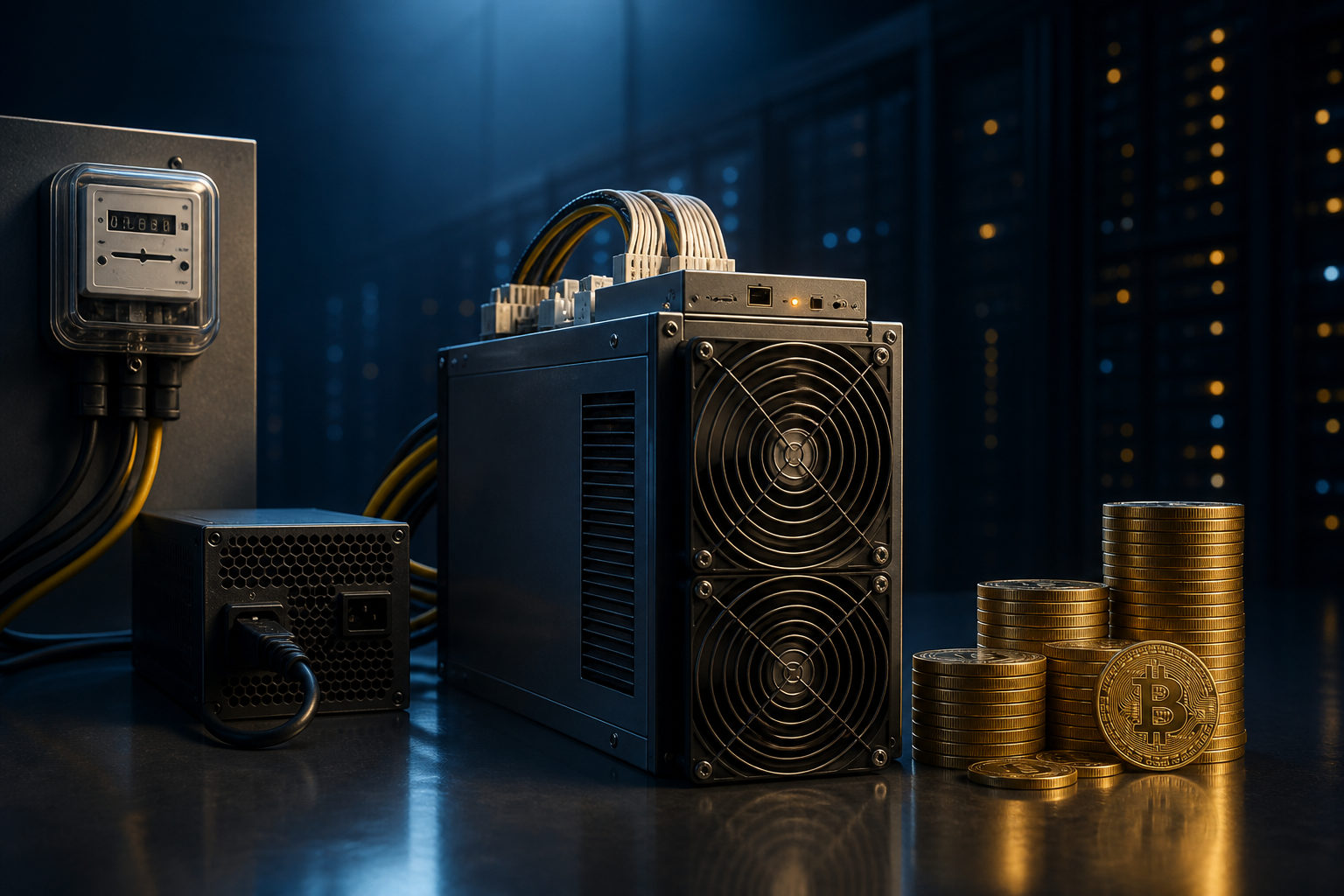
Is Bitcoin mining profitable? Sometimes yes, but only for operators with the right power costs, efficient machines, and solid uptime. For most people, the real question is not profit in theory but whether their setup can compete in practice.
Think of mining as a race to write the next page
Bitcoin mining is often easier to understand if you picture it as a bookkeeping contest. The network needs participants to verify transactions and package them into new blocks, and miners use specialized hardware to compete for that role.
When a miner successfully produces a valid block, that miner can receive the block reward plus transaction fees. This system has been running since the genesis block in January 2009, and it exists to keep Bitcoin operating without a central controller. On average, a new block is produced about every 10 minutes, so mining is less about guessing right once and more about running efficient hardware over time.
Why profit depends on more than the Bitcoin price
People asking whether mining Bitcoin is profitable often focus on price first. Price matters, of course, but mining is really a business built on electricity, hardware, cooling, maintenance, and operational discipline.
Your power bill can decide everything. So can machine efficiency, downtime, repair delays, hosting fees, and changes in network difficulty. Bitcoin also goes through a halving about every 4 years, or every 210,000 blocks. The halving years so far have been 2012, 2016, 2020, and 2024, which means the reward structure changes over time even if your machine does not.
That is why a simple yes-or-no answer can mislead people. One operator may have access to cheap power and strong infrastructure, while another may be trying to run loud, hot machines in a poor environment with expensive electricity.
Main ways people take part in mining
Running your own machines
This is the most direct route. You buy ASIC hardware, connect it to the Bitcoin network through a mining pool or a solo setup, and take responsibility for power, ventilation, noise, maintenance, and repairs.
The benefit is control. The downside is that every operating problem becomes your problem, from heat management to failed components.
Joining a mining pool
Most miners do not work alone because solo mining can be extremely uneven. A mining pool combines the work of many participants and distributes rewards according to its payout rules, which can make income less erratic.
That does not mean a pool creates profit out of thin air. Fees, payout methods, server reliability, and pool policies all affect the final result.
Using hosted mining or cloud mining offers
These options are marketed as simpler because someone else handles the machines and the facility. That convenience comes with a tradeoff: you rely much more on the provider's contract terms, reporting, and operating honesty.
For many beginners, this is where confusion starts. Not every product sold as mining gives you the same level of control, and some arrangements shift most of the risk to the customer while keeping the equipment decisions in someone else's hands.
What decides whether mining can work for you
- Electricity cost: usually the biggest long-term factor.
- Hardware efficiency: better machines can do more work for the same energy use.
- Uptime: every outage, repair, or overheating event cuts into results.
- Operating environment: ventilation, dust control, and stable power all matter.
- Fee structure: pool fees, hosting charges, maintenance terms, and withdrawal rules can change the economics.
- Halving pressure: block rewards drop on schedule, so weak setups can become uncompetitive faster.
Bitcoin has a fixed supply cap of 21 million coins, which means newly issued coins are limited by design. Mining is not a simple machine purchase that automatically turns into profit; it is an efficiency contest inside a network that keeps adjusting.
If you are asking the 2026 version of this question, the best approach is still the same. Do not start with a forecast. Start with your cost structure, your operating skill, and your tolerance for hardware risk.
FAQ
Can I mine Bitcoin profitably at home?
Home mining is difficult for many people because of noise, heat, ventilation, and electricity costs. Even if the machine runs, keeping it stable over time can be harder than expected.
What should I check first before buying mining hardware?
Look at electricity cost, hardware efficiency, and whether you have a suitable place to run the machine. After that, review maintenance needs, downtime risk, and the payout rules of any pool or hosting provider.
Does joining a mining pool make Bitcoin mining more profitable?
A pool usually makes payouts smoother, not magically larger. It reduces variance, but fees and pool rules still affect what you actually receive.
Is cloud mining a good way to start?
It can look easier because you do not manage the hardware yourself. The catch is that you depend heavily on the provider's terms, transparency, and reporting, so the risk can be harder to judge.
How does the halving affect mining economics?
Each halving reduces the block reward on a set schedule. When rewards fall, operators with high costs or inefficient hardware usually feel pressure first.
Before you spend anything, list your power cost, hardware plan, hosting or repair needs, and downtime risk. That checklist will tell you more than any blanket claim about whether Bitcoin mining is profitable.
Disclaimer: This article is for informational and educational purposes only and is not investment, financial, or legal advice. Crypto assets are highly volatile and you could lose your entire investment. Do your own research and decide carefully.