
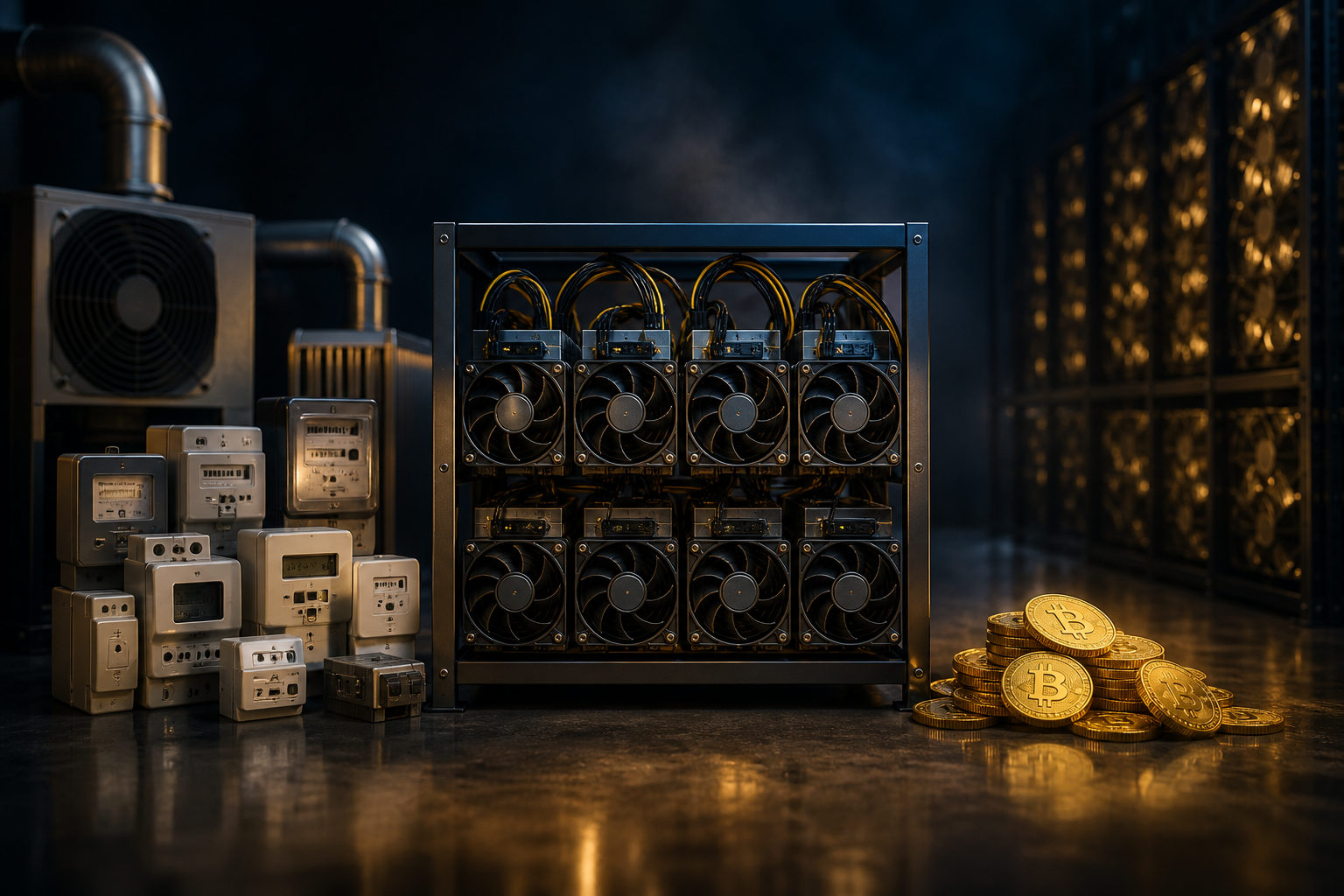
Does mining bitcoins make money? Yes, it can, but only if your hardware, power cost, cooling setup, and day-to-day operation leave room after expenses.
Why bitcoin mining can produce income
A simple way to picture mining is to treat the Bitcoin network like a public ledger that needs constant bookkeeping. Miners compete to add the next block, and the winner can receive block rewards plus transaction fees. That is the basic source of mining revenue.
This is not a race of clicking faster. It is a competition in computing power, machine efficiency, and uptime. Bitcoin produces a new block about every 10 minutes, and the network adjusts mining difficulty so block production stays fairly steady. When more participants join, competition usually gets tougher, which can reduce the share any one miner can expect.
So the real issue is not whether bitcoin mining can pay. It is whether your setup can still keep a margin after all the costs are counted.
What decides whether mining is profitable
Hardware quality matters more than many beginners expect
For Bitcoin, mining today usually means specialized machines, not a standard home computer. A regular desktop may run, but it usually cannot compete well with purpose-built mining hardware on speed and power efficiency.
There is also a tradeoff inside the mining hardware market itself. Older machines may cost less to buy, yet their energy use can be hard to justify. Newer models may perform better, though they require more capital up front. In practice, you are buying future competitiveness, not just a box that turns on.
Electricity often makes or breaks the plan
Many newcomers focus on rewards first and power bills later. That order causes problems. Mining is a continuous power-intensive activity, so an unfavorable electricity rate can eat through potential income long before a miner sees any net gain.
Power is only part of the operating picture. Cooling, airflow, noise control, maintenance, and downtime all affect the result. In a hot environment, weak cooling can lower performance, raise failure risk, and shorten equipment life. A setup that looks attractive on paper can fail once these details become real.
Difficulty and market price move together in practice
People often ask whether a rising bitcoin price means mining will be profitable. Not by itself. If network competition rises at the same time, a miner may work harder for a smaller share of rewards.
The reverse is also true. Even if difficulty eases for some reason, a weaker market price can still pressure margins. Mining is a moving business where revenue and costs both change, so a single headline never tells the whole story.
Common ways individuals take part
Running your own machines
This is the most direct path. You buy the hardware, set up the location, manage the internet connection, handle power delivery, and deal with maintenance. The benefit is control. The downside is that you carry nearly all the operational burden.
If your goal is to understand the mechanics of mining, this route teaches the most. If your goal is profit, you need to count repair work, machine aging, noise complaints, and lost time during outages as part of the decision.
Joining a mining pool
A mining pool combines the computing power of many participants and shares rewards according to its rules. For individuals, this often means a smoother income pattern than solo mining, where long stretches can pass without finding a block.
Still, a pool does not remove risk. Fee structures, payout methods, account controls, server reliability, and withdrawal terms vary from one pool to another. A miner who looks only at marketing language can miss the terms that shape actual results.
Using hosted or managed arrangements
Some people do not want machines running at home because of heat, noise, and constant upkeep. In that case, they may place equipment in a professional facility or use a managed service. This can reduce hands-on work, but it also means depending on a third party.
That dependence has to be examined carefully. Service terms, maintenance responsibility, outage handling, and exit options all matter. Convenience changes the form of risk; it does not erase it.
Why people often overestimate mining income
The first mistake is treating block rewards like fixed personal income. They are not. Your share depends on competition, your own hash power, your machine uptime, and pool rules if you use one.
The second mistake is ignoring halvings. Bitcoin halves the new block subsidy every 210,000 blocks, with past halving years in 2012, 2016, 2020, and 2024. After a halving, newly issued rewards drop, so miners face more pressure unless other conditions improve.
The third mistake is thinking mining works like passive income once the machines are installed. In reality, hardware ages, operating conditions change, difficulty adjusts, and cooling or repair issues keep coming back. Mining behaves more like a small industrial operation than a simple software task.
FAQ
Can you still make money mining bitcoin today?
You can, but the bar is much higher than many people expect. Before spending anything, look at electricity cost, machine efficiency, cooling, and your ability to keep the setup running without frequent interruptions.
A lot of losses come from weak preparation, not from a misunderstanding of Bitcoin itself. The details around operation matter as much as the mining idea.
Can I make money mining bitcoin with a home computer?
For learning purposes, a home computer can help you understand the concept. For profit, it is usually not a practical tool because specialized mining hardware is built for this competition.
Regular computers also face heat, wear, and power-use issues during long sessions. That makes them a poor fit for anyone focused on margin.
Does joining a pool mean mining becomes safe profit?
No. A pool can smooth payouts, but it cannot remove electricity expense, hardware wear, downtime, or market pressure. It only changes how rewards are shared and how often you see them.
Pool terms also vary a lot. Fees, payout formulas, and account requirements can change what you actually receive.
Does a halving always make mining less profitable?
A halving cuts new block rewards, so it can tighten conditions for miners right away. Even so, the final outcome depends on several factors at once, including machine efficiency, mining difficulty, and market price.
For smaller operators, a halving usually raises the value of careful cost control. Thin margins become even more sensitive after rewards shrink.
What should I check first before deciding if mining can pay?
Start with electricity. Then check hardware efficiency, cooling needs, maintenance demands, and likely downtime. Once those costs are clear, you can make a more grounded judgment about possible revenue.
If the setup cannot run reliably, the reward side of the equation matters much less. Stable operation is the base layer of any mining plan.
Build a cost list before you buy anything
If you are serious about mining, write down every major item first: hardware purchase, electricity terms, cooling plan, noise impact, pool rules, maintenance responsibility, and how you would exit if the setup stops making sense. That step is often more useful than reading one more sales page.
If your main goal is simply to learn Bitcoin, starting with wallets, transactions, and block confirmation may be a better first move than buying mining equipment right away. Whether mining bitcoins makes money depends less on the idea of rewards and more on control over costs.
Disclaimer: This article is for informational and educational purposes only and is not investment, financial, or legal advice. Crypto assets are highly volatile and you could lose your entire investment. Do your own research and decide carefully.