
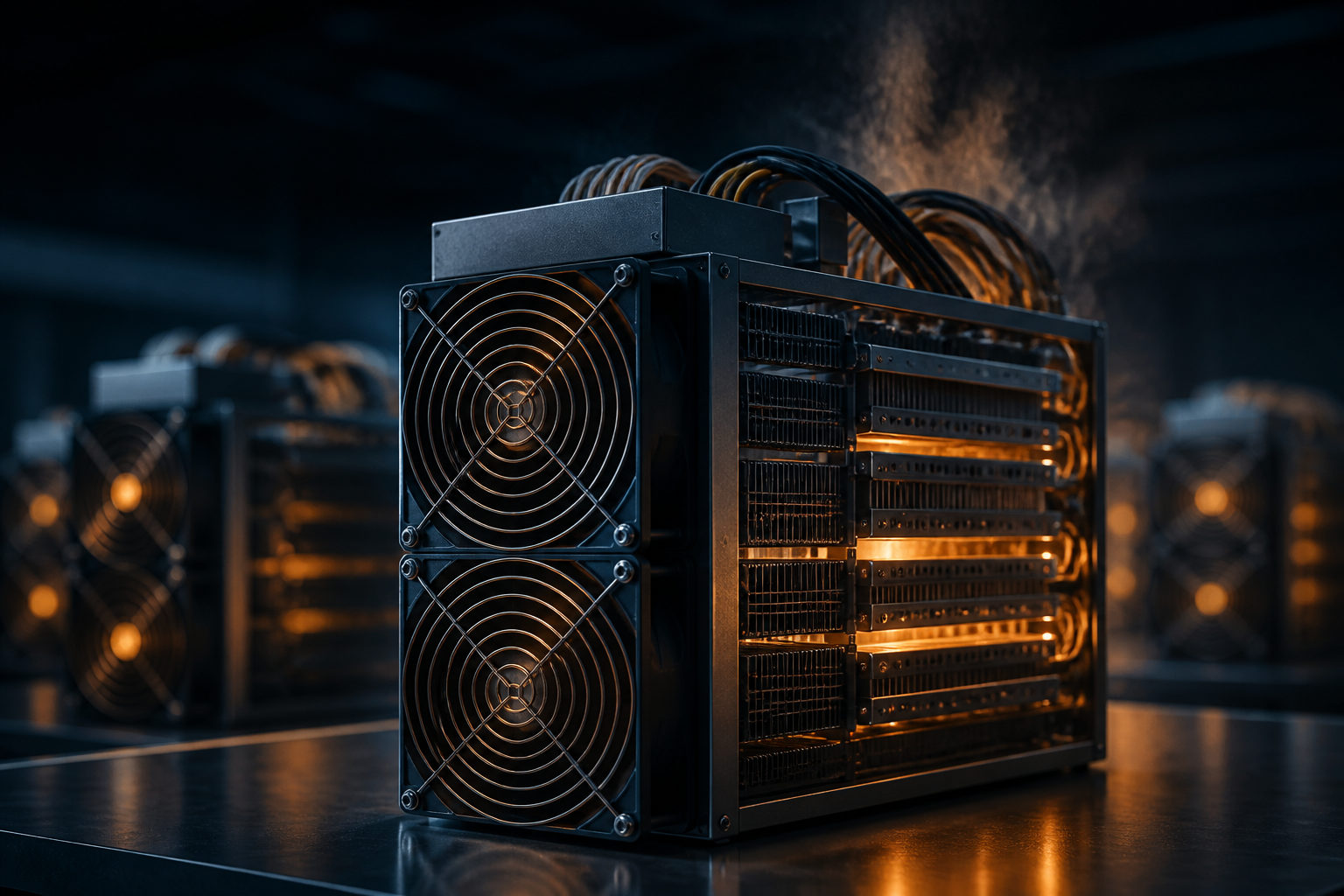
Bitcoin mining is hard because you are not just running a machine. You are entering a global race to win the right to add the next block, and that race depends on probability, hardware efficiency, power costs, and constant upkeep.
Why bitcoin mining feels like a bookkeeping contest
A simple way to picture bitcoin mining is to imagine an open ledger that anyone can inspect. New transactions need to be grouped into a block, and miners compete to produce a valid result that lets that block be added to the chain.
This is why the work looks less like ordinary computing and more like a nonstop contest. The network produces a block about every 10 minutes, so miners around the world keep trying at the same time. When people ask “how hard is it to mine bitcoin,” they are really asking how difficult it is to stay competitive in that race over long periods.
What makes mining difficult in practice
It is based on repeated trial, not steady progress
Many beginners assume that if a machine keeps running, success gets closer in a smooth, predictable way. That is not how bitcoin mining works. The hard part is not one complicated calculation; it is performing a huge number of attempts and waiting for probability to break in your favor.
That matters even more if someone is asking “how hard is it to mine a bitcoin.” For a solo miner, getting enough luck and enough time to reach one full bitcoin can be a long and uncertain process. It is not like finishing a checklist and collecting a guaranteed result at the end.
Competition is highly specialized
Mining started in a far less professional setting than it has today. Now the field is dominated by purpose-built machines, better cooling setups, tighter operations, and teams that know how to reduce downtime.
That means a casual participant is not competing with a handful of hobbyists. In many cases, they are competing with operators that treat mining as an industrial process. A home setup may still function, but functioning and competing are not the same thing.
Costs do not stop after buying hardware
New miners often focus on the machine itself and overlook what comes after. Power bills, heat, noise, dust control, repairs, and monitoring all shape the real difficulty of bitcoin mining.
A machine under heavy load needs a stable environment. If the temperature is too high or the system is not maintained well, performance can slip and failures can become more frequent. The challenge is not just starting. It is keeping the operation running in a stable way day after day.
How hard it is to mine one bitcoin depends on your setup
If the question is about mining one bitcoin, the answer depends a lot on how you participate. Solo mining gives you a chance at the full result from a block reward event, but the wait can be long and uneven. Pool mining spreads the outcome across participants based on contribution, which usually makes results feel less erratic.
Bitcoin has a total supply cap of 21 million coins. New issuance falls over time under fixed rules, with a halving about every 4 years, or every 210,000 blocks. The halving years so far are 2012, 2016, 2020, and 2024. For miners, that means cost discipline matters at every stage, because poor planning becomes harder to absorb as conditions change.
Main factors that shape mining difficulty for individuals
- Hardware efficiency: Two machines can run for the same amount of time and produce very different results.
- Power cost: Mining uses substantial electricity, so ongoing energy expense can decide whether the effort is sustainable.
- Cooling and environment: Heat, dust, airflow, and power quality all affect performance.
- Mining mode: Solo mining brings larger swings, while pools smooth participation but add rules and fees to review.
- Downtime: A machine that stops often loses ground fast in a competitive system.
Can ordinary people still mine bitcoin?
Yes, but that does not mean it makes sense for everyone. A better first question is whether you want to learn how bitcoin mining works or whether you want to run a serious hardware operation. Those are very different goals.
If your goal is education, start with the mechanics. Bitcoin launched with the genesis block in January 2009, and its design ties block production to proof-of-work. Miners compete to extend the chain, and that repeated competition is part of what makes the record hard to rewrite.
If your goal is actual participation, think through the practical side before you buy anything. Check your power situation, noise tolerance, cooling options, and maintenance capacity. For many newcomers, those issues turn out to be more important than the first machine they choose.
FAQ
Is bitcoin mining still realistic for one person?
It is possible, but it is much harder than it was in earlier years. The main obstacles for individuals are usually electricity, heat, noise, and maintenance rather than basic access.
Does solo mining mostly come down to luck?
From a personal results perspective, the swings can be very large. Someone may wait a long time without seeing a meaningful outcome, which is why many miners join pools instead.
Can a home computer mine bitcoin today?
A home computer may be able to run mining-related software, but that is different from being competitive. In practice, bitcoin mining now relies on specialized hardware rather than general-purpose consumer machines.
Why is mining a whole bitcoin so difficult?
Because you are facing a continuous global competition, not completing a fixed task. For solo miners, the uncertainty can last a long time, and the path is rarely smooth.
What should beginners check before getting started?
Start with electricity costs, operating conditions, and your ability to handle maintenance. Buying hardware first and asking questions later is often the expensive way to learn.
Checks to make before you commit
- Define your goal: Learn the system or evaluate a serious mining operation.
- Review power conditions: Stability, load capacity, and long-term electricity expense matter.
- Assess the environment: Noise, heat, dust, and ventilation will shape day-to-day experience.
- Understand participation rules: If you are looking at a mining pool, read the fee structure and payout method carefully.
- Plan for maintenance: Failures, restarts, and performance drops are part of the job.
If you want the short answer to “how hard is it to mine bitcoin,” it is this: the rules are easy to describe, but staying competitive is hard. Before you spend money, write down your power, cooling, hardware, and maintenance constraints in one place and judge the idea from there.
Disclaimer: This article is for informational and educational purposes only and is not investment, financial, or legal advice. Crypto assets are highly volatile and you could lose your entire investment. Do your own research and decide carefully.