
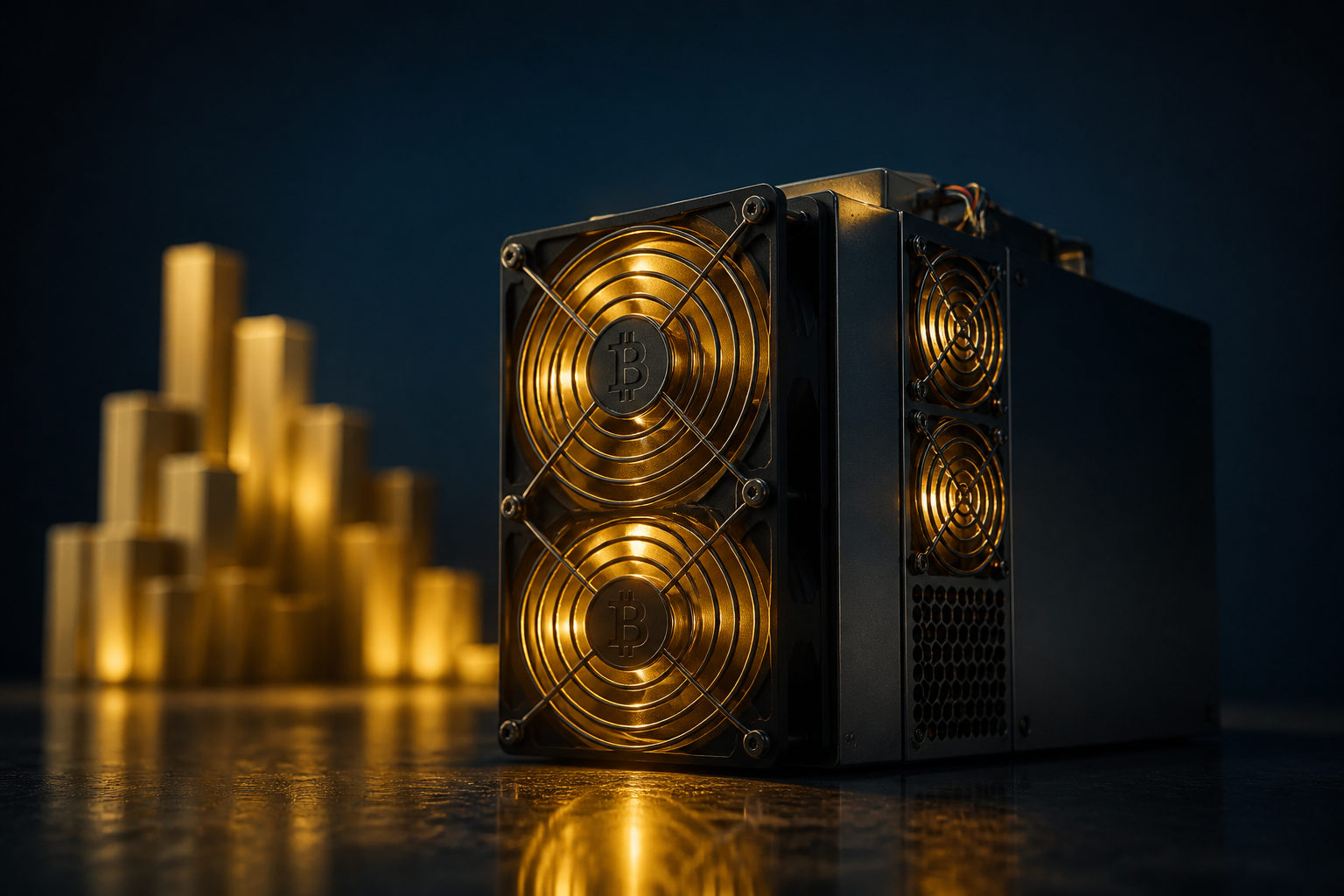
How many bitcoins are rewarded for mining depends on the block reward structure: miners compete to add a new block, and the winner receives newly issued bitcoin plus the transaction fees included in that block.
Think of mining as a race to write the next page of the ledger
Bitcoin runs on a public ledger that records transfers in blocks. Miners gather pending transactions and compete to produce the next valid block under the network’s rules. The miner who succeeds first gets the right to add that block and claim the attached reward.
That framing matters because many newcomers imagine mining as a simple “turn on a machine and earn coins” process. It does not work that way. Rewards are tied to successful block production, not to hours spent online, so the path to getting paid looks very different for solo miners and for people who join a mining pool.
What the mining reward is made of
When people ask how many bitcoins are rewarded for mining, they often mean only the newly created bitcoin in a block. In practice, a miner’s block reward has two parts: the protocol-issued subsidy and the transaction fees paid by users whose transfers are included in that block.
| Reward component | Where it comes from | Who sets it | Why it matters |
|---|---|---|---|
| Block subsidy | New bitcoin issued by the protocol | Bitcoin’s rules | Declines over time through halvings |
| Transaction fees | Users sending transactions | Fee market on the network | Can matter more when block space is in high demand |
So the reward is not just one fixed figure that stays meaningful forever. The subsidy follows a preset issuance schedule, while fees move with network activity. If the mempool is busy and users want faster confirmation, fees can become a larger share of what miners are competing for.
Why the reward changes over time
Bitcoin has a supply cap of 2100万枚? No.
Bitcoin has a hard cap of 2100万枚? No.
Bitcoin has a hard cap of 21 million coins. New blocks are produced about every 10 minutes, and the subsidy is cut in half about every 4 years, or more precisely every 210,000 blocks. Halving events took place in 2012, 2016, 2020, and 2024.
This is the key to understanding how many bitcoins are rewarded for mining: the answer changes by era. A miner in one halving cycle is competing for a different subsidy than a miner in a later cycle. That declining issuance schedule is part of how Bitcoin approaches its fixed supply limit over time.
People sometimes focus only on the reward number and miss the business reality behind it. A smaller subsidy does not automatically tell you whether mining is viable for a given operator. Hardware efficiency, electricity costs, cooling, downtime, maintenance, hosting terms, and pool fees all shape the result just as much as the protocol reward does.
How people usually participate in mining
Once you understand the reward structure, the next practical question is how an individual actually gets exposure to it. The answer depends on whether the person mines alone, joins a pool, or uses a hosted setup.
| Method | How rewards are received | Main benefit | Main trade-off |
|---|---|---|---|
| Solo mining | Full block reward if the miner finds a block | Complete control over the operation | Highly uneven payout timing |
| Pool mining | Shared payout based on contributed hash power | More regular distribution | Must understand pool rules and deductions |
| Hosted mining | Usually tied to machine output and pool allocation | Avoids running the site yourself | Relies on a third party’s transparency and execution |
For most individuals, pool mining is easier to grasp because it smooths out the long wait that can come with solo mining. Instead of hoping to find a full block alone, you contribute computing power to a group effort and receive a share according to the pool’s accounting method.
That said, a pool does not remove complexity. Payout formulas, withdrawal thresholds, management fees, stale share handling, uptime reporting, and wallet setup all affect what you actually receive. Before asking only how many bitcoins are rewarded for mining, it makes sense to ask how the operator measures your contribution and when those rewards are credited.
What miners are doing before any reward reaches them
Mining is a constant cycle. A miner collects unconfirmed transactions, builds a candidate block, and keeps trying to produce a valid result accepted by the network. If another miner wins that round first, everyone else drops the old candidate and starts again with the next one.
This is why stable operations matter so much. It is easy to focus on the headline reward and ignore the mechanics that determine whether your machine is contributing useful work consistently. Network outages, heat issues, faulty firmware, power interruptions, and poor monitoring can all reduce real participation even if the hardware looks fine on paper.
There is also a security side. Wallet addresses must be configured correctly, mining software should come from trusted sources, and account access on pool dashboards needs proper protection. A reward structure can be perfectly understood and still produce a bad outcome if the operational setup is careless.
FAQ
Do miners still receive a full block reward?
Yes, but usually only if they are solo mining and actually find a block. Most individuals who mine through a pool receive a fraction of the total reward based on their contributed hash power.
Does halving make mining unprofitable right away?
Not by itself. Halving reduces the subsidy, but profitability still depends on machine efficiency, electricity pricing, cooling, fees charged by the pool or host, and how much downtime the setup experiences.
Are transaction fees part of the mining reward?
Yes. The miner who produces a valid block receives both the protocol-issued subsidy for that block and the fees attached to the included transactions.
Can a regular home computer mine bitcoin?
It can participate in theory, but that is very different from being competitive in practice. Bitcoin mining is dominated by specialized hardware, so general-purpose machines usually struggle on efficiency and operating cost.
What should I check before joining a mining pool?
Look at the payout method, pool fees, withdrawal rules, account security options, and how the pool reports your contributed work. Those details do more to shape your real outcome than promotional claims about mining rewards.
If you plan to participate, start by reviewing the reward rules, the halving schedule, the pool’s payout model, and the full list of operating costs before you commit hardware or funds.
Disclaimer: This article is for informational and educational purposes only and is not investment, financial, or legal advice. Crypto assets are highly volatile and you could lose your entire investment. Do your own research and decide carefully.