
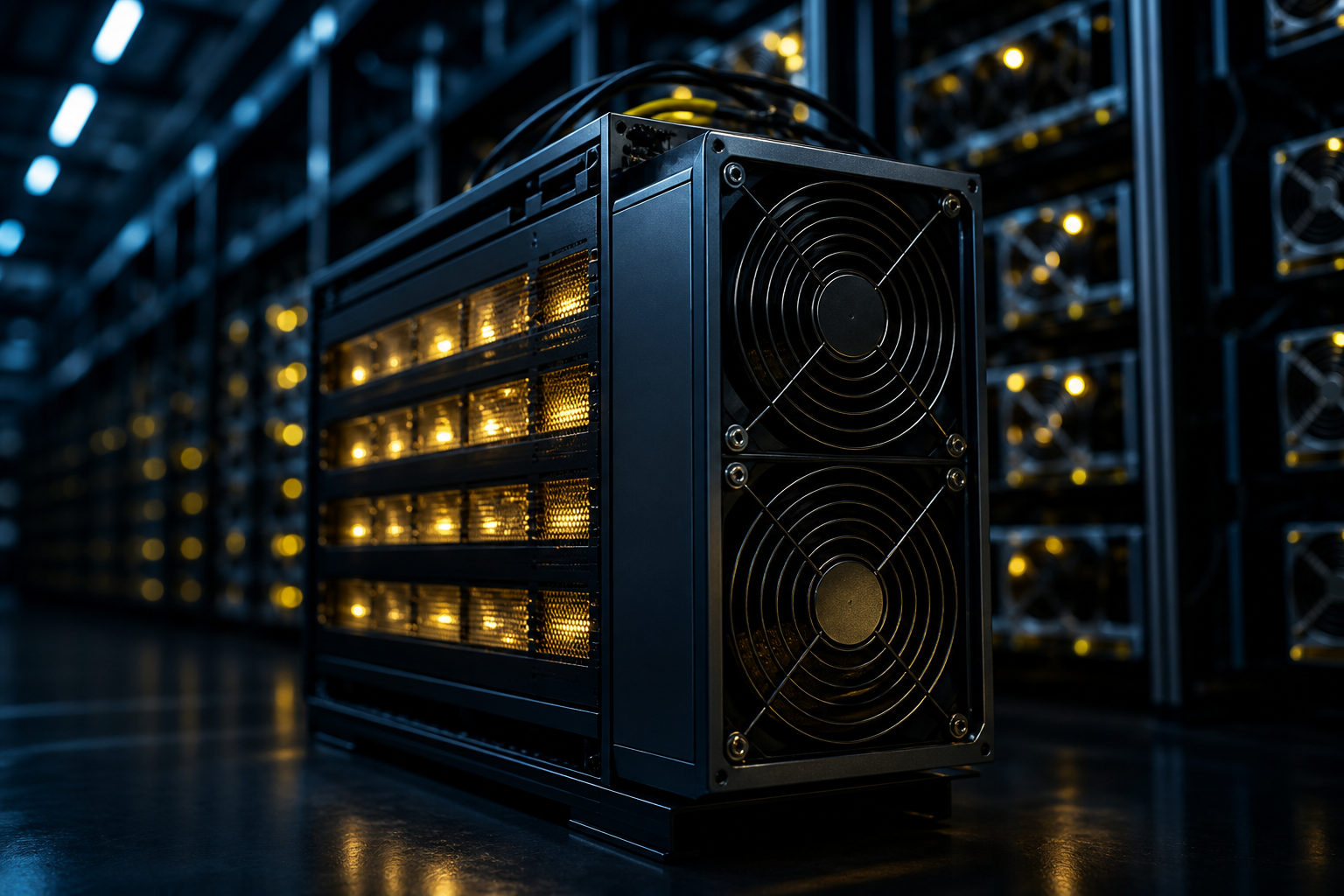
Why do you mine bitcoin? Because mining is how the Bitcoin network picks who gets to add the next block, verifies transaction order, and protects the ledger without a central authority.
What bitcoin mining actually does
A lot of beginners hear the word mining and picture people digging up digital coins. That is not what happens. In Bitcoin, mining is a competition to win the right to record a new batch of transactions on the blockchain.
Think of the network as a public ledger that anyone can inspect but no single party controls. New transactions keep arriving, and someone has to group them into a block, present that block to the network, and prove they followed the rules. Miners do that work by spending computing power to search for a valid result that the rest of the network can verify.
The key idea is simple: mining converts real-world cost into a way to choose the next bookkeeper. That makes cheating expensive and honest participation easier for the network to recognize.
Why Bitcoin needs mining in the first place
It solves the “who writes the next page” problem
In a bank or card network, a central operator decides which transactions count and in what order. Bitcoin does not rely on that kind of operator, so it needs another method to decide who can add the next block.
Mining fills that role. Instead of handing control to one company or administrator, Bitcoin opens block production to anyone willing to follow the protocol and commit resources.
It ties security to economic cost
Miners want block rewards and transaction fees, so they have an incentive to follow the rules. If a miner produces an invalid block, the network rejects it, and the miner still pays for the electricity, hardware use, cooling, and time already spent.
That matters because Bitcoin does not depend on good intentions alone. It uses incentives so that rule-following is usually the cheaper path, while attacking the system becomes costly.
It controls how new bitcoin enters circulation
Bitcoin is not issued all at once. New coins are introduced through block rewards, under rules that are visible to everyone. The total supply is capped at 21 million coins, blocks are produced about every 10 minutes, and the block subsidy is cut in half about every 4 years, or every 210,000 blocks.
That schedule is part of why mining matters. It is not only about transaction processing; it is also part of Bitcoin’s monetary design.
Why bitcoin is not just handed out to everyone
A fair question is this: if the network needs users, why not simply distribute bitcoin evenly? The problem is that open systems are easy to abuse if rewards come with no real cost. People could create endless fake identities or try to claim value without contributing anything to security.
Mining avoids that by requiring real inputs. A miner has to commit hardware, electricity, cooling, space, monitoring, and maintenance. Those costs are what make participation meaningful in the first place.
This also explains why mining is not the same as owning bitcoin. Mining is an operating activity with technical and cost risks. Holding bitcoin is about buying, receiving, or storing the asset.
Do you have to mine bitcoin to get bitcoin
No. Mining is how new bitcoin is released according to the protocol, but it is not the only way a person can obtain it. You can buy bitcoin through a trading venue, receive it as payment, or accept it for goods and services.
That distinction is important for beginners. When people ask “why do you have to mine bitcoins,” they are often mixing up the network’s need for miners with an individual user’s choices. Bitcoin needs mining. You do not necessarily need to be a miner.
For many people, direct purchase is easier to understand than running machines. Mining may appeal more to those who want to operate hardware and manage ongoing costs rather than simply gain exposure to bitcoin itself.
How people participate today
- Solo mining: You run your own equipment and try to find blocks on your own. This gives you full control, but outcomes can be highly uneven.
- Mining pools: You combine computing power with other miners and receive a share of rewards based on the pool’s rules. This can smooth outcomes, though it does not remove operating costs.
- Buying bitcoin directly: If your goal is ownership rather than running infrastructure, buying may be more practical.
- Learning first: Many newcomers start by understanding wallets, private keys, confirmations, and storage risk before they spend money on either coins or mining hardware.
For most households, mining is not a casual setup. Noise, heat, power use, equipment care, and uptime all matter. That is why it helps to treat mining as an operating decision, not as a shortcut to easy bitcoin.
Core rules behind mining
| Item | Meaning |
|---|---|
| Launch | Bitcoin began with the genesis block in January 2009 |
| Creator name | Satoshi Nakamoto, whose real identity remains unknown |
| Block timing | About 10 minutes per block |
| Halving cycle | About every 4 years, or every 210,000 blocks |
| Supply cap | 21 million coins |
| Smallest unit | 1 satoshi equals one hundred millionth of a BTC |
These rules show why mining is more than raw computing power. It is part of the system that orders transactions, secures the chain, and releases new supply under fixed conditions.
FAQ
Why does Bitcoin rely on mining to confirm transactions?
Bitcoin has no central office that stamps transactions as valid. Mining gives the network a public way to decide who may propose the next block, after which other nodes check whether that block follows the rules.
This approach makes transaction ordering possible without placing one party in charge of the ledger.
Do you need to mine bitcoin to own bitcoin?
No. You can buy bitcoin, receive it from someone else, or accept it as payment. Mining is a native issuance process for the network, not a requirement for every user.
That is why many people interact with Bitcoin without ever running mining equipment.
Why do miners get rewarded?
Miners spend resources to help secure the network and process blocks, so the protocol rewards valid block production. Those rewards align miner incentives with network operation.
If miners had no incentive, the system would need some other way to attract participants to do the work.
Is mining still realistic for individuals?
It can be, but only if you understand the practical side. Hardware efficiency, electricity cost, cooling, noise, maintenance, and downtime all affect the result.
For many people, mining is closer to running a specialized operation than using a normal home computer.
Does more mining increase Bitcoin’s total supply?
No. The supply cap is fixed at 21 million coins, and new issuance follows the protocol’s schedule. More miners change the competition for rewards, not the final limit.
Mining activity affects who earns rewards, not the maximum number of bitcoin that can exist.
Before you mine, define the goal
If you ask why do you mine bitcoin, the practical answer is twofold: the network mines to stay decentralized and secure, while people mine to compete for block rewards under those rules. Before buying equipment, decide whether you want to understand Bitcoin, hold it, or operate mining hardware, because those are related goals, but not the same one.
Disclaimer: This article is for informational and educational purposes only and is not investment, financial, or legal advice. Crypto assets are highly volatile and you could lose your entire investment. Do your own research and decide carefully.