
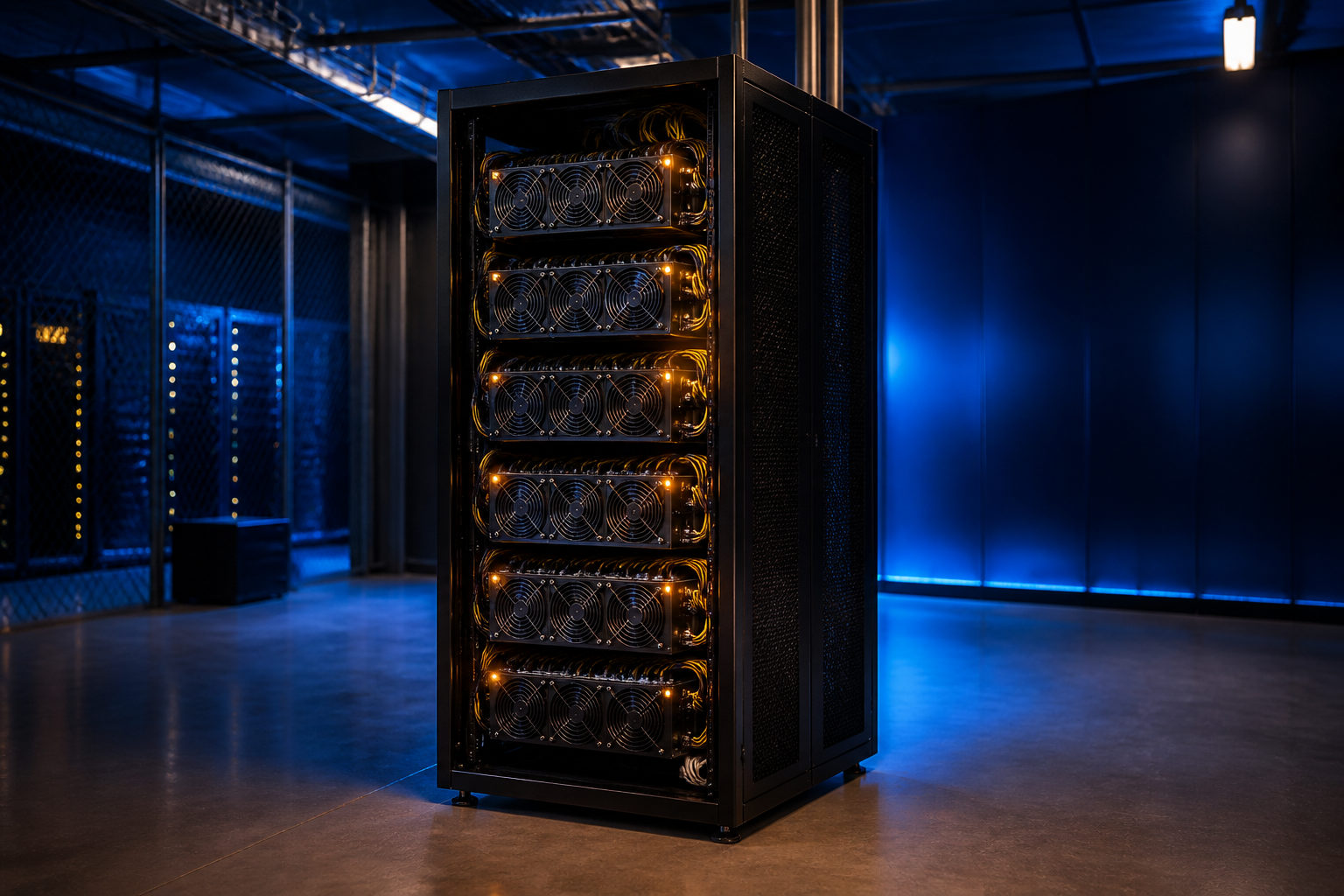
Bitcoin hosting means putting mining machines in a third-party facility that supplies power, internet access, cooling, and day-to-day maintenance so the machines can run without staying on your own property.
What bitcoin hosting actually refers to
Beginners often hear the term and assume it means a company will handle everything and send back bitcoin on a fixed schedule. That shortcut creates confusion. In practice, bitcoin hosting is an infrastructure service for mining hardware, not a promise of returns.
Bitcoin mining depends on specialized machines running continuously with stable electricity, a reliable network connection, and workable temperature control. Many people cannot provide that setup at home or in a small office because of noise, heat, power limits, and maintenance demands. Hosting exists to solve those operational problems by moving the machines into a professional site.
| Model | Bitcoin hosting | Cloud mining | Home setup |
|---|---|---|---|
| Hardware visibility | You can often identify the machine being hosted | You may only buy a contract for computing power | You fully control the machine directly |
| Power and cooling | Provided by the host facility | Handled by the platform | Handled by the user |
| Maintenance | Routine work is usually done by the host | Done by the platform, with varying transparency | Done by the user |
| Control over setup | Often shared between owner and host | Usually limited | Highest |
| Main misconception | People treat it like passive income | People think a contract equals hardware ownership | People think setup is simple |
What a hosting provider usually does
A bitcoin hosting provider typically offers rack space, electrical supply, internet connectivity, airflow or cooling support, on-site monitoring, restart assistance, and basic troubleshooting. Some also help with miner configuration, pool connection, shipping coordination, and machine intake.
That service list matters because hosting only covers part of the mining picture. The host may keep machines online and in working order, but the mining result still depends on the hardware itself, pool settings, downtime, fee structure, competition on the network, and the market price of bitcoin. Hosting can reduce operational friction, yet it does not remove business risk.
There is another boundary new readers miss: a host may not handle hardware procurement, resale, tax treatment, wallet custody, or parts replacement beyond basic support. Some firms offer those extras, others stay strictly focused on facility operations. You need that line to be clear before agreeing to anything.
| Service area | Often included | Not automatically included |
|---|---|---|
| Facility resources | Power, internet, rack space, cooling | Guaranteed low operating cost for the full term |
| Daily operations | Monitoring, reboots, basic maintenance | Free repair for major damage |
| Technical setup | Pool connection, initial configuration help | Wallet or private key management |
| Hardware handling | Receiving, installing, removing equipment | Buyback protection or resale support |
| Financial outcome | Charging hosting-related fees under the agreement | Fixed profit or guaranteed payout |
Common mistakes people make when they hear the term
Confusing hosting with an investment product
If a service talks mainly about easy income and barely explains machine identity, pool routing, maintenance response, or account control, that is a warning sign. Hosting should be understandable at the equipment and facility level. Marketing claims should never replace operational detail.
Assuming hosted mining is completely hands-off
You may not be the person standing in the data hall, but you still need to know who controls the pool account, where rewards are sent, who can change payout settings, and how downtime is reported. Those questions affect your practical control over the asset flow.
Ignoring the exit process
People often focus on getting machines online and forget to ask what happens when they want out. The agreement should make it clear how equipment is removed, who pays for shipping, what happens after nonpayment, and how configuration data is handled at the end of the relationship.
What to check before choosing a bitcoin hosting service
You do not need expert-level mining knowledge to ask useful questions. A beginner can still do basic screening by checking hardware verification, payout control, maintenance standards, fee disclosure, and offboarding rules.
| Checkpoint | What to ask | Why it matters |
|---|---|---|
| Machine identification | Can the provider map your account to specific miners or an equipment list? | Helps show you are not buying an abstract promise |
| Payout path | Who controls the mining pool account and payout address? | Shows who actually controls reward flow |
| Downtime handling | How are offline machines detected, reported, and addressed? | Downtime affects mining output directly |
| Fee structure | Which fees exist, when are they charged, and how are they settled? | Prevents surprise costs later |
| Contract end process | How are machines removed, shipped, or retired when service ends? | Reduces disputes during exit |
| Permission boundaries | Who can change pool settings, firmware, or payout instructions? | Clarifies authority and security exposure |
If a provider cannot answer those points clearly, the problem is not just poor communication. Lack of clarity is itself part of the risk. In bitcoin hosting, transparency is one of the service features you are evaluating.
FAQ
Is bitcoin hosting the same as cloud mining?
No. Bitcoin hosting usually centers on identifiable hardware placed in a third-party facility, while cloud mining often means buying access to computing power through a contract. The practical difference is how much visibility and control you have over the underlying operation.
Do I need to own a miner before using bitcoin hosting?
Not always, because some providers also help clients source or lease equipment. Still, that is separate from the core meaning of hosting. You should confirm whether you are getting hardware rights, a lease arrangement, or only a revenue-sharing plan.
Does the host keep custody of my bitcoin?
Not by definition. Some hosts only run the machines and leave wallet management to the customer. If rewards pass through a platform account before reaching you, review withdrawal rules and account permissions very carefully.
Is bitcoin hosting suitable for someone with no mining experience?
It can be, because it removes many physical setup problems. Even so, a beginner should understand the basics of payouts, downtime, fees, and equipment control before committing funds. If those points are still vague, more reading is better than rushing in.
How is bitcoin hosting different from running miners at home?
Home mining gives you the most direct control, but it also leaves you with heat, noise, electricity limits, and maintenance work. Hosting shifts those operational burdens to a specialized site, though it adds dependence on a service provider and on contract terms.
Before moving ahead with any bitcoin hosting offer, ask for the service scope, fee list, machine identification method, and exit procedure in plain terms. If you cannot trace who controls the hardware, the payout settings, and the end-of-service process, you do not yet have enough information to make a sound decision.
Disclaimer: This article is for informational and educational purposes only and is not investment, financial, or legal advice. Crypto assets are highly volatile and you could lose your entire investment. Do your own research and decide carefully.