
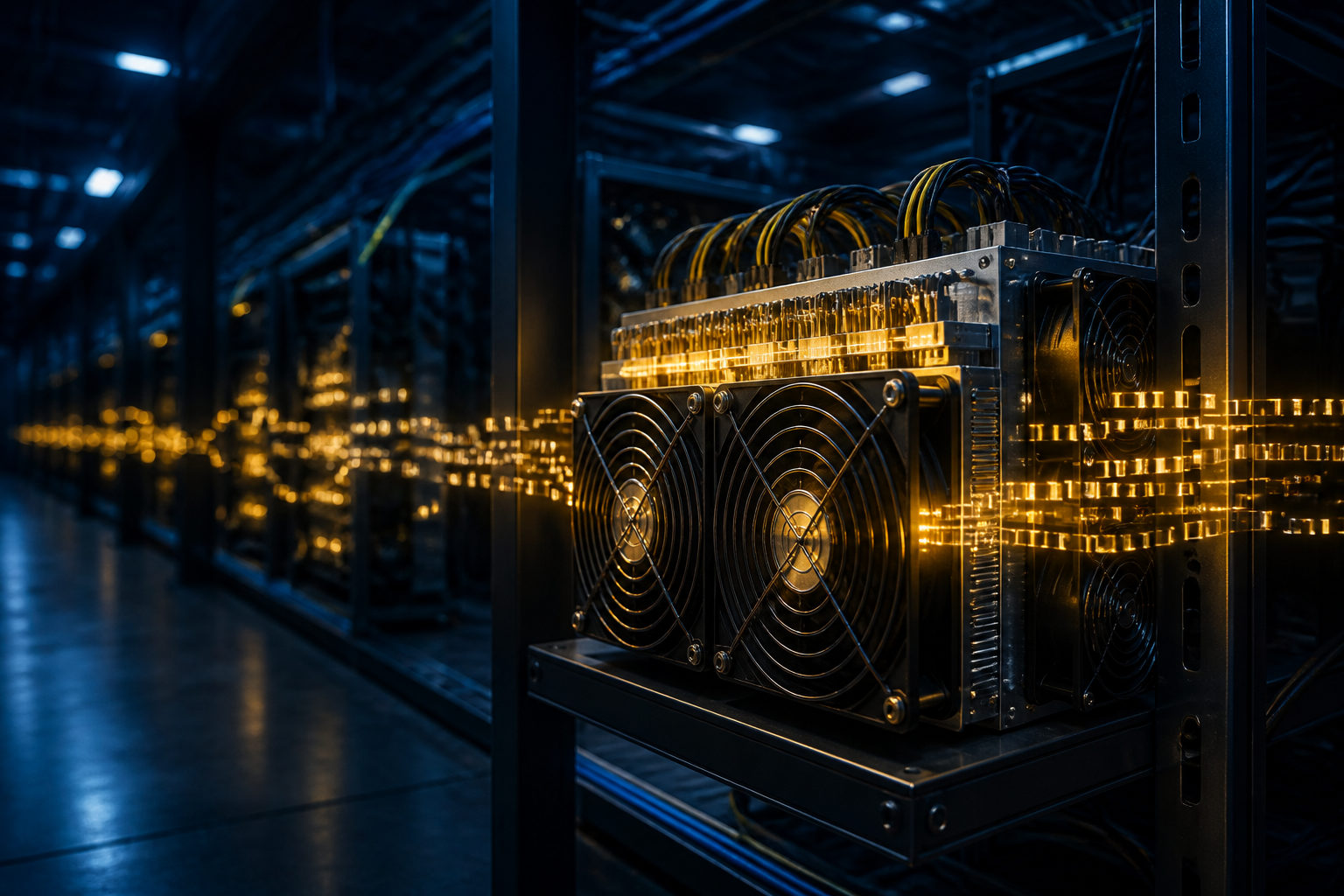
Bitcoin mining means using computing power to compete in the network’s record-keeping process. A miner that meets the rules first can add a new block to the blockchain and earn the block reward plus transaction fees.
What a bitcoin mine really is
People often hear the phrase and picture coins hidden underground. That is not how Bitcoin works. A bitcoin mine is usually a site filled with specialized machines that run nonstop, checking transactions and trying to produce a valid block before other miners do.
So when people ask what is bitcoin mine, they may mean one of two things: the activity of mining, or the physical mining farm where machines are installed. The first is a network security process. The second is the real-world facility that supplies power, cooling, internet access, and maintenance.
What it means to mine bitcoin
If someone asks, “what does it mean to mine bitcoin,” the short answer is this: miners help order and confirm transactions without a central bookkeeper. In return, the protocol allows successful miners to receive newly issued bitcoin and fees attached to the transactions in the block.
Bitcoin has a fixed supply cap of 2100万? No.
Bitcoin has a fixed supply cap of 21 million coins. New issuance follows preset rules rather than discretionary decisions. A new block is produced about every 10 minutes, and the block subsidy is cut in half about every 4 years, or every 210,000 blocks; halving years include 2012, 2016, 2020, and 2024.
Why miners are needed
Bitcoin does not rely on one company or bank to approve every transaction. Instead, miners compete through proof of work, which makes it expensive to rewrite old records. That competition helps the network agree on a shared history of transactions.
Why the word “mine” is used
The term is a metaphor. Miners spend real resources such as electricity, hardware capacity, and operational effort to receive a chance at rewards. They are not digging up specific coins from a hidden pool.
How bitcoin mining works step by step
To answer “what does it mean to mine for bitcoins,” it helps to separate the process from the reward. Miners are not targeting one exact coin. They are building candidate blocks from pending transactions and repeatedly hashing block data until a valid result appears.
- Pending transactions arrive: transactions spread across the network and wait to be included in a block.
- Miners validate them: miners check signatures, formatting, and other protocol rules.
- A candidate block is assembled: valid transactions are grouped into a block template.
- Machines keep hashing: mining devices run repeated hash calculations to satisfy the current difficulty target.
- The new block is broadcast: once a miner finds a valid block, other nodes verify it.
- The chain moves forward: if accepted, the block becomes part of the blockchain and the reward is assigned according to protocol rules.
Bitcoin started with the genesis block in January 2009. Its design was introduced in the 2008 white paper, Bitcoin: A Peer-to-Peer Electronic Cash System, published under the name Satoshi Nakamoto, whose identity remains unknown.
How people take part in mining today
In the early years, the idea of mining with ordinary consumer hardware was easier to imagine. Today, participation is much more demanding. Mining depends on access to efficient equipment, affordable electricity, stable internet, heat management, and ongoing maintenance.
Solo mining
Solo mining means running your own operation and competing alone for block rewards. The structure is straightforward, but the odds of finding blocks on your own can be very uneven, especially for smaller operators.
Mining pools
A mining pool combines the computing power of many participants and distributes results according to its payout rules. For many individuals, this is easier to understand as a practical entry point because payouts tend to be less lumpy than solo mining. Even so, pool fees, withdrawal terms, and operational policies still matter.
Mining farms
If someone asks, “what is a bitcoin mine,” they may be referring to a mining farm. That is the physical side of the business: rows of machines, power systems, cooling setups, network connections, and technicians keeping everything running.
The cost reality behind bitcoin mining
Bitcoin mining should not be framed as easy passive income. It is a competitive industrial activity with ongoing costs and operational risk. Before anyone thinks about participating, it helps to understand what usually drives the outcome.
- Electricity costs: mining machines run continuously, so power pricing has a direct effect on viability.
- Hardware expenses: equipment must be purchased, maintained, repaired, and replaced over time.
- Heat and noise: mining devices generate significant heat and can be loud, which makes home setups difficult.
- Regulatory and tax issues: rules differ by location, so local requirements should be checked before setting anything up.
- Price volatility: even without quoting live prices, it is important to know that bitcoin’s market price can move sharply, which changes the economics of mining.
That is the practical meaning behind the phrase “mine for bitcoin”: spending real-world resources for a chance to help secure the network and receive rewards, not collecting free coins from a simple app.
FAQ
Does mining bitcoin mean finding coins inside a computer?
No. Mining is the process of validating transactions, competing to add blocks, and keeping the blockchain in order. The reward comes from protocol rules rather than from discovering coins hidden somewhere.
What does it mean to mine a bitcoin?
It does not mean targeting one specific coin and pulling it out of the network. In practice, miners compete for block rewards, and any payout depends on the mining method and the reward distribution model. Bitcoin can also be divided into very small units: 1 satoshi equals one hundred millionth of 1 BTC.
Can one person still mine bitcoin today?
In theory, yes. In practice, it is difficult without efficient hardware, suitable power costs, and solid operational planning. That is why many people study mining pools before trying to run a setup alone.
Is a bitcoin mine the same thing as a mining pool?
No. A bitcoin mine often refers to the physical site where machines operate, while a mining pool is a coordination model that combines computing power from many miners. They can be related, but they are not the same concept.
Where can I check the live price if I am evaluating mining?
Use a major market data platform or a large exchange interface to view the current bitcoin price. Then compare that market information with your electricity, equipment, cooling, and maintenance situation before making any decision.
If you want to go deeper, start by mapping your local power costs, space limits, cooling options, noise tolerance, and legal requirements. That practical checklist will tell you much more than the word “mining” on its own.
Disclaimer: This article is for informational and educational purposes only and is not investment, financial, or legal advice. Crypto assets are highly volatile and you could lose your entire investment. Do your own research and decide carefully.