
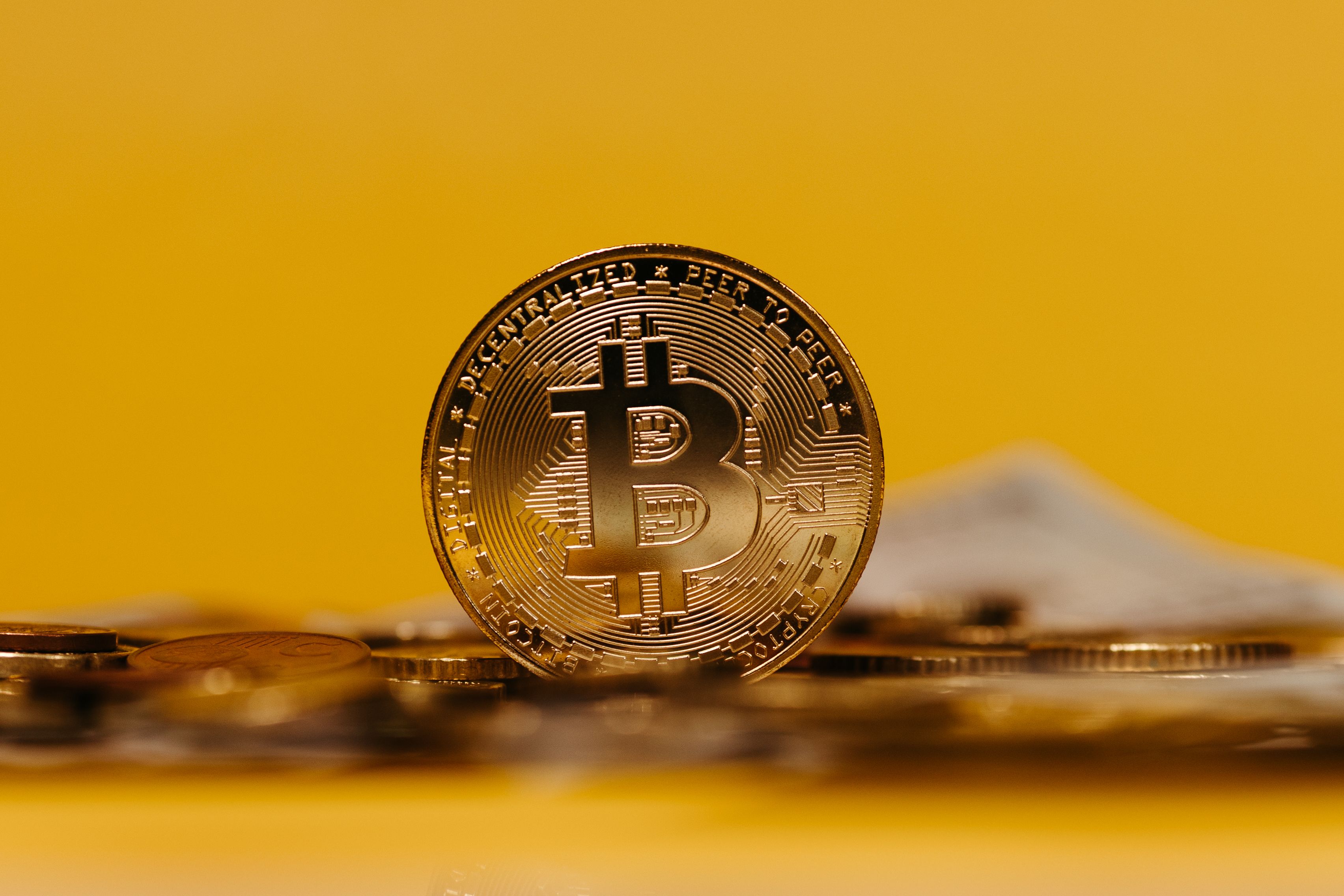
When 21 million bitcoins are mined, Bitcoin does not shut down. What changes is the source of miner revenue: over time, newly issued coins fade out, and transaction fees take on a larger role in paying for block production.
The key idea: mining all bitcoin does not end Bitcoin
People often hear “mining” and picture a resource being pulled out of the ground until nothing is left. That image helps a little, but it misses the main point. In Bitcoin, mining is better understood as an ongoing contest to write the next page of a shared ledger.
Miners collect valid transactions, assemble them into a block, and compete to add that block to the chain under the network’s rules. The winner gets paid. Today, that payment has two parts: the block subsidy, which is newly issued bitcoin, and the transaction fees attached to the transfers inside the block.
Bitcoin has a hard cap of 21 million coins. That rule is part of the protocol. Once the full amount has been issued, the block subsidy no longer creates new bitcoin. Still, the network does not lose its reason to exist. Transactions will still need ordering. Blocks will still need validation. Nodes will still check whether each block follows the rules.
So if you ask what happens when 21 million bitcoins are mined, the direct answer is simple: issuance ends, but the network keeps operating. The system moves closer to a fee-funded model for miners.
Why the network can keep working after issuance stops
Bitcoin’s main job is not “making new coins forever.” Its real job is helping a distributed set of participants agree on which transactions are valid and in what order they happened, without relying on a central operator. That function does not disappear just because no more new BTC can be created.
A useful analogy is a public bookkeeping tournament. Early on, the system offers a built-in subsidy to attract miners to secure the chain. Over time, that subsidy falls because Bitcoin halves roughly every 4 years, or every 210,000 blocks. The years commonly associated with halvings are 2012, 2016, 2020, and 2024. As that subsidy shrinks, user-paid transaction fees matter more.
That shift does not happen all at once. It is a long transition. Bitcoin launched with the genesis block in January 2009, and its issuance schedule has always pointed toward lower subsidy over time. By design, the network is meant to move from heavy reliance on newly minted coins toward greater reliance on fees from actual usage.
This is the point many beginners miss: miners are not only “creating bitcoin.” They are securing transaction history and competing to extend the chain with valid blocks. Even when the subsidy reaches zero, those functions remain necessary if people continue using Bitcoin.
What miners are expected to earn instead
The short answer is transaction fees. If users want their transfers included in a block, they attach fees. Miners, acting in their own economic interest, usually select the set of transactions that makes the block more attractive to mine. In a future with no new issuance, those fees become the direct market payment for scarce block space.
That does not mean miner economics become easy to predict. Mining has real-world costs: specialized hardware, electricity, cooling, maintenance, physical space, network connectivity, and operations. No one can honestly look at the 21 million cap and claim to know, by that fact alone, exactly how profitable mining will be far in the future.
The useful takeaway is narrower and more reliable. Bitcoin does not require infinite coin issuance to keep producing blocks. It requires enough incentive for miners to keep competing. In the long run, that incentive is expected to come more from fees and less from subsidy.
You can think of it like a contest that started with organizer-funded prizes. Later, the organizer’s subsidy gets smaller, and the participants who want access to the service end up paying more of the cost. If Bitcoin remains useful, users who value settlement on the main chain may continue bidding for inclusion through fees.
At the same time, there is no rule saying this process must feel smooth for everyone. Demand for block space can change. Miner cost structures can differ widely. Some operators may run more efficiently than others. That is why a serious explanation of “what happens when 21 million bitcoins are mined” should focus on mechanism, not easy promises.
How ordinary users can take part in Bitcoin
Many readers asking this question are really asking something else: if all bitcoin will eventually be mined, is there still a place for me? Yes. Most people do not participate by running industrial-scale mining hardware, and they do not need to.
Use Bitcoin as a network participant
The most direct role is using a wallet to send and receive bitcoin. That sounds simple, but it comes with responsibility. If you hold your own keys, you need to understand backups, seed phrase safety, address checks, device hygiene, and phishing risk.
Run a node and verify the rules yourself
A full node does not produce blocks and does not receive newly issued coins just for validating data. What it does give you is independent verification. Instead of trusting a third party to tell you what Bitcoin is, you can check blocks and transactions against the protocol rules on your own system.
Study mining with realistic expectations
In theory, anyone can try mining. In practice, it is highly competitive and cost-sensitive. Mining requires specialized machines rather than ordinary consumer computers, and it also depends on power, cooling, uptime, and operational discipline. That is why the topic should be approached as infrastructure, not as a casual side activity.
If your real question is whether mining still matters after all bitcoin is mined, the answer is yes. Mining remains the process that adds blocks. What changes is the mix of incentives behind it.
What fee-driven security means for users
For users, the practical effect is not “Bitcoin stops creating coins, so now everything changes overnight.” The more relevant idea is that block space is limited, and users compete for that space when they broadcast transactions. Fees are the market signal in that competition.
As fee revenue matters more, users may pay closer attention to when they transact and how urgent confirmation really is. Not every transfer needs the same priority. Not every use case belongs on the base chain at the same moment. Understanding that helps make sense of why fee conditions can matter so much to the user experience.
It also explains why many discussions around Bitcoin eventually move to layered usage. The base chain can serve final settlement, while other transaction patterns may seek different paths. Even without going deep into any one approach, the broad point is clear: scarce block space becomes more economically visible when issuance matters less.
There is another basic concept worth knowing here. One bitcoin is divisible. Its smallest unit is the satoshi, and 1 satoshi equals one hundred millionth of 1 BTC. So reaching the 21 million cap does not mean the system becomes unusable for smaller transfers. Divisibility remains part of how Bitcoin can be used even with a fixed supply cap.
FAQ
Does Bitcoin stop working after all 21 million coins are mined?
No. The end of issuance is not the end of the network. As long as nodes validate blocks and miners keep producing them, Bitcoin can continue processing transactions.
Why would miners keep mining if there are no new bitcoins left?
Because users still pay transaction fees to have transfers included in blocks. Those fees are expected to become a larger part of miner revenue over time. Whether they are enough depends on real demand and miner costs.
Will “all bitcoin mined” automatically make the price go up?
No automatic price result follows from the supply cap alone. Bitcoin’s price depends on supply and demand, market sentiment, liquidity, and broader financial conditions. If you need a live quote, check a market data platform instead of guessing from the cap.
Can regular people still participate in Bitcoin without mining?
Yes. You can use a wallet, hold your own keys, learn how transactions work, or run a full node to verify the chain yourself. For many people, those forms of participation are more realistic than trying to compete in mining.
What should I look at before considering mining?
Start with costs and operating conditions, not hype. Hardware quality, electricity access, cooling, maintenance, and downtime risk all matter. Mining is a serious operational activity, not just a software install.
If you want a practical way to think about the topic, break it into three checks: whether people still want to use Bitcoin, whether transaction fees can keep attracting miners, and whether your own role is user, node operator, or mining researcher. Those questions are more useful than treating the 21 million cap as a shortcut to every answer.