
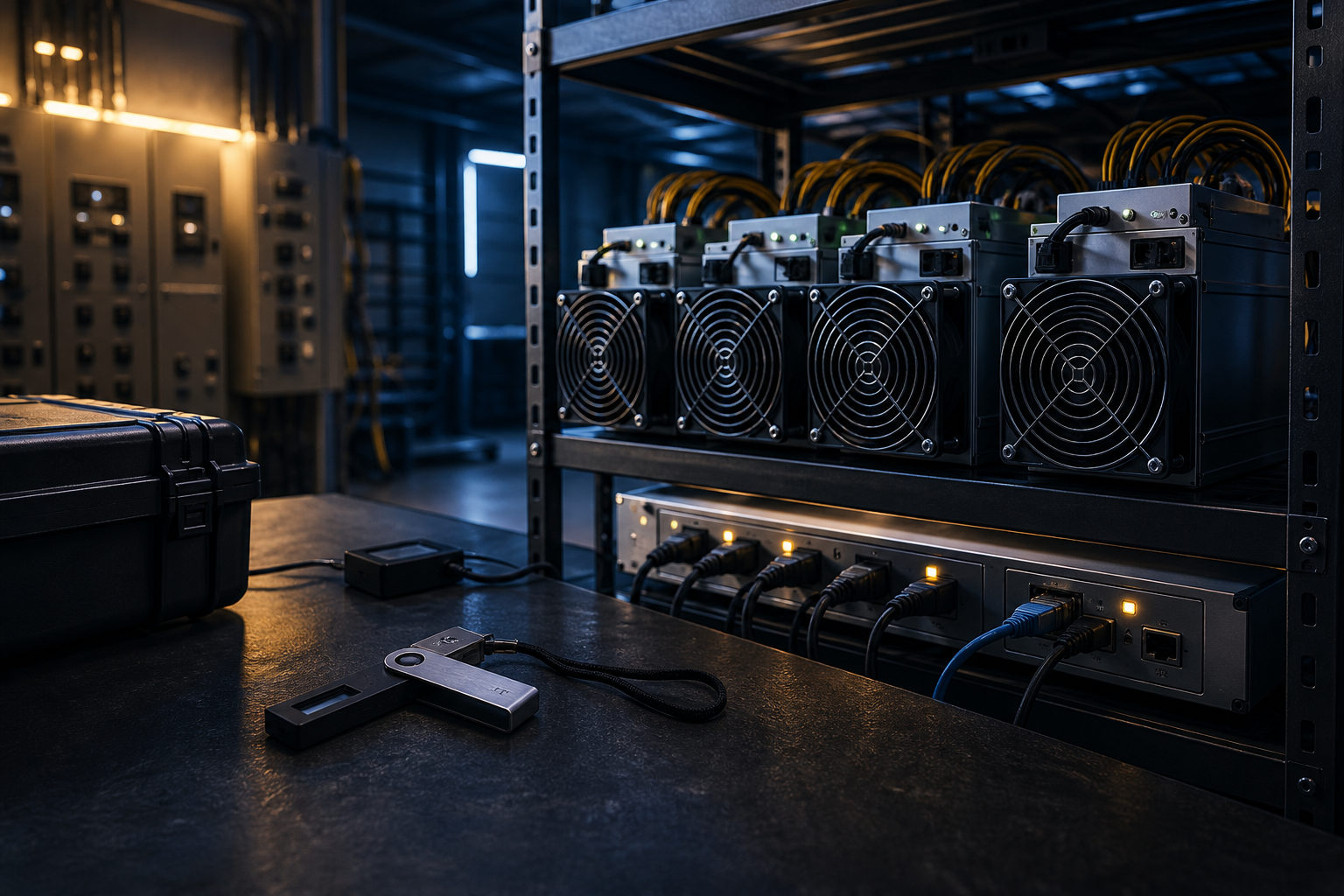
To mine Bitcoin, you usually need specialized hardware, reliable power, internet access, a Bitcoin wallet, and a setup you can maintain over time. A normal home computer may help you learn the basics, but it is usually not enough for real mining competition.
Start with the idea behind mining
A simple way to think about Bitcoin mining is to picture a running contest for record-keeping. New transactions wait to be confirmed, and miners group them into blocks while competing to add the next block to the chain.
Bitcoin started with the genesis block in January 2009 and uses proof of work. In broad terms, the network produces a new block about every 10 minutes, and miners try to find a valid result first. The successful miner can add the block and receive the block reward plus transaction fees.
That is why the question “what do I need to mine bitcoin” has a longer answer than many beginners expect. Mining is not one device and one button. It is a combination of hardware, power, connectivity, storage, and day-to-day operation.
The main things you need to mine Bitcoin
ASIC mining hardware
If you mean actual Bitcoin mining today, the key piece of equipment is usually an ASIC miner. These machines are built for one job: running the hashing process used in Bitcoin mining as efficiently as possible.
A desktop or laptop can still help you understand wallets, nodes, and transaction flow. But if your goal is to compete on the Bitcoin network, dedicated hardware is usually the starting point.
Stable electricity
Mining depends on continuous power. The price of electricity matters, but so do power stability, circuit limits, and the risk of outages.
Many newcomers focus on the machine and forget the environment around it. A miner that can turn on is not always a miner that can run safely for long periods.
Internet connection
Bitcoin miners need to stay connected so they can receive new block information and send work results back in time. You do not need extreme bandwidth, but you do need a dependable connection with low interruption.
If your connection drops often, your machine may still be running while failing to participate effectively. In mining, consistency matters more than flashy speed claims.
A Bitcoin wallet
You also need a Bitcoin wallet to receive any mining payouts and manage the coins afterward. The wallet does not make mining faster, but it is a basic part of the setup.
When choosing one, focus on private key control, backup methods, and storage habits. If you use recovery words, keep backups safe and separate from your everyday devices.
A mining pool account or solo setup skills
You can mine solo or join a mining pool. Solo mining means competing alone against the full network. A pool groups the hash power of many participants and shares results based on its own rules.
For most people, a pool is the more practical path to understand first. Even then, you need to read the payout method, fees, security settings, and withdrawal rules carefully.
What people often overlook
Heat and noise
Mining machines produce heat, and many are loud. This is one of the biggest surprises for beginners who picture a miner as something they can place next to a desk and forget about.
You need to think about airflow, dust, room conditions, and whether the location can handle constant noise. A poor environment can make the whole setup hard to live with and harder to keep stable.
Maintenance and downtime
Mining is not just buying hardware. Over time, you may need to deal with firmware settings, fan issues, cleaning, restarts, and fault checks.
Even basic troubleshooting matters. If the machine stops, your participation stops with it, so maintenance is part of the real cost of mining Bitcoin.
Rules, property limits, and practicality
Local rules can affect how realistic mining is. Power use, noise limits, landlord terms, business zoning, and digital asset restrictions may all shape what you can do.
In many cases, the biggest barrier is not the machine itself. It is whether your space and local conditions can support the setup in the first place.
Ways to take part in Bitcoin mining
- Run your own miner at home or in a dedicated space: more control, but you manage power, cooling, and upkeep yourself.
- Join a mining pool: common for smaller participants and easier to approach than solo mining.
- Run a Bitcoin node to learn the system: this is not the same as mining, but it helps you understand how transactions and blocks are checked and shared.
Beginners often mix up wallets, nodes, and mining. They are related, but they do different jobs. A wallet stores and manages access to coins, a node validates and relays network data, and mining competes to add new blocks through proof of work.
FAQ
Can I mine Bitcoin with a regular PC?
You can use a regular computer to learn how the system works. For real mining on the Bitcoin network, though, a normal PC is usually not competitive against ASIC hardware.
Do I have to join a mining pool?
No. Solo mining is possible because the protocol does not require pool participation. Still, many people look at pools because mining alone means facing the full competition by yourself.
Why do I need a wallet before I start?
You need a wallet to receive and manage any Bitcoin you earn. Good backup habits also matter, because losing control of your private keys can mean losing access to the coins.
Is internet speed the main thing that matters?
Not by itself. A stable connection is usually more important than headline speed, because miners need reliable communication with the network.
What should I do first if I am just learning?
Start by understanding proof of work, mining pools, wallets, and nodes as separate parts of the Bitcoin system. Then check your power, heat, space, noise tolerance, and maintenance ability before you spend money on equipment.
If you are still asking what you need to mine Bitcoin, make a simple checklist before anything else: hardware, power, internet, wallet, cooling, noise handling, maintenance, and local rules. That list will tell you more than a sales page ever will.
Disclaimer: This article is for informational and educational purposes only and is not investment, financial, or legal advice. Crypto assets are highly volatile and you could lose your entire investment. Do your own research and decide carefully.