
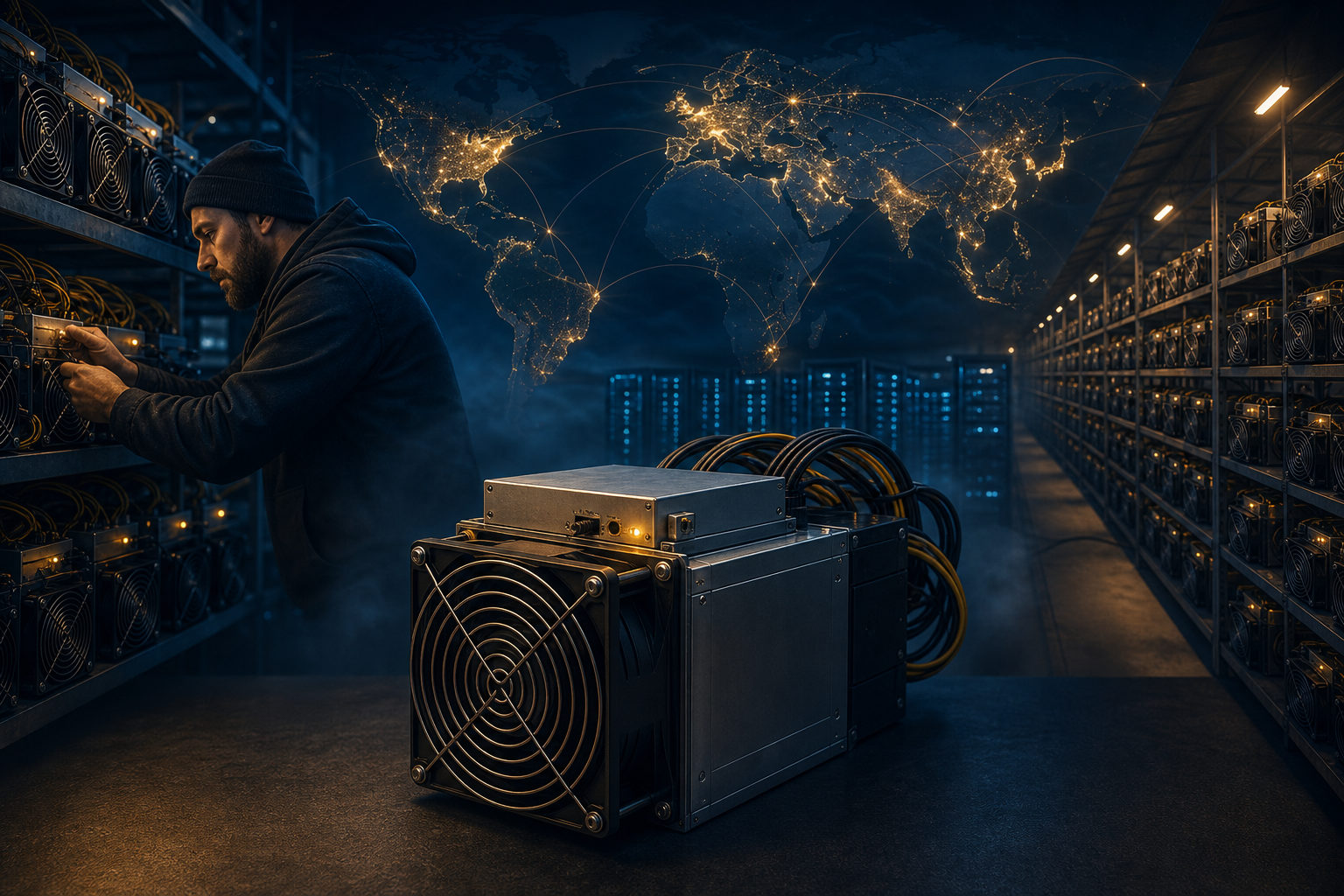
Bitcoin is mined by a mix of individual miners, pool participants, and industrial-scale mining farms. In theory, almost anyone can mine bitcoin; in practice, the people who stay competitive usually have specialized hardware, low power costs, and strong operational control.
Who actually mines bitcoin
Bitcoin mining is the process of using computing hardware to compete for the right to add a new block to the blockchain. The people doing this range from solo operators running their own machines to large businesses managing rows of mining rigs in dedicated facilities.
A third group sits in the middle: miners who own hardware but connect it to a mining pool. That setup lets many participants combine their computing power and share payouts according to the pool's rules, which can reduce the income swings of mining alone.
So when people ask who mines bitcoin, the practical answer is broad. The network is open, but the active mining base is shaped by economics more than by access rules.
Who can mine bitcoin
From a protocol standpoint, anyone can mine bitcoin. There is no central company that approves miners before they join. If you have compatible mining hardware, a wallet, an internet connection, and the software needed to participate, you can take part.
That said, being allowed to mine is different from being well positioned to mine. The main barriers are not identity or status. They are power prices, machine efficiency, heat management, noise, uptime, repairs, and the ability to keep equipment running without frequent interruptions.
Common types of miners
- Solo miners: run their own machines and compete on their own.
- Pool miners: contribute hash power to a pool and receive a share of payouts.
- Mining farms: operate many machines in one location with dedicated systems.
- Hosted miners: own the hardware but place it in a third-party facility.
Why mining is dominated by farms and pools
Bitcoin produces a new block about every 10 minutes, and miners compete continuously for that block. For a single machine or a small setup, mining alone can mean highly uneven returns. That is one reason mining pools became common: they turn a winner-takes-all process into a steadier payout model for participants.
Large mining farms have other advantages. They can negotiate better power arrangements, build cooling systems around their equipment, standardize maintenance, and monitor machines at scale. Since mining hardware runs under constant load, any downtime, overheating, or connection issue can cut output fast.
Hardware also matters. In bitcoin's early days, people could participate with general-purpose computers. Today, mining is largely done with specialized machines built for this one task, which raises the bar for anyone entering the field with consumer equipment.
What bitcoin miners are actually doing
Miners are not just “making coins.” They collect transactions, check that those transactions follow the network's rules, and perform the computation needed to compete for block production. The miner that finds a valid result first gets the chance to add the next block and receive the block reward plus transaction fees under the protocol.
This role is central to how bitcoin stays operational. Mining helps order transactions, reduces the risk of the same coins being spent twice, and adds a cost to attacking the network. In other words, miners are part of both issuance and security.
Bitcoin has a fixed supply cap of 21 million coins. New issuance follows the code, and the block subsidy is cut roughly every 4 years, or every 210,000 blocks. That means miners are always balancing current operating costs against a schedule that becomes tighter over time.
What ordinary people should check before trying
If your real question is whether you can mine bitcoin yourself, start with the basics rather than with marketing claims. Check your electricity cost, available space, ventilation, noise tolerance, internet stability, and the time you can devote to maintenance.
You should also separate different participation models. Solo mining gives you full control but comes with more variance. Pool mining is the more common route because payouts are usually smoother. Hosting can remove some day-to-day work, but it adds counterparty risk, service fees, and less direct control over the machines.
It also helps to distinguish mining from simply buying bitcoin. Mining is closer to running equipment and managing expenses over time. Buying bitcoin is a market transaction. People new to the topic often mix up those two paths and underestimate hardware wear, downtime, and operational overhead.
FAQ
Who mines bitcoins today?
Most active mining is done by industrial operators, pool participants, and a smaller number of solo miners. Individuals can still join, but large-scale setups usually have stronger cost and uptime advantages.
Can regular people mine bitcoin?
Yes, from a network access standpoint. The harder question is whether a regular person can do it efficiently once power costs, heat, noise, and maintenance are taken into account.
Can you mine bitcoin with a home computer?
A home computer can run mining-related software, but that does not mean it is competitive. In current conditions, consumer hardware generally struggles against specialized mining machines.
Does joining a mining pool still count as mining?
Yes. You are still providing computing power to the network, just through a shared structure that spreads results across many participants.
Why are miners important to bitcoin?
Miners confirm transactions, compete to add new blocks, and help keep the ledger hard to alter. Without ongoing miner participation, bitcoin would not operate in the same decentralized way.
Check these points before spending money
Before you spend on mining equipment or hosting, review the machine source, custody of your wallet, facility terms, and the rules that apply where you live. Once you understand the cost structure and the exit options, you can decide whether mining bitcoin fits you better than simply buying and holding it.
Disclaimer: This article is for informational and educational purposes only and is not investment, financial, or legal advice. Crypto assets are highly volatile and you could lose your entire investment. Do your own research and decide carefully.