
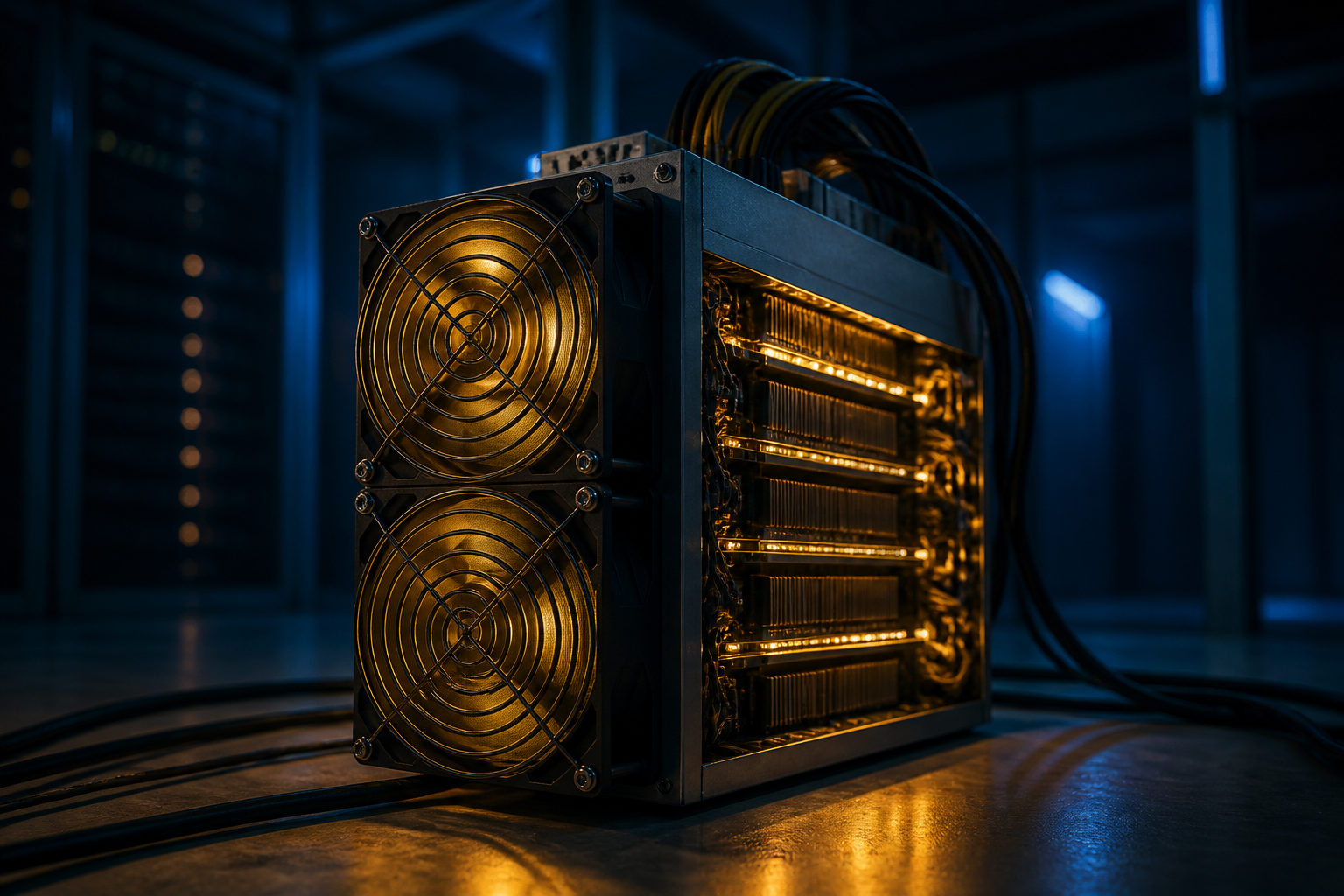
Bitcoin uses so much energy because its security model depends on proof of work, where miners run specialized hardware and consume electricity to compete for the right to add new blocks.
Start with the process: where the energy use actually comes from
If you want a clear answer to “why does bitcoin use so much energy,” the best approach is to follow the mining process step by step. Bitcoin has no central operator that decides which transactions are valid, so it needs a way for strangers across the network to agree on one transaction history without trusting a single party.
Proof of work does that by making block production expensive in the real world. Miners gather transactions, build candidate blocks, and then keep running hash calculations until one of them finds a result that fits the network rules. That repeated trial-and-error work is where most of the energy use comes from.
| Step | What happens | Why energy is used | What to keep in mind |
|---|---|---|---|
| Collect transactions | Miners assemble pending transactions into a candidate block | This part is not the main source of heavy power use | Energy use is tied more to security competition than to sending a payment |
| Run hash calculations | Mining hardware keeps trying new inputs | The machines must work continuously at high intensity | This is the main driver of electricity demand |
| Compete to find a valid block | One miner finds a valid result before others | Many parallel calculations happen across the network | Those attempts raise the cost of cheating |
| Verify the block | Nodes check whether the new block follows the rules | Verification is much lighter than mining | Bitcoin is designed so block creation is hard and validation is easier |
That distinction matters. A common mistake is to assume Bitcoin burns large amounts of energy every time a user presses send. The bigger picture is different: the large energy bill comes from keeping the network resistant to manipulation, not from the simple act of moving coins between wallets.
Step 1: proof of work turns electricity into a security cost
Bitcoin needs a rule set that works in an open system where participants may not know each other and may not trust each other. If anyone could create blocks cheaply and without limit, rewriting history or flooding the network would be much easier. Proof of work raises the barrier by forcing miners to commit real resources.
In practical terms, miners change part of the candidate block data and keep hashing it again and again. The reason is simple: there is no shortcut to guess a valid result. You have to keep trying until one appears. Once a miner finds it, though, the rest of the network can check it quickly.
The important caution here is that Bitcoin was built around “hard to produce, easy to verify.” That is why the energy use sits at the front of the process. The system spends resources to make block production expensive, then lets verification stay relatively light for everyone else running a node.
This also helps explain why energy use is not a bug that accidentally appeared on top of Bitcoin. It is tied to the network’s method of defense. Anyone who wants to attack the chain has to face the same costly competition that honest miners face.
Step 2: miner incentives keep the competition running
Technology alone does not explain the full picture. Bitcoin also uses a strong incentive system. Miners compete because valid blocks come with economic rewards, and those rewards encourage them to keep hardware online, search for cheaper power, and upgrade to more efficient machines when the economics justify it.
A useful way to think about this is to picture mining as a constant calculation of cost versus expected return. A miner looks at electricity expense, hardware efficiency, and the current level of competition, then decides whether to keep operating. If the business case still works, machines stay on. If it does not, some miners shut down.
There is a caution here as well: people often talk as if rising Bitcoin demand must automatically and neatly translate into rising energy use. Reality is less tidy. Hardware efficiency changes, miners enter and leave, and network difficulty adjusts. So the relationship is real, but not a straight line you can reduce to one headline.
| Factor | How miners react | Why it matters for energy use |
|---|---|---|
| Block rewards and fees | Higher expected revenue can attract more miners | More competition can keep more hardware running |
| Electricity cost | Cheap power improves the mining business case | The same machine can be viable in one place and unprofitable in another |
| Hardware efficiency | More efficient machines produce more hashpower per unit of electricity | Energy debates need to consider efficiency, not just raw consumption |
| Competitive pressure | More miners reduce each miner’s chance of winning a block | Total energy use and individual profit are not the same thing |
This competition matters because miners do not simply stop after “enough” work has been done. As long as the expected reward attracts participants, mining remains a global race. That race is one of the biggest reasons Bitcoin uses so much energy.
Step 3: difficulty adjustment keeps block production costly
Bitcoin aims to produce a new block about every 10 minutes. To keep that pace from speeding up whenever more mining hardware joins, the protocol adjusts mining difficulty. If total hashpower rises, it becomes harder to find a valid block. If hashpower falls, the barrier can move the other way.
Operationally, that means extra mining power does not simply make the network process blocks faster and faster. Instead, it tends to make the competition tougher. More machines chasing the same schedule leads to more work being performed across the network, which supports security but also keeps energy demand significant.
This is one place where newcomers often get confused. In many computing systems, adding more machines helps finish jobs and then the machines can slow down. Bitcoin mining does not work like a typical server queue. Miners are all chasing a winner-takes-the-block contest, so a large amount of parallel work keeps happening until someone wins that round.
The caution point is that faster hardware does not remove the contest. It often intensifies it. More efficient chips can improve output per unit of electricity, but they can also keep the race attractive enough for more miners to participate.
Step 4: high energy use does not settle the value debate by itself
People often move too quickly from a technical fact to a moral conclusion. The technical fact is straightforward: Bitcoin consumes substantial energy because proof of work makes miners spend real resources. The harder question is whether that cost is justified by what the network provides.
Some people see Bitcoin as an open monetary system that can be verified independently and operated without a central gatekeeper. From that view, energy use is part of the price paid for censorship resistance and a hard-to-alter ledger. Others see the same electricity demand and decide the tradeoff is not worth it.
It helps to separate these layers instead of mixing them together. One layer is whether the energy use is real. Another is why it happens. A third is whether the benefits justify the cost. The first two are mostly about mechanism. The third is where values and priorities differ.
One more warning: headlines often blur these layers on purpose. A piece that starts by asking about power consumption may end by pushing a token, a mining scheme, or a simplistic political angle. Once that happens, you are no longer reading a neutral explanation of how Bitcoin works.
Step 5: how to avoid misleading claims and mining scams
The energy topic attracts bad marketing. Some promotions use Bitcoin’s power consumption to scare readers into buying a different coin. Others flip the story around and claim that high energy use proves mining must be highly profitable. Both approaches can push people into poor decisions.
| Situation | Common pitch | What to do | Caution |
|---|---|---|---|
| Mining hardware sales | “If it uses this much energy, the profits must be huge” | Ask what determines revenue and what could reduce it | If power cost and competition are missing from the pitch, be careful |
| Cloud mining offers | “Hands-off income with none of the technical work” | Read the contract terms, payout rules, and exit conditions closely | If you cannot explain how the model works, do not send funds |
| Alternative coin promotion | “Bitcoin wastes energy, so this coin is the obvious replacement” | Compare the consensus model and security assumptions | Lower energy use does not automatically mean equal security |
| Social media hype | Emotion-heavy posts tied to quick calls to buy or join a group | Check whether the content explains the mechanism or pushes a transaction | The more urgent the sales tone, the slower you should move |
If your goal is education, start with Bitcoin’s white paper, plain-language explanations of proof of work, and technical resources that focus on mechanism rather than sales. If a so-called explainer turns into a deposit request, a private group invite, or a guaranteed return claim, treat that as a warning sign.
Bitcoin began with the 2008 white paper titled Bitcoin: A Peer-to-Peer Electronic Cash System, and the network’s first block appeared in January 2009. Those details matter because they remind you that the system was designed from the beginning around open participation and a proof-of-work model, not around a later marketing story.
FAQ
Does every Bitcoin transaction use a huge amount of electricity?
It is misleading to think of energy use as being caused by one transaction in isolation. Most of the electricity goes toward maintaining network security through ongoing mining competition, even when individual users are simply sending or receiving funds.
Why doesn’t Bitcoin switch to a lower-energy system?
Other blockchains use different consensus models, but changing Bitcoin’s core security design is not a small software tweak. It would affect the network’s trust assumptions, participation model, and the rules that users and node operators rely on.
Would better mining hardware solve the energy issue?
More efficient hardware can improve how much hashpower miners get from each unit of electricity. That does not guarantee total network energy use will fall, because improved efficiency can also keep mining attractive enough for more competitors to stay in the race.
Is Bitcoin energy use just wasted power?
That depends on how you judge the tradeoff. If you value an open system with independent verification and resistance to unilateral control, you may see the energy cost as part of the service. If you focus more on resource efficiency, you may disagree.
How can I research this topic without getting pulled into a scam?
Look for material that explains proof of work, mining incentives, and difficulty adjustment without trying to sell you access, hardware, or guaranteed returns. If the explanation quickly turns into a payment request, the educational part is probably just bait.
If you want to study the subject further, the most useful next terms to look up are proof of work, mining difficulty adjustment, miner incentives, block rewards, and node verification. Those concepts fit together, and once you see that structure, Bitcoin’s energy use becomes much easier to understand.
Disclaimer: This article is for informational and educational purposes only and is not investment, financial, or legal advice. Crypto assets are highly volatile and you could lose your entire investment. Do your own research and decide carefully.