
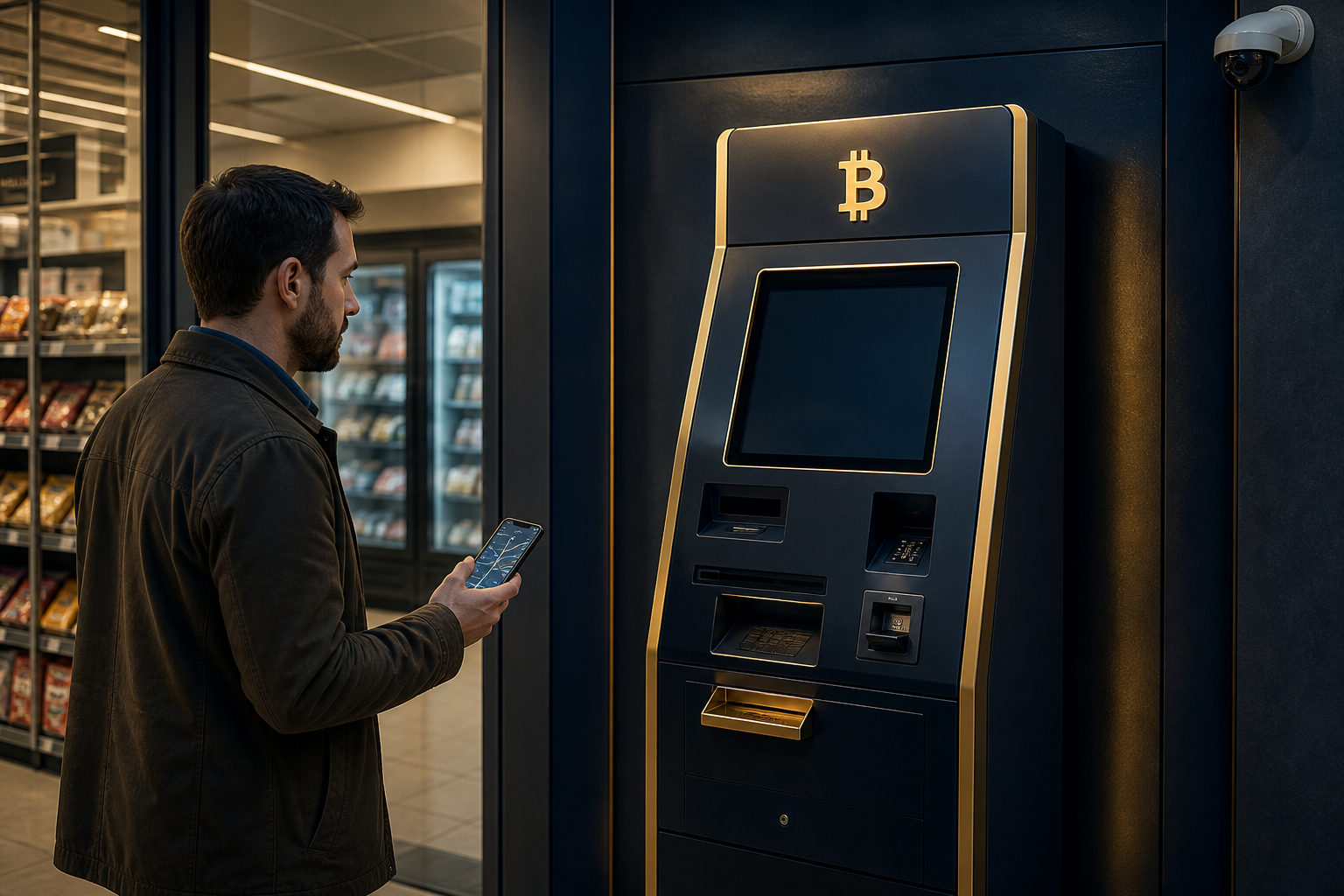
If you are searching for a bitcoin ATM near you, the smart move is to verify the machine, the fees, the ID checks, and the safety of the location before you leave home.
What a bitcoin ATM actually does
A bitcoin ATM is not the same thing as a regular bank ATM. It usually lets a user buy bitcoin through an in-person process, and some machines also let users sell bitcoin and receive cash. Features vary by operator, so finding a nearby machine does not mean it will fit your purpose.
That distinction matters. A bank ATM works with your bank account. A bitcoin ATM is usually part of a crypto transaction flow that can include identity verification, a wallet address scan, cash handling, and an on-chain transfer. The process is simpler than a full trading interface for some people, but it also creates different risks.
Step 1: Decide whether a bitcoin ATM makes sense for you
Action: Before you search maps or directories, decide whether you want to buy bitcoin, sell bitcoin, or just confirm whether a machine exists nearby. Then think about how you plan to pay and whether you already have your own wallet ready.
Why it matters: Not every bitcoin ATM supports both directions. Some are buy-only. Some ask for a phone number or ID steps before they allow a transaction. Some support bitcoin, while others emphasize different crypto assets or have limited options on site.
Watch for this: If you are completely new and do not yet understand wallet addresses, QR codes, and transaction confirmation, slow down before using any machine. The hardest part is often not inserting cash. It is making sure the bitcoin goes to the right place.
When a bitcoin ATM may be a reasonable option
- You prefer an in-person flow instead of starting with a more complex trading screen.
- You already control your own bitcoin wallet and can verify your receive address.
- You value convenience and speed enough to accept that the total cost may be higher.
When you should not rush into it
- You do not have a wallet yet and are still unclear on how to receive bitcoin.
- Someone else is telling you to go to a nearby machine right away.
- You cannot tell where the fee is shown or how much bitcoin you will actually receive.
Step 2: Search for a nearby machine the right way
Action: When you search for “a bitcoin atm near me” or a similar phrase, do not stop at the first map pin. Check whether the business is real, whether the location is open, whether the machine supports bitcoin, and whether it is buy-only or two-way.
Why it matters: In-person machine data can go stale. A machine may be moved, shut down, under maintenance, or limited to certain functions. If you head out based on one unverified listing, you may waste time or arrive unprepared.
Watch for this: Cross-check the location details instead of trusting a single result page. Compare the business name, opening hours, machine description, and any recent user notes. If those details do not line up, treat the listing with caution.
What to verify before you go
- Whether the venue is open: Many machines are inside stores or other businesses with their own hours.
- Whether the machine handles bitcoin: Do not assume every crypto kiosk is a bitcoin ATM in the way you need.
- Whether it supports buying, selling, or both: This changes the whole trip.
- What identity steps are required: Some machines may ask for a phone number, an ID check, or a camera-based step.
- How the fees are shown: The cost may appear as a service fee, a spread in the quoted rate, or both.
- How the bitcoin is delivered: Some send directly to your wallet after scanning your QR code.
If a listing says little more than fast crypto access or easy purchase, with no clear explanation of fees, verification rules, or supported assets, that is not a great starting point for a first-time user.
Step 3: Prepare your wallet before you leave home
Action: Set up your own bitcoin wallet in advance. Make sure you can open it, find your receive address, and display the correct QR code. Also check your phone battery, mobile connection, and your ability to receive text messages if needed.
Why it matters: The most common user mistake is not the payment step. It is the address step. If you are standing at the machine downloading apps, creating an account, or trying to figure out where the QR code is, your chances of making a mistake go up fast.
Watch for this: Never let a stranger handle your phone. Never use a wallet suggested by a random person at the location. A bitcoin ATM does not need your recovery phrase, private key, or backup words. If anyone asks for them, stop immediately.
Quick checklist before you head out
- Your wallet is already created and backed up safely offline.
- You know how to display your bitcoin receive QR code.
- You can tell the difference between your own wallet address and some random address sent by another person.
- Your phone can stay online during the process.
- You know where to check the transaction record afterward.
If you cannot answer a simple question like where your bitcoin will be delivered, you are not ready to use the machine yet. The ATM can process a transaction. It cannot replace basic wallet security.
Step 4: Use the machine slowly and in order
Action: Once you arrive, look at the surroundings first. Then inspect the machine, read the prompts, and go through each screen in sequence. Start small if you are learning the flow for the first time.
Why it matters: The pressure of a physical setting makes mistakes more likely. Other people may be waiting. The screen may time out. A text verification code may interrupt the process. It is easy to tap through important details when you feel rushed.
Watch for this: If any screen is unclear, pause. Do not continue just because you have already started. A bitcoin transaction sent to the wrong address is usually not something you can simply reverse.
A practical order to follow on site
- Check the machine itself: Look for signs of tampering, unusual add-ons, or anything that seems out of place.
- Select the correct transaction type: Buying and selling are not the same process.
- Read the identity prompts: Know what information is being requested before you continue.
- Scan your own wallet QR code: Use only your wallet. Do not scan a code from a chat window, a text message, or a stranger's paper note.
- Review the confirmation screen: Check the asset, the address, the fee information, and the delivery method.
- Keep the receipt or record: Save any printed receipt or transaction reference for follow-up.
If the machine or another person tells you to send the bitcoin to a separate verification wallet, support wallet, or secure holding address, stop. That is not a normal self-service purchase flow.
Step 5: Put scam prevention ahead of convenience
This is the part many beginners miss. Bitcoin ATMs are often used in scams because they combine a physical cash-like experience with a transfer method that is usually hard to undo once the bitcoin leaves your control.
Common danger signs include someone claiming to be from government, tax, technical support, customer service, an investment group, a job offer, or a romantic contact, then telling you to go to a nearby bitcoin ATM immediately. Another red flag is being told to keep the transaction secret, avoid speaking to store staff, or complete it the same day without delay.
- If anyone tells you to use a bitcoin ATM to pay a fine, deposit, release fee, recovery fee, or account fix, walk away.
- If anyone offers to guide you step by step over the phone or through screen sharing, treat that as a serious warning sign.
- If anyone asks for your code, your receipt photo, or access to your device, do not comply.
- If anyone promises to send more back after you transfer first, do not proceed.
A very useful rule is this: if the bitcoin is not going into your own wallet first, and you are being told to send it to a wallet controlled by someone else, you are not doing a simple purchase anymore. You are stepping into a high-risk transfer.
Step 6: Compare convenience, cost, and privacy before you commit
Action: Read the machine's fee disclosures, including any service fee, any rate spread, and any network fee explanation. Also check how much personal information the machine asks for before you decide to continue.
Why it matters: Many people focus only on whether there is a bitcoin ATM nearby. The better question is whether that machine is worth using for your needs. Convenience may be the main benefit, but convenience is not the same as low cost or low data collection.
Watch for this: A nearby machine may save time, yet still be a poor fit if you are very sensitive to fees or privacy requirements. On the other hand, some users accept those trade-offs because they prefer an in-person process and direct control over the wallet address scan.
| Factor | What to check | Why it matters |
|---|---|---|
| Fees | Service fee, quoted rate, network fee disclosure | It affects how much bitcoin you actually receive |
| ID rules | Phone number, ID request, photo step | It affects privacy and whether you can finish the process |
| Delivery | Direct wallet delivery or another follow-up step | It shapes your timing expectations |
| Location safety | Lighting, privacy, foot traffic, people nearby | It lowers the chance of shoulder surfing or pressure |
Step 7: Check the result before you leave
Action: After the transaction, open your wallet and look for the incoming activity. Save your receipt and verify that the destination wallet is yours. If the wallet does not show a completed result yet, check whether the transaction is pending rather than assuming something went wrong.
Why it matters: Wallet apps do not all display status in the same way. A transaction may appear as submitted or pending before it looks final. If you do not know that, you may panic too early or miss a real issue.
Watch for this: If you need support, share only the minimum details required, such as the time, machine location, and receipt reference. Never send your seed phrase, private key, or full wallet backup to anyone claiming to help.
FAQ
How can I tell if there is really a bitcoin ATM near me and not just an old listing?
Check more than one source and compare the venue name, hours, and machine description. A map pin by itself is not enough, especially if the listing does not clearly explain whether the machine is active.
Do I need my own wallet before using a bitcoin ATM?
In most cases, yes, that is the safer approach. Having your own wallet ready means you control the receive address and do not need to install unfamiliar software on the spot.
Can I buy bitcoin at the ATM and send it straight to someone else?
You may be able to do that technically, but it is risky for beginners. If another person is directing the transfer, that is one of the strongest scam warning signs.
How do I judge whether the machine's fees are too high?
Look at the total result, not just one fee line. The key question is how much bitcoin you receive after all charges and rate differences are reflected.
What should I do if the machine completes the process but my wallet does not show the bitcoin yet?
First check whether the wallet shows a pending or incoming status. Keep the receipt and use the operator's official support channel if needed, but never give away your recovery phrase.
If you decide to use a bitcoin ATM, the safest approach is simple: prepare your own wallet first, verify every screen, keep the bitcoin in your own control, and stop the moment anyone tries to turn the purchase into a payment for them.