
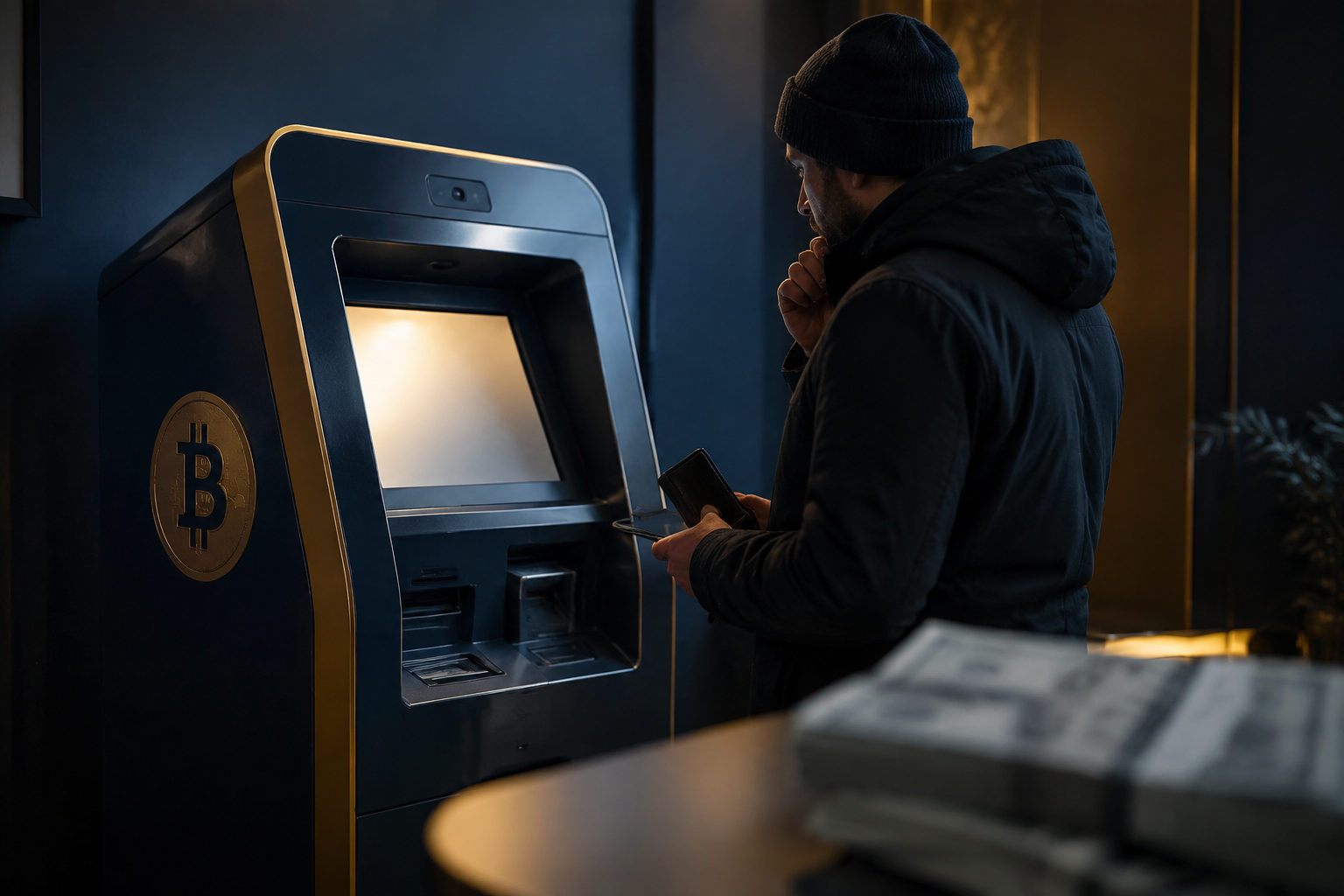
Bitcoin ATMs are not anonymous. Most operators require identity verification before any transaction, and the machines that skip checks entirely are increasingly rare. This guide walks through the actual sequence — choosing a machine, buying, selling, and withdrawing cash — and flags the privacy limits and common scams at each stage.
Step 1: Check Whether the Machine Requires KYC
Start by reading the screen. If it asks for a phone number or scans an ID, the machine runs a verified process. If the interface only takes a Bitcoin address and collects no identity data, you are looking at one of the few no-KYC units. That distinction drives your transaction limits and the fee structure.
Which option is right depends on what you need. Buying a few hundred dollars occasionally? A verified machine is less hassle. Privacy matters more? Check the operator's compliance disclosures before you decide. Keep in mind that many small operators advertising "no verification" still log IP addresses, security footage, and timestamps — so "anonymous" is rarely absolute.
Step 2: Buying — Watch the Spread and the Rate Lock
ATM buy prices run noticeably higher than exchange quotes. That gap is the machine's service cost, not a glitch. Before you confirm payment, check the displayed rate and compare the payout amount against the live market price to calculate your real expense.
The buying flow generally looks like this: choose an amount or scan a payment QR code, insert cash or swipe a debit card, enter your Bitcoin address, then confirm on your phone once the deposit lands. Double-check the address character by character — copy-paste from a wallet is where missing or extra characters sneak in. A wrong address means permanent loss.
The rate lock is another blind spot. Several minutes can pass between payment and on-chain confirmation, and if the quoted rate goes stale, the amount you receive may not match the screen. If that happens, screenshot the evidence and contact support before leaving the machine.
Step 3: Selling and Cash Withdrawal
The reverse direction works by scanning a receipt QR code and dispensing cash, but limits are tighter. Many machines cap a single withdrawal well below the buy limit, and cash-out fees run higher, making small redemptions poor value. Check nearby machines for their withdrawal caps and fees before heading out.
Count the bills at the machine. If a note is missing or damaged, do not walk away — use the intercom button to reach the operator and keep the receipt. Cash transactions have no bank-style dispute channel; once you leave the location, a complaint becomes much harder to resolve.
Step 4: Recognizing the Common Scams
Scams usually fall into two patterns. One is a person posing as official maintenance staff, claiming the machine is broken and asking you to send coins to a specific address. Legitimate operators never ask users to transfer funds to an arbitrary address. The other is a fake support number on the screen, designed to extract your recovery phrase or private key. Never share your recovery phrase with anyone, period.
There is also a face-to-face scheme aimed at sellers. A stranger approaches you at the machine, offers to buy your coins above market rate, and asks you to sell on the spot and hand over the cash. This is fraud that exploits your unfamiliarity with the process. A legitimate ATM transaction dispenses cash directly from the machine — there is no middleman collecting money on your behalf.
If something feels off, stop the transaction. Contact support only through the number published on the operator's official website, not any number displayed on the screen. Keep the receipt, the timestamp, and the machine ID — those three items are your main evidence if you need to escalate.
FAQ
Do Bitcoin ATMs require ID verification?
Most of them do. Major operators typically ask for phone verification or a scanned ID, and unverified transaction limits are low or nonexistent. Fully anonymous machines still exist, but they are becoming harder to find.
Can Bitcoin ATM purchases be traced?
Yes. The blockchain is a public ledger, so every transfer is visible. The camera footage, phone number, and ID simply make the trail even more direct — the system is not designed for anonymity.
What is the difference between a Bitcoin ATM and an exchange?
ATMs lower the entry barrier and move faster, but fees are higher. Exchanges offer more coin options and better pricing at the cost of a full sign-up process. In both cases, KYC requirements typically tighten as transaction amounts grow.
A Habit Worth Keeping: Log Every Transaction
Write down the time, machine ID, transaction amount, and destination address after every ATM use. This single habit makes reconciliation and dispute resolution faster, and it helps you spot account problems early — instead of digging through old records after something has already gone wrong.