
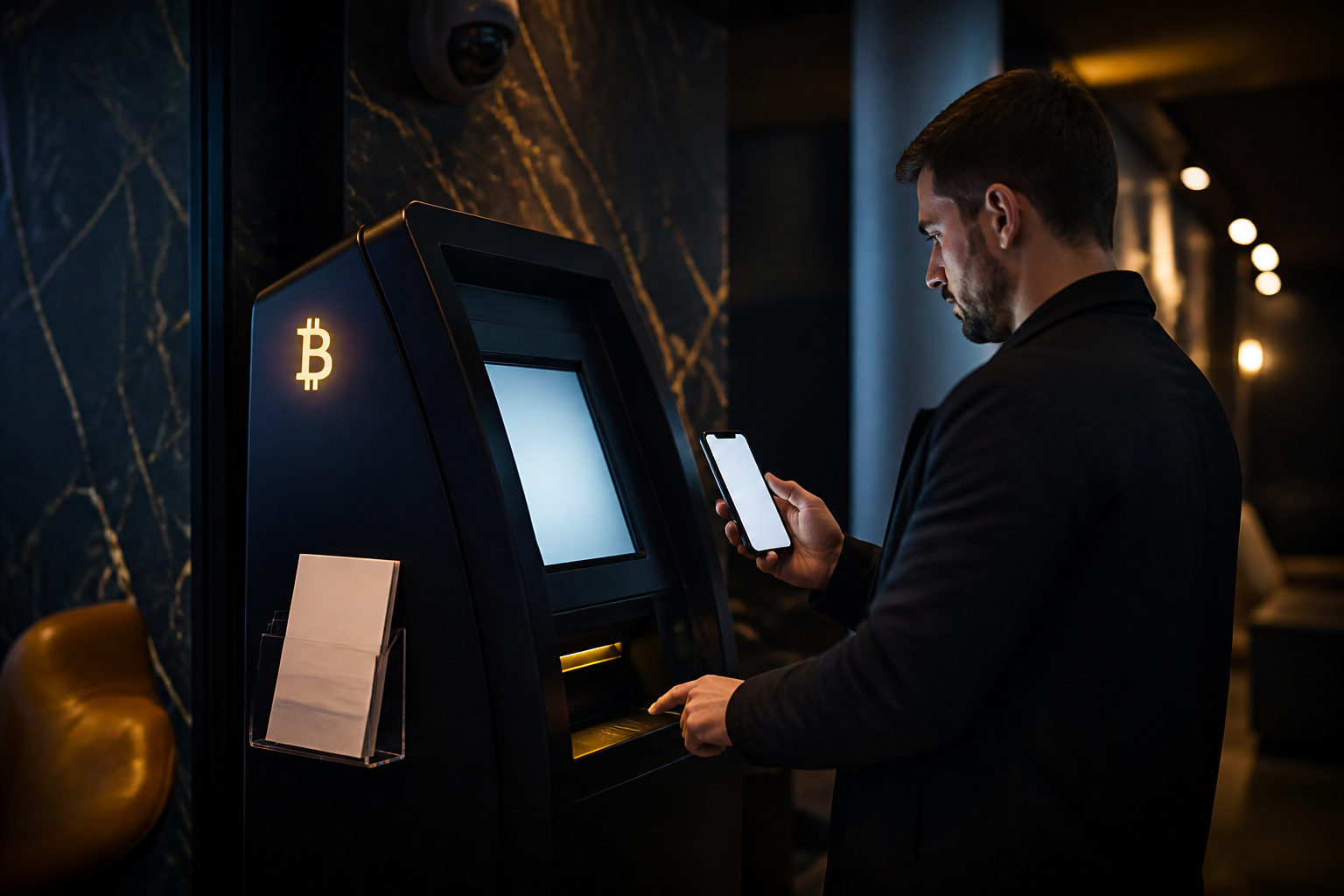
Are bitcoin machines safe? Sometimes, yes—but only when the operator is legitimate, the fees are clear, and you control the wallet address. The biggest danger usually comes from scams, hidden costs, and rushed transactions, not from the Bitcoin network itself.
What “bitcoin machines” usually means in practice
Most people asking this question mean Bitcoin ATMs or kiosks that let users buy bitcoin with cash or a bank card. Some machines also support selling. They are best understood as a physical on-ramp, not a place to store funds for the long term.
Bitcoin itself has been running since the genesis block on 2009-01-03, and the network targets a new block about every 10 minutes. A machine does not change those rules. It only helps convert local money into BTC and sends it to a wallet address, which is why safety depends on the machine operator and on whether the destination address is really yours.
| What you are judging | Does it prove safety? | What matters more |
|---|---|---|
| The machine looks modern | No | A clean screen says little about fees, support, or compliance |
| The machine is in a busy store | Only partly | A public location may help with maintenance and records, but it does not confirm trustworthiness |
| The operator is clearly identified | Yes | You want a real company name, support channel, and fee disclosure |
| You checked the wallet address yourself | Yes | Blockchain transfers usually cannot be reversed after confirmation |
| Someone is telling you what to do by phone | Major warning | This is a common scam pattern |
The main risks are simple, direct, and easy to miss
The first risk is scam coaching. A fraudster may claim to be from a bank, a tech company, a tax office, or law enforcement. The goal is to create urgency and push you to a bitcoin machine so you convert your money and send BTC to a wallet they control.
This setup works because people feel trapped in the moment. If someone tells you to stay on the phone, avoid talking to family, or follow step-by-step instructions at the machine, that is a strong signal to stop immediately. A real purchase does not require secret pressure from a stranger.
The second risk is poor fee transparency. Bitcoin machines often cost more than large online exchanges, and the total cost may be split across exchange rate spread, service fee, and blockchain fee. If the full amount appears only at the last confirmation screen, users may approve the transaction without noticing how much value they are giving up.
The third risk is a wrong or replaced wallet address. You may scan a QR code sent by another person, or malware on your phone may swap a copied address before you reach the machine. Once the BTC is sent and confirmed on-chain, recovery is usually not possible through the machine operator.
The fourth risk is data collection without clear handling rules. Some operators ask for a phone number, an ID scan, or a selfie. That does not always mean something is wrong, but you should know why the data is collected, how support works, and what happens if there is a dispute.
| Risk pattern | What it looks like on the spot | Best response |
|---|---|---|
| Phone or chat coaching | Someone tells you not to hang up | End the call and walk away |
| Fake authority pressure | You are told your account will be frozen unless you act now | Verify the claim through official channels on your own |
| Fees hidden until the end | The final page shows a much worse deal | Cancel the transaction |
| Stranger-supplied QR code | You are told to scan a receiving address from someone else | Send only to your own wallet and test with a small amount first |
| Extra stickers or unofficial signs on the machine | A label tells you to contact “support” through a separate code | Ignore it and rely on the machine’s built-in interface |
How to tell whether a bitcoin machine is worth using
Start with the operator, not the hardware. A safer machine usually makes the responsible company easy to identify, shows support details, explains fees before confirmation, and gives some record of the transaction. If you cannot tell who runs the machine, your position gets weak the moment something goes wrong.
Next, look at the flow. A normal machine gives you time to review the wallet address, exchange terms, and final amount. A risky setup pushes you forward with urgency, confusing wording, or pressure from another person standing nearby.
Then separate buying from custody. Bitcoin’s smallest unit is 1 satoshi, equal to 0.00000001 BTC, and every purchase eventually comes down to who controls the destination wallet. If the machine sends funds to a wallet or app account you do not fully control, the transaction may be complete while your security is still weak.
| Checkpoint | Better sign | Bad sign |
|---|---|---|
| Operator details | Clear company name, support, and terms | Branding only, with no accountable entity |
| Fee display | Total cost is visible before final approval | Costs are fragmented and hard to compare |
| Address review | You can pause and verify carefully | The process pushes you to continue fast |
| ID verification | The purpose and support path are explained | Too much data requested with little explanation |
| Physical setting | Open and visible area | Someone is hovering and watching your screen |
If you still want to use one, follow this order
Prepare your own wallet first on a device you trust. Do not combine a first-time wallet setup, a first-time machine purchase, and instructions from an unknown person in one rushed session. Too many unknowns in one place is exactly what scammers want.
At the machine, do only what you understand. A normal bitcoin purchase does not require screen sharing, remote access software, or reading one-time codes aloud. If any step feels detached from the simple act of buying BTC, stop there.
Use a small test transaction before anything larger. Wait until you can confirm that the bitcoin arrived at your own wallet address, then decide whether to continue. If a test does not arrive when expected, review the receipt and on-chain status before doing anything else.
Keep records. Save the receipt, the time, the machine location, the transaction ID if shown, and any support messages. Blockchain transfers usually cannot be reversed, but these records still matter for machine errors, duplicate charges, delayed processing, or identity verification disputes.
It also helps to remember what does and does not affect safety. Bitcoin has a hard cap of 21,000,000 BTC, expected to be fully issued around 2140, and the block subsidy is reduced every 210,000 blocks, roughly every four years. After the 2024-04-19 halving, the current block reward is 3.125 BTC, with the next halving expected around 2028. Those facts describe the asset itself; they do not make a kiosk safe or unsafe. The real question is whether the operator is reliable and whether the coins end up in a wallet you control.
FAQ
Are bitcoin machines safe for beginners?
They can be, but beginners are often more vulnerable to bad fees and scam pressure. If you use one, go in with your own wallet ready and never follow live instructions from a stranger.
Is a bitcoin machine in a mall automatically trustworthy?
No. A visible location may help if you need records or support later, but it does not prove the operator is fair or transparent. You still need to review the company details and fee disclosure.
Why do scammers tell victims to use bitcoin machines?
Because the machine can turn cash or bank funds into BTC quickly, and confirmed blockchain transfers are usually very hard to recover. The machine is used as a tool in the scam, not as proof of legitimacy.
Is bitcoin bought from a machine different from bitcoin bought online?
No, the asset is the same once it reaches the blockchain. The difference is usually in fees, identity checks, support quality, and how easy it is to verify every step before payment.
What should I check first on the screen?
Check the receiving wallet address before anything else, then review the total cost. High fees are unpleasant, but a wrong address can send your BTC to someone else permanently.
If you feel rushed, watched, or instructed during the transaction, the safest move is to cancel and leave. You can always buy later; a mistaken blockchain transfer usually does not give you a second chance.