
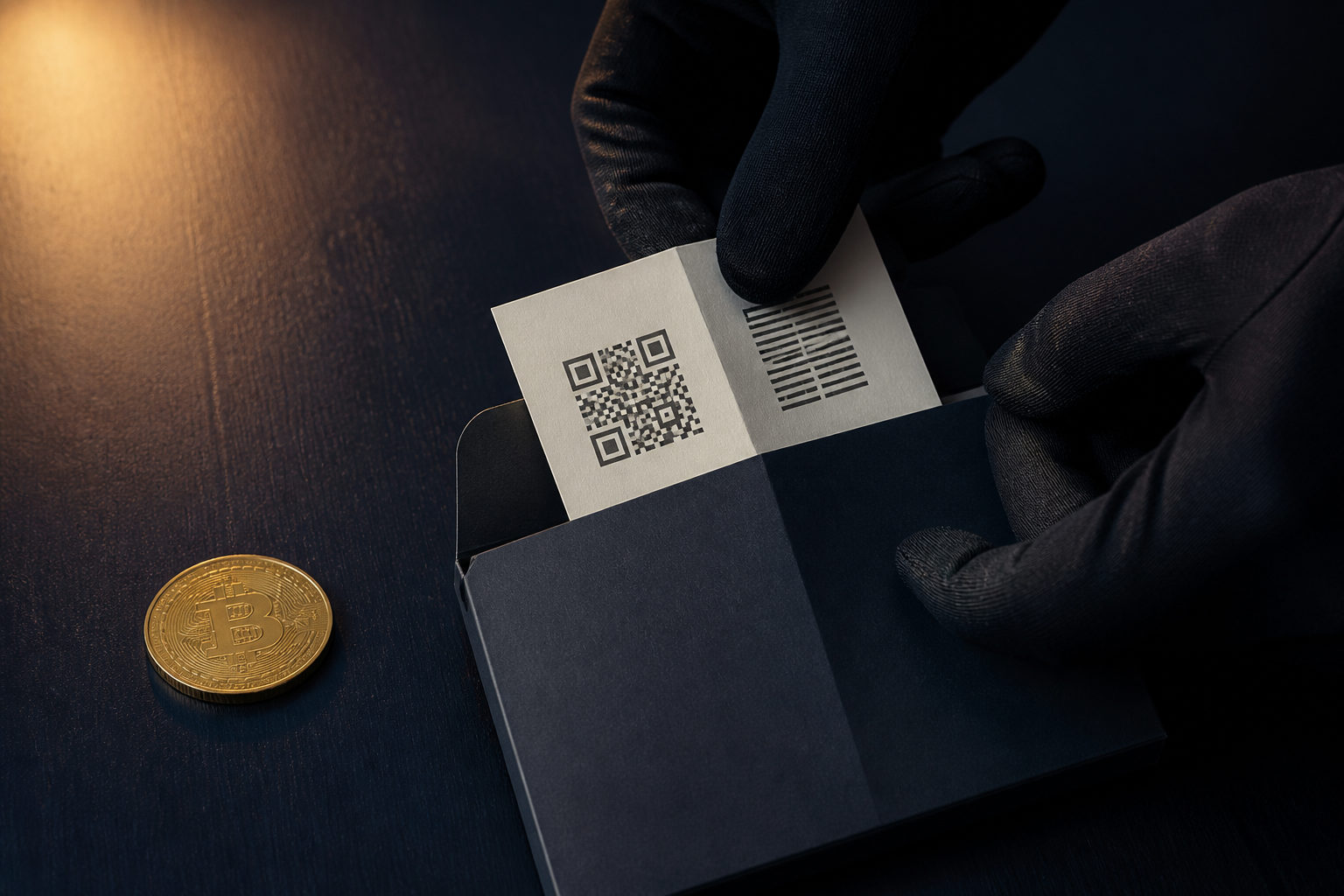
A bitcoin paper wallet is an offline paper record of the secret information that controls BTC. It can reduce internet exposure, but if that information is copied, miswritten, lost, or damaged, the funds are often gone for good.
What a bitcoin paper wallet actually is
The phrase sounds simple, yet it causes a lot of confusion. A bitcoin paper wallet is not valuable because it is printed on paper. It matters because it contains a private key, or other recovery information, that gives spending authority over a bitcoin address.
Bitcoin itself works through cryptographic signatures. The network does not care who you are; it checks whether a transaction is signed with the right key. That is why paper wallets are really about offline key custody. Paper is just the storage medium.
This idea became popular because people wanted a way to hold bitcoin without leaving keys on an internet-connected device. That goal still makes sense. The trouble is that paper removes one set of risks and replaces it with another: handling errors, poor backups, physical damage, and accidental disclosure.
| Option | Where secrets live | Online exposure | Main weakness | Best fit |
|---|---|---|---|---|
| Paper wallet | Written or printed on paper | Low if created offline | Human error and physical loss | Strict cold storage use |
| Software wallet | Phone or computer app | Higher | Malware or device compromise | Frequent use |
| Hardware wallet | Dedicated device | Lower | Bad backup practices or device loss | Long-term holding with occasional spending |
So when people ask about a bitcoin paper wallet, the real question is whether they can manage private-key responsibility without making a single serious mistake. That is the whole model.
Why people like paper wallets, and why they fail
The appeal is easy to understand. If your key never sits in a daily-use app or cloud account, you cut off many common attack paths. For someone worried about infected devices, phishing, or account takeovers, offline storage feels direct and easy to reason about.
What often gets missed is the creation step. A paper wallet is only as private as the environment used to generate it. If the key is created on a connected machine, shown on a web page, stored in a printer queue, copied into a note app, or photographed for backup, the whole cold-storage argument gets weaker fast.
Another issue is false confidence. People sometimes treat a paper wallet like a vault because it is tangible. In practice, it is fragile. A fire, water damage, fading ink, messy handwriting, or a relative throwing away “an old sheet of paper” can all become single points of failure.
| Common shortcut | Why it feels convenient | What can go wrong |
|---|---|---|
| Generate it on a live website | Fast setup | The browser, page, or system may expose the key |
| Photograph the paper | Easy backup | Photos often sync to cloud services |
| Email the key to yourself | Simple retrieval | Email compromise exposes the funds |
| Keep reusing one paper wallet | Less to manage | One leak can affect the full balance |
That is why paper wallets are less forgiving than many newcomers expect. They do not tolerate casual handling.
How to create and store a paper wallet with fewer mistakes
If you decide to use a bitcoin paper wallet, start with the purpose. Is this for deep cold storage, or do you expect to spend from it later? If you plan to move funds often, paper is usually the wrong tool because spending introduces extra exposure and operational friction.
The next question is the setup environment. The safer approach is to generate the key material in a controlled, offline setting, then record it clearly and check it more than once. Some people print; some write by hand. Handwriting avoids printers and file queues, but it raises the chance of transcription errors. Printing can improve readability, yet it adds another device and another place where sensitive data may remain.
Clarity matters. A bitcoin private key cannot be “close enough.” One character wrong may make the funds unreachable. The same standard applies if you are storing recovery information rather than a raw private key. Bitcoin is divisible down to 1 satoshi, which equals 0.00000001 BTC, but even a tiny amount deserves the same level of care because the failure mode is absolute.
You should also think about physical durability. Paper can burn, get wet, tear, fade, or be discarded by mistake. Multiple copies can reduce the risk of one copy being destroyed, but each extra copy increases the chance that someone else sees it. There is no universal perfect setup; there is only a trade-off between availability and secrecy.
- Define the role first: use paper for long-term offline storage, not as a daily spending wallet.
- Create in a controlled environment: avoid exposing the private key to connected services.
- Verify every detail: check the address and secret data carefully before sending any BTC.
- Avoid digital traces: no photos, no screenshots, no cloud uploads, no chat backups.
- Plan physical protection: store it where fire, moisture, and casual access are less likely.
- Leave usable instructions: if someone may need to handle it later, the process must be understandable without exposing the secret too broadly.
One warning belongs in bold mentally, even if not on the page: test the full process with a very small amount before storing more. That means confirming you can receive bitcoin to the address and later recover or move it when needed.
The biggest mistakes happen when spending from a paper wallet
People often focus on storage and forget the exit path. A paper wallet is easy to misunderstand at the moment you want to use the funds. Older guides may suggest importing the private key into a software wallet and then spending from there over time. The problem is that once the secret touches an online device, the original paper wallet should no longer be treated as clean cold storage.
A more cautious approach is usually to move the full balance under that key into a fresh wallet setup after access is restored. That way, the old secret can be retired instead of reused. This matters because bitcoin transactions are authorized by keys, not by the history of how carefully you handled the paper before.
Paper wallets also create inheritance problems. Bitcoin has a hard cap of 21,000,000 BTC, and control over each unit depends on keys rather than identity records. If your heirs do not know what the document is, which part is public, and which part must stay secret, the paper may exist but remain unusable.
| Risk point | Likely result | Better response |
|---|---|---|
| The key was exposed on a connected device | Cold-storage trust is weakened | Move funds to a fresh address |
| Only one paper copy exists | Loss or damage may be final | Use carefully planned backups |
| No test before larger storage | Errors are found too late | Run a small test first |
| The same old key keeps being reused | Past exposure keeps hanging over the funds | Retire the old key after use |
There is also a practical point many people skip: paper wallets fit a narrow use case. They are best for someone who fully accepts self-custody burden and can follow a disciplined process from creation to eventual spending. For many users, a well-managed modern wallet backup offers a cleaner path with fewer failure points.
FAQ
Is a bitcoin paper wallet still a good idea today?
It can be, but only for a limited group of users who want strict offline control and understand the trade-offs. For many people, modern wallet backups are easier to use correctly.
Is a paper wallet the same as writing down seed words?
Not exactly. Both may end up on paper, but a paper wallet often refers to direct key storage, while seed phrases usually belong to a broader wallet system with more structured recovery.
Can I keep adding BTC to the same paper wallet?
You can, though the risk profile gets worse if that private key is ever exposed later. Reuse also concentrates funds behind a single secret, which increases the impact of one mistake.
What should I do after importing a paper wallet into an app?
Do not keep treating the original paper key as untouched cold storage. Once it has been exposed to an online environment, the safer move is usually to transfer the balance to a fresh setup.
Is printing safer than storing the key digitally?
Sometimes, but not by default. Paper reduces certain online risks while adding physical ones, so the result depends on the entire process, not on the material alone.
If you choose a bitcoin paper wallet, make the decision slowly: test with a tiny amount, confirm recovery works, and retire the old key after it touches any connected device. Those steps matter more than the paper itself.
Disclaimer: This article is for informational and educational purposes only and is not investment, financial, or legal advice. Crypto assets are highly volatile and you could lose your entire investment. Do your own research and decide carefully.