
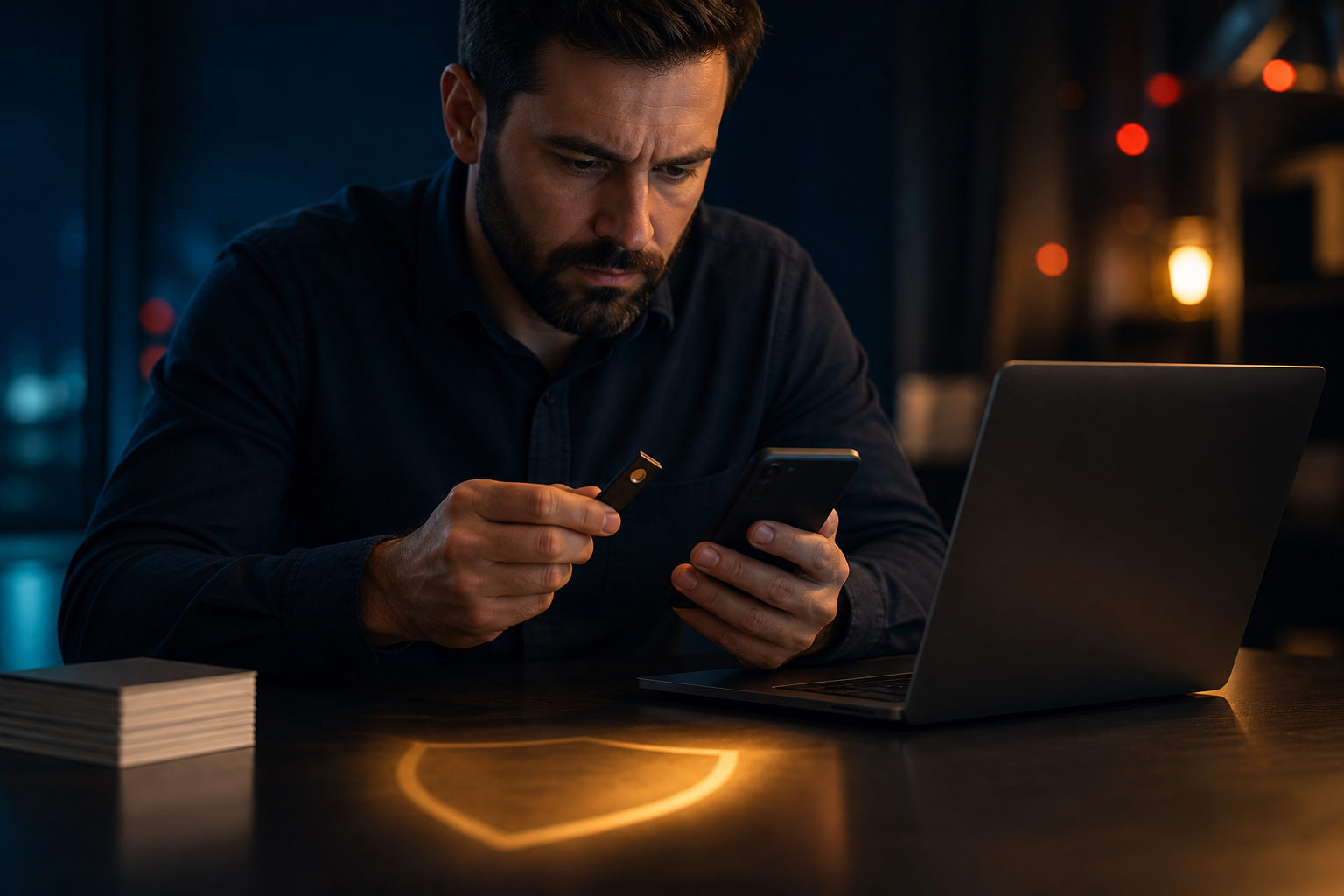
Is bitcoin trading safe? It can be relatively safe if you treat it as a risk process, not a quick click. The biggest dangers usually come from scams, account compromise, and irreversible transfer mistakes rather than from Bitcoin’s core rules.
Start with the real question: safe from what?
People often ask whether bitcoin trading is safe as if there were one answer. There isn’t. You have to separate market risk, account risk, transfer risk, and fraud risk because each one calls for a different response.
Market risk means price swings. Account risk covers weak passwords, leaked codes, and fake login pages. Transfer risk shows up when someone sends coins to the wrong address or follows bad instructions. Fraud risk includes fake support, impersonation, social media “mentors,” and off-platform deals that depend on trust instead of verification.
Bitcoin itself has operated under public rules since the genesis block on 2009-01-03, with a target block time of about 10 minutes. That says something about the network’s consistency. It does not mean your personal trading process is automatically safe. Most losses for ordinary users happen at the points where humans make decisions.
| Risk type | What it looks like | Main consequence | Your first response |
|---|---|---|---|
| Market risk | Sharp price moves | Bad entries or panic exits | Set position size before trading |
| Account risk | Weak password, fake login page | Unauthorized access | Use strong credentials and 2FA |
| Transfer risk | Wrong address or wrong process | Funds may be unrecoverable | Verify details and test first |
| Fraud risk | Fake support, guaranteed profit pitch | Voluntary loss through deception | Stop and verify independently |
| Custody risk | Leaving all funds with a third party | Access problems or management failure | Separate trading funds from storage |
Step 1: Define what kind of trading you are actually doing
Safety depends a lot on the activity. Buying a small amount of bitcoin to hold is one situation. Frequent trading is another. Sending bitcoin to your own wallet is a third. An off-platform deal with another person is a fourth. Those are not minor differences.
If you are a beginner making a first purchase, the main job is to use the correct entry point, protect the account, and understand the withdrawal flow before moving any funds. If you are trading often, your exposure grows because every login, order, confirmation, and transfer creates another chance to make a mistake.
Bitcoin’s smallest unit is 1 satoshi, equal to 0.00000001 BTC. That matters for safety because interfaces can show many decimal places. New users often focus on the asset and ignore the mechanics, then make a preventable error with amount entry or transfer confirmation.
| Trading situation | Main risk | Why it happens | What to watch |
|---|---|---|---|
| First purchase | Fake page or fake app | Unfamiliar process | Use a saved official entry point |
| Frequent trading | Emotional decisions and click errors | Fast pace increases mistakes | Write rules before placing orders |
| Withdrawal to a wallet | Wrong address or wrong flow | On-chain transfers are usually irreversible | Send a small test first |
| Off-platform deal | Fake payment proof or impersonation | Less standardized protection | Rely on confirmed receipt, not screenshots |
Step 2: Build a strong account security base
If your account entry point is weak, trading skill will not save you. Use a unique password for the trading account, another unique password for the email attached to it, and enable two-factor authentication. Then check login history from time to time so unfamiliar devices do not go unnoticed.
When possible, app-based authentication is usually a better primary layer than SMS alone. SMS can be exposed to interception, social engineering, or phone-number takeover attempts. An authenticator app does not remove all risk, though it cuts out some obvious weaknesses. Recovery codes also need care. Do not store them in the same online note as your password.
Your device matters as much as your password. Logging in from a shared computer, an untrusted phone, or a public network raises the odds of trouble before any trade is placed. When installing a wallet or trading app, verify the source, the publisher name, and the permissions it asks for. A fake app can look convincing enough to fool someone who is in a hurry.
Email deserves special attention. Many account recovery flows lead back to the email inbox. If that inbox is compromised, other protections may be bypassed through password resets. Treat email as a high-value account, not as an afterthought.
Step 3: Use a fixed transfer checklist every single time
Bitcoin transfers are powerful because they do not depend on a central party to approve each move. The trade-off is that once a transaction is broadcast and confirmed, reversing it is usually difficult. That is why transfer discipline matters more than confidence.
Before sending bitcoin, check three things in a fixed order: the receiving address, the amount, and the exact process you are following. Do not check only the first and last few characters of an address. Clipboard malware can replace pasted text. Read through the address carefully, slow down, and confirm you are not acting on instructions from a random message or a rushed conversation.
A small test transfer is one of the most useful habits in crypto. It confirms that the address works, that the receiving setup is correct, and that you understand the flow. Many costly mistakes look obvious in hindsight and invisible in the moment. Testing shrinks that gap.
Bitcoin’s supply rules show how clear the protocol can be. The hard cap is 21,000,000 BTC. The block subsidy is cut every 210,000 blocks, roughly every 4 years. The halving dates already recorded are 2012-11-28, 2016-07-09, 2020-05-11, and 2024-04-19. After the 2024 halving, the current block reward is 3.125 BTC, and the network adds about 450 BTC per day at roughly 144 blocks. Those figures explain issuance. They do not protect you from sending funds to the wrong place.
| Transfer check | What to do | Why it matters | Easy mistake |
|---|---|---|---|
| Receiving address | Paste, then review carefully | Prevents wrong or altered destination | Checking only the beginning and end |
| Amount | Confirm unit and decimals | Prevents overpaying or underpaying | Misreading decimal places |
| Process | Make sure you understand each step | Prevents social engineering | Following live chat instructions blindly |
| Test send | Send a small amount first | Validates the route | Skipping the test because of urgency |
Step 4: Learn scam patterns before you care about speed
Scams linked to bitcoin usually work through pressure, greed, or borrowed trust. The pitch may be “guaranteed returns,” “I can trade for you,” “customer support needs your code,” or “this private group has a special signal.” Different story, same goal: get you to hand over control or send funds willingly.
Fake support is common because it sounds routine. A person may pretend to help with a login issue, a frozen withdrawal, or a verification problem, then ask for a one-time code or ask you to share your screen. Once they can see enough or receive enough, they no longer need your consent.
Off-platform deals carry their own trap. Many users assume a friend’s introduction, a chat group reputation, or a polished profile is enough. It isn’t. Payment screenshots can be forged. Promises can be deleted after the fact. For any direct trade with another person, your standard should be actual confirmed receipt, not conversation history.
| Red flag | Typical pitch | Why it is dangerous | Safer response |
|---|---|---|---|
| Guaranteed profit | Risk-free return, sure win | Pushes you to skip verification | Leave the conversation |
| Forced urgency | Act now or miss the move | Reduces clear thinking | Pause and review alone |
| Request for codes | I need your code to help | Codes can open the account | Never share them |
| Screen-sharing request | I will guide you live | Can expose sensitive data | Use official help material instead |
| Proof by screenshot | I already paid, release the coins | Images can be faked | Trust only confirmed account status |
Step 5: Separate trading convenience from long-term storage
Where you buy bitcoin and where you keep bitcoin are two separate decisions. A trading account is useful for access and execution. It is not automatically the best place for long-term storage of everything you own. Your storage plan should match your purpose.
Self-custody gives you more direct control, but it also gives you full responsibility. If recovery information, seed phrases, or private keys are exposed or lost, there may be no practical way back. Saving those details in chat apps, email drafts, or cloud notes is a common and avoidable mistake.
If you are not yet comfortable with self-custody, there is no need to rush. Learn how backup works, how recovery works, and how you would verify your own setup before moving larger amounts. Good security is procedural. It is built through repeatable habits, not through confidence.
FAQ
What is the most common safety mistake for first-time bitcoin buyers?
The most common problems are fake websites, fake apps, and first withdrawals done without a test transaction. These mistakes often cause more direct damage than a bad market call because they can lead to immediate loss of control or loss of funds.
Is it always unsafe to keep bitcoin in a trading account?
Not always. It depends on your purpose and your own skill level. Active trading needs easier access, while long-term holding raises stronger questions about third-party custody and whether you are ready to manage your own wallet safely.
Is the Bitcoin network itself secure?
Bitcoin runs on public rules first described in the white paper released by Satoshi Nakamoto on 2008-10-31, titled Bitcoin: A Peer-to-Peer Electronic Cash System. For regular users, the bigger issue is usually not a sudden change in those rules but phishing, fraud, or human error during use.
Can I trust a trading mentor or someone offering managed trades?
If a person wants your login, your verification code, your screen, or your coins first, treat that as a warning sign. Education can be useful, but anyone asking for direct control over your account creates a very different risk.
If I send bitcoin to the wrong place, can I get it back?
Once an on-chain transaction is confirmed, reversal is usually difficult. You can keep records and try to contact the recipient if possible, but prevention matters far more than hoping for recovery after the fact.
If you want to trade bitcoin today, do three things before placing any order: save the correct login entry point, enable two-factor authentication on both the trading account and its email, and practice with a small test transfer. Those actions improve safety far more than chasing a perfect setup in one afternoon.
Disclaimer: This article is for informational and educational purposes only and is not investment, financial, or legal advice. Crypto assets are highly volatile and you could lose your entire investment. Do your own research and decide carefully.