
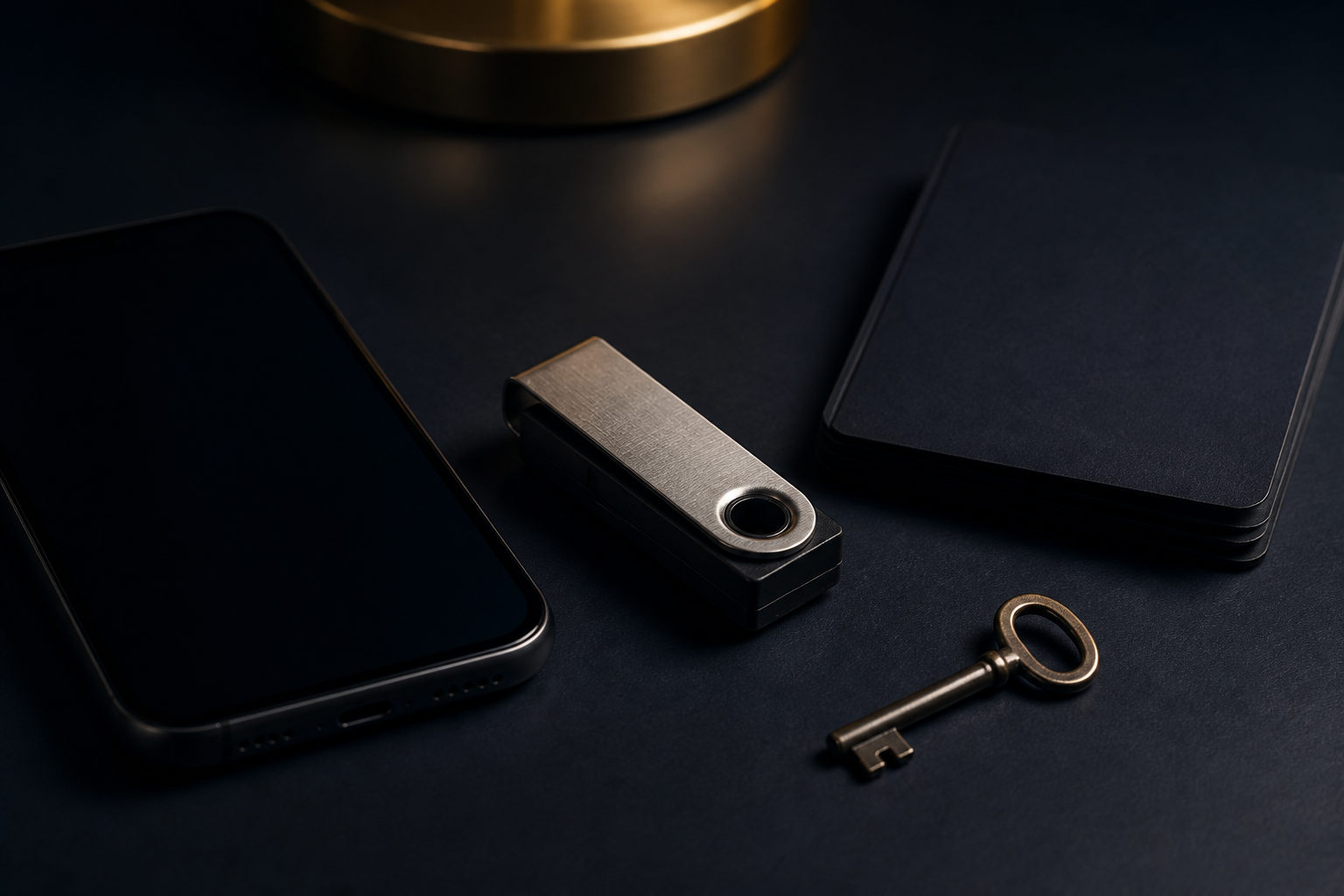
A bitcoin wallet is a tool for managing private keys, signing transactions, and receiving bitcoin. The key question is not which app looks best, but who controls the keys, how recovery works, and whether you are ready for irreversible actions.
What a bitcoin wallet actually does
New users often picture a bitcoin wallet as a place where coins sit, similar to a banking app balance. That mental model causes confusion. Bitcoin stays recorded on the blockchain; the wallet handles the credentials that let you prove control over specific funds and authorize a transfer.
That is why private key control matters so much. In a custodial setup, a platform holds the sensitive credentials for you, so the experience can feel familiar: account login, password reset, support tickets, and platform rules. In a self-custody setup, you hold the recovery material yourself. That gives you direct control, but it also puts the burden of backup and security on you.
The wallet also helps with address generation and transaction signing. An address is what you share to receive bitcoin. A signature is the authorization step that tells the network a valid keyholder approved the spend. If you lose access to the key material, the network has no built-in help desk to restore control.
Bitcoin itself follows fixed monetary rules. The total supply is capped at 21,000,000 BTC, and issuance is expected to continue until around 2140. New blocks are targeted about every 10 minutes. Those rules belong to the network, not to the wallet you choose.
Types of bitcoin wallets and who they suit
The right wallet depends on what you need it for. Someone learning how to receive a first payment has a different risk profile from someone planning to hold funds for years. Before you compare features, decide whether convenience or direct key control is your priority.
| Wallet type | Who controls the keys | Best for | Main strengths | Main risks |
|---|---|---|---|---|
| Custodial wallet | Platform | Beginners who want simple access | Fast setup, familiar account recovery flow | You depend on platform policies for withdrawals, reviews, or freezes |
| Software wallet | User | Daily use and learning on-chain basics | Flexible, easy to install, direct control of recovery phrase | Device malware, accidental deletion, and poor backup habits |
| Hardware wallet | User | Long-term holders who want stronger isolation | Transaction signing is kept more separate from internet-connected devices | Setup errors, fake devices, and weak backup handling |
| Offline backup approach | User | People focused on long-term recovery | Less exposure to online leakage | Loss, water damage, fire, and transcription mistakes |
A software wallet is often the easiest way to understand the full flow: create, back up, receive, send, and recover. A hardware wallet is more common when the goal is longer-term storage and you are willing to accept extra setup steps. A custodial wallet may still be useful as a trading or access point, but that is different from holding your own keys.
How to set up and use a bitcoin wallet safely
Start by deciding whether you want custody or self-custody. That choice changes the whole responsibility model. With custody, account security is the center of gravity. With self-custody, the center of gravity is your private key or recovery phrase.
When creating a wallet, use a clean device and install the software from an official source. During setup, many wallets show a recovery phrase. Write it down offline in the exact order and check it carefully. Do not store it in screenshots, cloud notes, chat apps, or email drafts. If that phrase leaks, anyone with it may be able to restore the wallet.
Before moving any meaningful amount, do a small test. Bitcoin transfers usually cannot be reversed once confirmed by the network. A wrong address, a clipboard replacement attack, or confusion about which asset belongs on which network can turn a routine transfer into a permanent loss. A small trial gives you a chance to verify that you understand the prompts before more is at stake.
When receiving bitcoin, your wallet will usually show an address and may also show a QR code. Check the beginning and end of the address before sharing or using it. If someone asks you to use an address format that does not match your wallet’s bitcoin receive screen, stop and verify before acting.
One more step matters more than many people expect: recovery practice. Writing down a phrase is only half the job. You need confidence that the backup can actually restore the wallet later. A recovery check can reveal wrong word order, bad handwriting, or an incomplete backup before there is a real emergency.
| Step | What to do | What to watch for |
|---|---|---|
| Create wallet | Install from an official source and initialize it | Avoid fake apps and unknown download files |
| Back up recovery phrase | Write it down offline | Never screenshot, upload, or share it |
| Receive bitcoin | Use the wallet’s receive address or QR code | Check the address carefully before use |
| Send bitcoin | Confirm details, then sign and broadcast | Transfers are usually irreversible after confirmation |
| Test recovery | Verify that the backup can restore the wallet | Fix backup errors immediately if you find any |
Private key responsibility and irreversible mistakes
The hardest part of using a bitcoin wallet is not tapping buttons on a screen. It is understanding where responsibility sits. Once you choose self-custody, you are stepping away from the normal assumptions people have from banks and payment apps. There may be no manual reversal, no platform reset, and no way to appeal to the network itself.
Several mistakes carry outsized risk. Saving a recovery phrase as a phone photo feels convenient, yet it places the most sensitive material into a connected environment. Giving the phrase to someone claiming to be support hands over control directly. Keeping only one backup in one location exposes you to both loss and physical damage at the same time.
Another common mistake is treating a local wallet password as if it were the same thing as the recovery phrase. They serve different purposes. The local password often protects access on that device; the recovery phrase or private key protects blockchain control. If you forget the device password, recovery may still be possible with the phrase. If the phrase is stolen, changing the app password will not bring the bitcoin back.
It also helps to separate a few core terms. A bitcoin address is for receiving. A private key grants spending authority. A recovery phrase is a human-friendly backup format. A signature is the authorization that approves a transaction. Once those ideas are clear, many scams become easier to spot.
Checklist for choosing a bitcoin wallet
| Checkpoint | Why it matters | What good looks like |
|---|---|---|
| Custodial or self-custody | Defines who carries key responsibility | The product explains clearly who holds the keys or recovery material |
| Backup flow | Determines whether loss of device is survivable | Clear, verifiable steps during setup |
| Recovery process | Prevents false confidence from a bad backup | Standard restore flow with clear prompts |
| Transaction confirmation screen | Reduces wrong-send and bad-sign risks | Shows address and amount clearly before signing |
| Maintenance and updates | Affects long-term security and usability | Active upkeep and visible issue handling |
| Complexity level | Impacts whether you will use it correctly | Matches your experience instead of overwhelming you |
If you are choosing your first serious bitcoin wallet, prioritize clarity over feature count. A wallet that makes backup, recovery, and transaction review easy to understand can prevent more real-world losses than a long list of advanced options.
FAQ
Does a bitcoin wallet actually store bitcoin?
Not in the way most people first imagine. Bitcoin remains on the blockchain, while the wallet stores the key material and related data needed to control and move it.
That is why changing phones does not automatically mean losing funds, as long as you still have the right recovery phrase or private key.
Is a recovery phrase the same as a private key?
They are related, but they are not identical. A recovery phrase is commonly used as a human-readable backup method, while the private key is the direct credential tied to spending authority.
For most users, the practical rule is simple: treat the recovery phrase as highly sensitive because it can often recreate the wallet.
Can one person have more than one bitcoin wallet?
Yes, and that is common. Some people split everyday use from long-term storage, while others separate wallets by device, purpose, or household use.
The main challenge is organization. Multiple wallets can reduce single-point mistakes, but only if your backups stay clear and manageable.
What happens if I forget my wallet password?
It depends on which credential you lost. If it is only the local app password, many self-custody wallets can still be restored on another device using the recovery phrase.
If the missing item is the recovery phrase or private key, the situation is far more serious because outside parties usually cannot reset blockchain control for you.
What is the smallest unit a wallet can handle?
The smallest unit of bitcoin is 1 satoshi, equal to 0.00000001 BTC. That does not mean every wallet or platform will let you withdraw or send amounts that small in practice.
Real use depends on service rules and transaction cost, so check those details before assuming tiny transfers make sense.
Before you use a bitcoin wallet for anything important, decide whether you want self-custody, pick a wallet with a clear recovery process, write the recovery phrase down offline, run a small test transaction, and verify every address with your own eyes. Those steps do more for safety than any marketing claim.
Disclaimer: This article is for informational and educational purposes only and is not investment, financial, or legal advice. Crypto assets are highly volatile and you could lose your entire investment. Do your own research and decide carefully.