
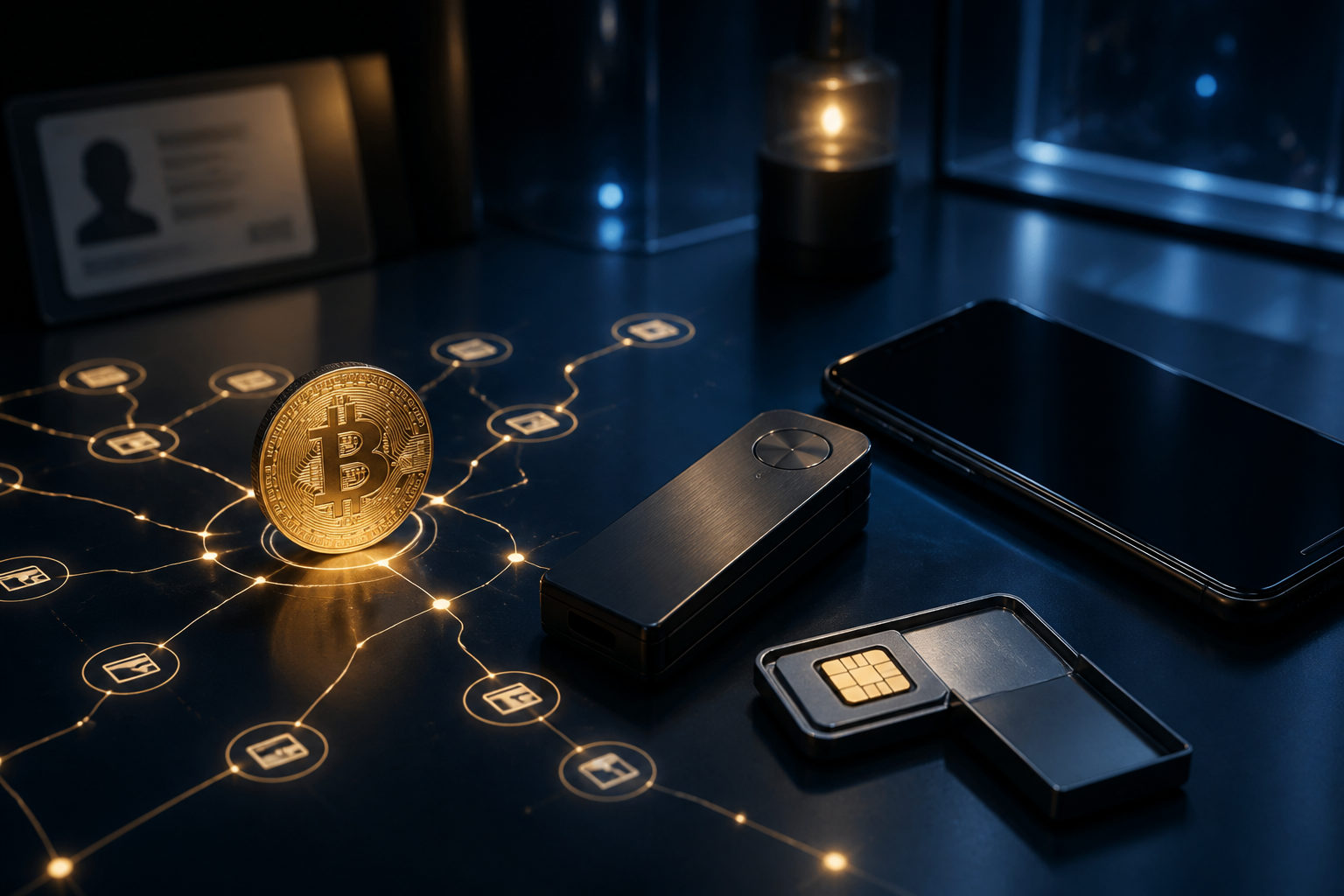
A Bitcoin wallet can be traceable, but what people usually trace is not the wallet app itself. They trace addresses, transaction flows, and the identity clues you leave around them.
The short answer: visible on-chain, not automatically tied to your name
Bitcoin is often described as decentralized, and many beginners hear that as anonymous. That is not the same thing. The Bitcoin blockchain is a public ledger. Anyone can inspect an address, see incoming and outgoing transactions, and follow the movement of funds from one address to another.
What they do not get by default is your real name, phone number, or home address. That part usually appears only when an address is connected to off-chain information, such as exchange verification, merchant records, public posts, or personal messages. So if someone asks whether a Bitcoin wallet is traceable, the better answer is this: the activity is observable, and in many common situations it can be linked back to a person.
What can actually be tracked
Addresses and transaction history
Every Bitcoin transaction is recorded on the blockchain. If you receive funds to one address, anyone can see that receipt. If you spend from it, they can see that too. If you reuse the same receiving address again and again, outside observers have a much easier time building a picture of your activity.
Patterns between addresses
Tracking is not limited to one address at a time. Analysts also look at how addresses may relate to each other. If a transaction spends from several input addresses together, people often infer that the same wallet or user controls them. Change addresses generated by wallet software can also reveal patterns, depending on how the wallet is used.
Off-chain identity links
This is where many privacy assumptions break down. The blockchain may show only addresses, but people connect those addresses to identities through other records. Buying bitcoin on a platform that verifies your identity, posting your address on social media, sharing screenshots of your wallet, sending funds to a merchant with delivery details attached, or telling another person which address is yours can all create the missing link.
Device and network traces
Even when on-chain activity looks pseudonymous, your wider digital footprint may not be. Screenshots, email records, chat logs, cloud backups, browser behavior, copied addresses, and repeated wallet habits can expose more than expected. Many users focus on passwords while ignoring the daily habits that make tracing easier.
Why some people think a Bitcoin wallet cannot be traced
A Bitcoin address does not display your name in the way a bank account might inside a banking system. You can create a wallet without publishing your identity to the whole network. That leads some people to think that if they never write their name next to the address, they are invisible.
In practice, most real-world use involves points of contact with identity. You may buy through an exchange, receive funds for work, pay a merchant, move funds between services, or show someone a wallet screenshot for support. Once one address is linked to you, observers may review earlier and later transactions tied to that address and possibly related ones. Bitcoin is better described as pseudonymous than anonymous.
Common actions that make tracing easier
- Reusing the same receiving address: this lets different payments be grouped together.
- Publicly posting a withdrawal or payment address: if that address is tied to a service account, your privacy shrinks fast.
- Sharing wallet screenshots: screenshots may reveal addresses, balances, timestamps, and device details.
- Storing wallet backups carelessly: weak backup practices can expose both your assets and your activity trail.
- Telling strangers which address is yours: a single proof-of-payment can reveal far more history than intended.
- Using one address like a public identity tag: wallets usually manage multiple addresses, but many users keep presenting one fixed address everywhere.
There is another point that deserves emphasis: Bitcoin transactions are generally irreversible. If you send funds to the wrong address, or to a fake support agent, scam seller, or impersonator, there is usually no undo button. Traceable does not mean recoverable.
How wallet type affects privacy and responsibility
A wallet does not literally store bitcoin the way a physical wallet stores cash. It manages the keys that let you control coins recorded on the blockchain. That matters because the answer to whether a wallet is traceable depends on what kind of wallet setup you are using and how you use it.
Custodial wallets
With a custodial wallet, a platform or service provider controls the keys or much of the account structure on your behalf. On-chain addresses may not display your identity to the public, but the service provider often knows which account made which transfer. Your privacy boundary depends in part on the provider's compliance process, record keeping, and internal controls.
Self-custody wallets
With self-custody, you control the private keys yourself. That gives you more direct control, but it also gives you full responsibility. If you lose your seed phrase, expose your private key, or back it up in an unsafe place, the consequences can be permanent. Self-custody improves control. It does not grant automatic anonymity.
Hot wallets and cold wallets
Hot wallets stay connected to the internet for convenience. Cold wallets are built around isolated signing and long-term storage practices. Both can be traced at the address level if your on-chain activity and off-chain behavior create connections. The difference is mostly about security posture, not a magic privacy switch.
Private key responsibility matters more than most users expect
Many users spend a lot of time asking whether someone can see their wallet activity, while paying less attention to the bigger operational risk: control of the keys. For most people, privacy loss is a serious issue. Private key loss can be a total loss.
Whoever controls the private key controls the bitcoin. That is the practical rule to remember. Never share a seed phrase or private key with anyone claiming to be support staff, a recovery expert, a trading mentor, or an account manager. Do not store recovery details in places you casually access from internet-connected devices. Do not send them through chat apps. Do not treat a screenshot as a backup strategy.
A small test transaction can help confirm that you copied the right address, but it does not prove that the recipient is trustworthy, and it does not prove that your device is clean. Test sends reduce one category of error. They do not solve all of them.
Action checklist: reduce exposure before you need to fix a mistake
- Separate purposes: avoid using the same address habits for savings, routine payments, and public receiving.
- Minimize address reuse: use fresh receiving addresses when your wallet supports that workflow.
- Verify before signing: check the full address carefully after pasting it, then check again before confirming.
- Use a small test for larger transfers: this helps catch obvious address mistakes before a bigger send.
- Keep seed phrases offline: store recovery information in a form you control without exposing it to routine online access.
- Never give recovery words to anyone: real support should never need your seed phrase.
- Review screenshots before posting: remove visible addresses, balances, timestamps, and device cues.
- Assume a send cannot be reversed: confirm the recipient and destination details before you act.
If you already exposed one of your addresses publicly, the practical next move is not denial. Start using a fresh receiving address for future payments and reduce the amount of identifying information you post around your wallet activity. Privacy is usually the result of repeated habits, not one setting.
FAQ
Can people tell that a specific Bitcoin wallet belongs to me?
Not from the blockchain alone in every case. What they usually see first is an address and its transaction history. Once that address is tied to an exchange account, public post, merchant record, or your own message, linking it to you becomes much easier.
If I use a new address each time, does that stop tracking?
It helps, but it does not guarantee privacy by itself. If your transaction patterns and off-chain behavior stay easy to connect, observers may still relate several addresses to the same user. Fresh addresses reduce exposure. They do not erase identity links created elsewhere.
Is a self-custody wallet more private than an exchange wallet?
It gives you more control over your keys, which is different from automatic privacy. Your on-chain activity is still public, and your identity can still be linked through the way you buy, receive, spend, or disclose information. Privacy depends heavily on behavior.
If a wallet is traceable, does that mean stolen bitcoin can be recovered?
No. Visibility and recovery are different things. A transaction path may be visible on-chain, but Bitcoin transfers are generally irreversible, which is why prevention matters more than hoping to reverse a mistake later.
What risk should most users deal with first?
For most people, seed phrase and private key exposure comes first, and traceability comes second. The first can lead directly to loss of funds. The second can expose your financial activity and make you a more visible target.
If you do only one thing after reading this, check whether you reuse public addresses, store recovery words in online accounts, or send bitcoin without verifying the full destination address. Fixing those habits is more useful than assuming a Bitcoin wallet is either fully anonymous or fully exposed.