
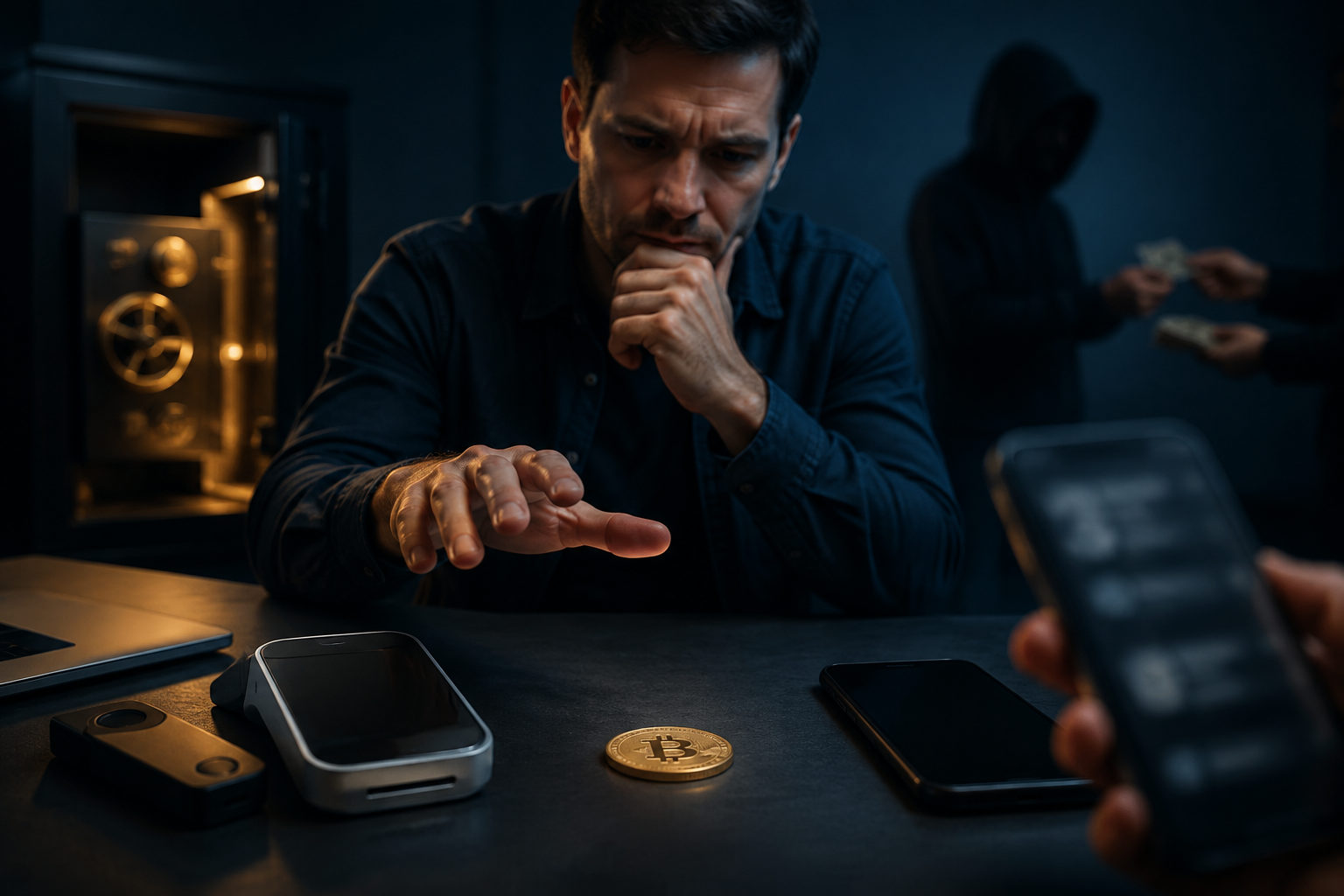
Are bitcoins safe to buy? Yes, they can be, but safety depends more on your buying process than on Bitcoin itself. The biggest risks usually come from scams, weak account security, fake support, and bad storage habits.
Start with the right question
Many beginners ask whether bitcoins are safe to buy, but the better question is this: can you verify what you are buying, who you are buying through, and where the coins will be stored after purchase? If those three parts are clear, your risk drops.
Problems often begin when someone else controls the process. A stranger in a chat group, a fake mentor, or a person offering to buy on your behalf can turn a simple purchase into a loss very quickly.
Step 1: Confirm that you are actually buying Bitcoin
What to do
Before you place an order, check that the asset is BTC and not a lookalike token, a packaged investment product, or a managed scheme using the word Bitcoin for marketing. Read the asset label, the product description, and the withdrawal rules for yourself.
Why it matters
A lot of people do not lose money because Bitcoin is unsafe. They lose money because they bought something else while believing it was Bitcoin. That can include imitation assets, internal platform credits, or products that do not give you real control over transfers.
What to watch for
- Do not assume any product with BTC in its name is actual Bitcoin.
- If the description is hard to understand, pause before paying.
- Promises of guaranteed returns or capital protection are major warning signs.
Step 2: Use only channels you can verify on your own
What to do
Choose a buying channel with clear rules, visible security settings, and straightforward account controls. Set up your account protection first, then use a small test transaction to learn the flow from buying to withdrawal without outside help.
Why it matters
If you are asking whether it is safe to buy bitcoins, channel verification is one of the biggest parts of the answer. Fraud usually moves people away from transparent interfaces and into private messages, fake support chats, search ads, or screenshots that are easy to fake.
What to watch for
- Do not trust a support contact just because it appears in a search result.
- Never share login codes, email codes, or two-factor codes.
- Do not let another person remotely control your phone or computer to “help” you buy.
Step 3: Secure the account before thinking about timing
What to do
Use a strong, unique password and enable two-factor authentication. Protect the email account connected to your crypto account as well, because email access can be enough for an attacker to reset key settings.
Why it matters
People spend a lot of time thinking about the best entry point, then ignore the account holding the funds. That order should be reversed. A stolen account can do more damage than a poorly timed purchase.
What to watch for
- Do not reuse passwords from shopping, social, or forum accounts.
- Enter codes only on the official login screen, not in a chat window.
- Avoid logging in or moving funds on public networks.
Step 4: Decide where the Bitcoin will be stored
What to do
After you buy, choose whether the coins will stay in an exchange account for active use or move to a self-custody wallet. If you use self-custody, back up your seed phrase or private keys offline and keep them in a place other people cannot access.
Why it matters
The question “is it safe to buy bitcoin” does not end when the order is filled. Storage is part of the same decision. Whoever controls the private keys controls the coins, and whoever gets your seed phrase may be able to move them.
What to watch for
- Do not store seed phrases in screenshots or chat app notes.
- Do not upload wallet backups to cloud drives or email drafts.
- For your first transfer, send a small test amount before moving more.
Step 5: Learn the common scam patterns before you buy
What to do
Pause when you see offers such as managed trading, account recovery by deposit, withdrawal unlock fees, discounted off-market coins, or “verification transfers.” Check every instruction independently instead of following pressure from a chat group or self-described expert.
Why it matters
New buyers often focus on price swings and miss the more common threat: social engineering. Scammers create urgency, authority, or fear so that you act before you think. The trick is often simple, but it works because the victim feels rushed.
What to watch for
- “Limited spots” and “act now” language is often there to shut down your judgment.
- A request to send coins to a “verification address” is still a request to send coins away.
- If support asks for screen sharing or unknown software installation, stop at once.
Step 6: Separate safety from price risk
What to do
Set a budget before you buy and use only money you can afford to see fluctuate. If you want to know the live price, check a mainstream market data tool instead of relying on group chats or screenshots.
Why it matters
Bitcoin can be bought in a careful and relatively safe way while still being volatile after purchase. Those are different kinds of risk. A secure process does not guarantee profit, and a strong market move does not mean your process was sound.
What to watch for
- Do not use money needed for bills or daily living.
- Do not increase your buy just because someone else posted a win.
- Understand fees, spread, and transfer confirmation before you trade actively.
A quick self-check before buying
Ask yourself a few direct questions. Do I know that I am buying BTC and not something similar? Can I log in, buy, and withdraw without another person guiding every click? Is two-factor authentication enabled? Do I understand that a seed phrase should never be shared? Can I tell the difference between real support and a fake account?
If several answers are no, the safer move is to slow down and learn the process first. For most beginners, patience is a security tool.
FAQ
What is the most common mistake when buying Bitcoin for the first time?
The biggest mistake is handing control to someone else. That can mean sharing verification codes, letting another person remote into your device, or following transfer instructions from a stranger.
Is it safe to leave Bitcoin on an exchange account?
It can be workable for some users, but convenience and control are not the same thing. If you keep coins there, you still need strong account security and a clear understanding of withdrawal rules.
Is self-custody always safer?
No. Self-custody gives you direct control of the private keys, but it also gives you direct responsibility. If you lose the backup or expose the seed phrase, there may be no simple way to recover access.
Is buying through a private transfer or chat contact safe?
For a beginner, that is usually a poor starting point. Once the process depends on private payment instructions, personal bank details, or chat-based trust, verification becomes much harder.
So, are bitcoins safe to buy or not?
They can be safe to buy when you use a verified channel, protect your account, control your backups, and refuse pressure tactics. They are not safe to buy when the process depends on secrecy, urgency, or giving your authority to someone else.
Before your first purchase, do three things: confirm the asset is BTC, set up strong account security, and decide where the coins will be stored after buying. Those steps matter more than trying to time the market.
Disclaimer: This article is for informational and educational purposes only and is not investment, financial, or legal advice. Crypto assets are highly volatile and you could lose your entire investment. Do your own research and decide carefully.