
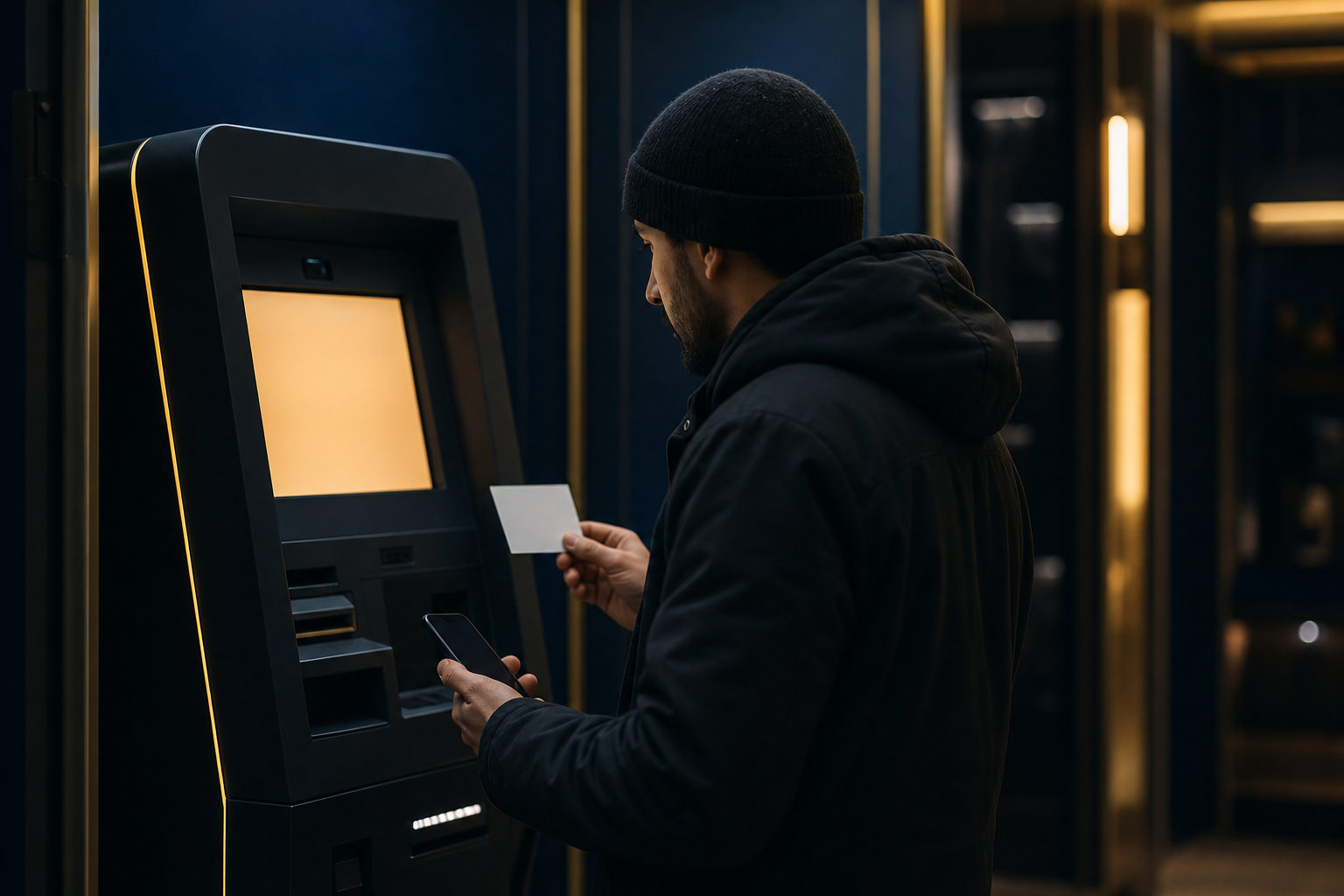
Sending money through a Bitcoin ATM can be safe in a narrow sense, but only when you control the wallet, verify the destination address yourself, and are not being pushed by a scammer. The biggest risks usually come from fraud, address mistakes, and the fact that Bitcoin transfers are hard to reverse.
Start by asking whether a Bitcoin ATM is the right tool for this payment
A Bitcoin ATM is best treated as a way to convert cash into bitcoin and send it to a wallet you control. It may also be used to pay someone else, but that only makes sense if you already know who they are, why you are paying them, and how to confirm the address without relying on their instructions.
If someone tells you over the phone, in a chat app, or on social media to go to a Bitcoin ATM right away, stop and reassess. That setup appears in many scams because it creates urgency and moves the victim into an unfamiliar process. The machine itself does not validate the story you were told.
Before you leave home, answer three questions. Do you know the recipient? Do you understand that a completed Bitcoin transfer is usually not easy to undo? Can you independently check the wallet address? If any answer is no, the payment should wait.
Step 1: Check the machine and the setting before you begin
Look at where the ATM is placed. A machine in a normal retail location with clear instructions and visible operating information is easier to trust than a device in an odd corner with vague prompts. That does not guarantee safety, though it gives you a better chance to pause, read, and think.
Watch the screen carefully. You should be able to tell that you are buying bitcoin, entering or scanning a receiving address, reviewing the transaction, and getting a record at the end. If the interface seems to be steering you into account access, remote assistance, or some unrelated service, do not continue.
Pay attention to people nearby. A stranger who wants to hold your phone, scan a code for you, or tell you exactly what to press is a serious warning sign. Your wallet details, verification messages, and transaction information should remain private from start to finish.
Step 2: Prepare your own wallet before you touch the ATM
You should arrive with a wallet that you can open, understand, and control. In practical terms, that means you can access the wallet yourself and you know how its recovery information is stored. If someone else created the wallet for you or keeps the recovery phrase, they may control the funds even if the screen appears to show your balance.
Open the wallet in advance and find the Bitcoin receiving page. Make sure it clearly shows a receiving address or QR code. Do not stand at the machine downloading an app from a link sent by another person. A fake wallet or a tampered app can defeat every later safety check.
If the goal is to pay another person, ask them to send the address for this payment again and copy or scan it yourself. Long addresses are easy to mistype. Reusing an old address from a previous chat can also send funds to the wrong destination if the context has changed.
Step 3: Verify the address with patience, not with a quick glance
Once the ATM has the destination address, pause before confirming anything. Compare the address shown on the machine with the address shown in your wallet or with the address you independently received for this transaction. They must match exactly.
Two common problems show up here. One is clipboard tampering on your phone, where you copy one address but another appears when pasted. The other is a last-minute address change from the recipient with no solid explanation. Either problem can send your bitcoin to the wrong place, and that is usually a final mistake.
A screenshot is not enough. Screenshots can be stale or edited, and they do not prove what is on the screen at the moment of payment. The safer habit is to compare live information on your wallet and on the ATM confirmation page, then check it once more before pressing confirm.
Step 4: Send a small test payment first
If the transaction matters to you, begin with a small test. This confirms that the machine can submit the transaction, the destination wallet can receive bitcoin, and the path you are using actually works. A short delay at this stage can prevent a much larger error later.
If the test arrives as expected, you can decide whether to continue. If anything feels off during the process, stop there. A changing address, confusing prompts, or a recipient who keeps pushing you to skip the test all point to elevated risk.
Keep the printed receipt or any transaction record the machine gives you. It may help you track the payment, confirm whether it was broadcast, and explain the issue to the machine operator if something went wrong. A receipt does not recover funds on its own, but losing it removes useful evidence.
Step 5: Understand fees, timing, and finality before you approve the transfer
The cost of using a Bitcoin ATM is usually made up of more than one part. The machine may charge a service fee, the buy price may include a spread, and the network fee can affect how much bitcoin is actually sent. Read the screen carefully so you know whether it is showing the cash you insert, the estimated bitcoin amount, or the amount the recipient may receive.
Timing also matters. The Bitcoin network produces a block about every 10 minutes, yet actual visible progress depends on network conditions, the ATM workflow, and the confirmation standard used by the receiving wallet or service. If someone claims the payment failed because it did not show up at once and tells you to send another one, treat that as a danger signal.
You also need to accept the practical finality of the transfer. Traditional banking mistakes sometimes have a support path. A Bitcoin payment sent to the wrong address usually does not. That makes the review screen one of the most important moments in the whole process.
Step 6: Learn the common scam patterns tied to Bitcoin ATM payments
Many ATM scams begin with pressure. The story may involve a frozen account, a package issue, a refund, an emergency, an investment opportunity, or someone pretending to be a friend in trouble. The details vary, but the goal stays the same: get you to convert cash into bitcoin and send it before you have time to verify the claim.
Another pattern involves remote guidance. The scammer tells you to share your screen, read out a code, show the wallet balance, or send a photo of the receipt. In that moment the machine may be functioning normally, yet your decision-making is being taken over step by step.
Promises of guaranteed returns should also stop the process immediately. Anyone who says they can handle the ATM purchase for you, hold the coins for you, or multiply the result after you send bitcoin to a certain address is asking you to surrender control at the most sensitive point.
- They insist you act right away and avoid checking with anyone else.
- They tell you to send bitcoin to solve a customer service, refund, or account issue.
- They ask for wallet recovery details, text codes, or full receipt images.
- They keep changing the instructions while pushing you toward another transfer.
Step 7: After the transfer, verify the transaction and secure your device
Once the payment is complete, check your wallet or a blockchain explorer to confirm that the transaction exists and that the destination address matches your intent. If the recipient says nothing arrived, ask them to provide the receiving address and transaction details before you send anything else.
Save all records from the session, including the receipt, the time of the transaction, what the machine displayed, and any relevant wallet screenshots. These records are useful if you need to review a mistake, contact the operator, or organize evidence of fraud.
Take a final look at your device security. If you installed an unfamiliar app, clicked an outside link, or let another person view or handle your phone during the process, deal with that risk right away. Review wallet permissions, change important passwords, and consider moving to a wallet you trust if your setup now feels compromised.
FAQ
Is sending money through a Bitcoin ATM safer than buying bitcoin online and sending it later?
Not automatically. A Bitcoin ATM is only an entry point for buying bitcoin with cash, and it does not make an unsafe payment safe by itself.
The main factors are still recipient trust, address accuracy, and whether someone is pressuring you into the transaction.
Can I reverse a Bitcoin ATM payment if I realize I was scammed?
In many cases, no. Once the Bitcoin transaction is sent and processed by the network, there is usually no simple cancellation path like the one people expect from banks.
You should still keep the receipt, save the messages, and contact the machine operator quickly, but that does not mean recovery will be possible.
What is the single most important safety move for a first-time user?
Prepare a wallet you control and send a small test payment first. That gives you a chance to confirm the address and the full payment path before sending a larger amount.
You should also refuse any remote or in-person coaching from a stranger who wants to direct the process.
Is it safer to send bitcoin to my own wallet first and then pay the other person?
In many situations, yes, because it lets you confirm that you can receive the bitcoin yourself before making the second transfer. It separates the machine step from the trust decision about the final recipient.
That said, it does not remove fraud risk if you later choose to send the coins to a scammer.
If you do use a Bitcoin ATM to send money, go in with your own wallet ready, verify the address on the live screen, keep the receipt, and stop the moment anyone rushes you. Those checks matter far more than finding the fastest machine.
Disclaimer: This article is for informational and educational purposes only and is not investment, financial, or legal advice. Crypto assets are highly volatile and you could lose your entire investment. Do your own research and decide carefully.