
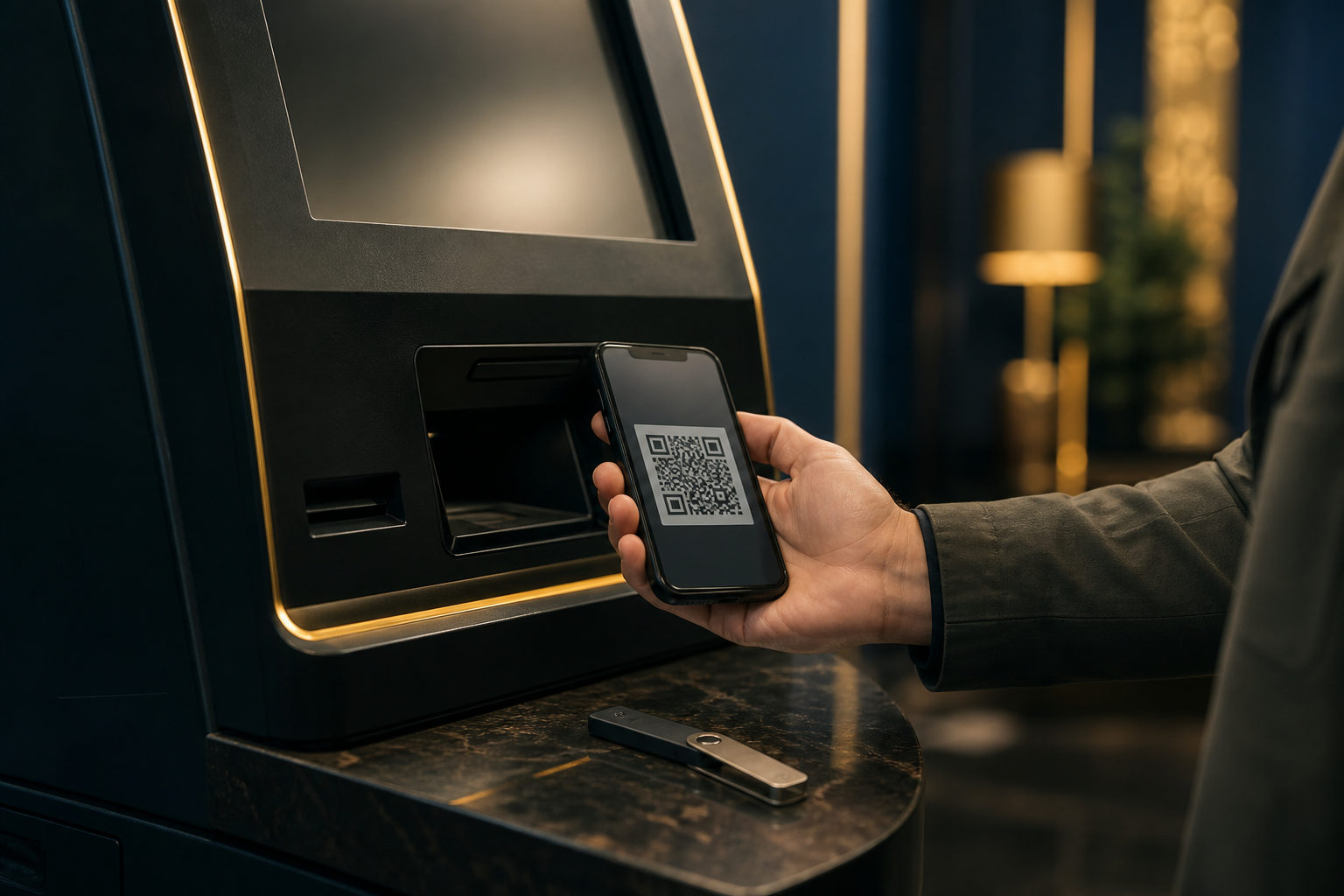
To move bitcoin from an ATM to a wallet, the first question is not which button to press. It is who controls the private key. If you do not control the key, seeing a balance does not mean you can freely move the coins.
Figure out what the ATM is actually doing
Some ATMs sell bitcoin and send it to a wallet address you provide. Others guide you to create or load a wallet first, then deliver the coins there. In the first case, the main task is to confirm that the receiving address belongs to you. In the second, the real issue is whether you saved the recovery phrase or private key in full.
If the machine only shows a QR code or an address and does not give you recovery details, treat that setup as temporary until you know exactly who controls the funds. A visible balance and actual control are not the same thing.
What to check before you confirm anything
- Compare the receiving address on screen with the one in your wallet.
- Read the prompt carefully: send to a wallet, or collect into an account.
- If the ATM creates a new wallet, save the recovery phrase right away.
- Decide in advance who will hold the private key after the transfer.
- Keep recovery words, unlock codes, and verification details out of sight.
The most common failure is not technical; it is rushing. One wrong character in an address, or one missing recovery word, can make the coins hard or impossible to recover.
How the transfer itself should be handled
If the ATM has already sent the bitcoin to a wallet you control, confirm the arrival in your wallet before you do anything else. If you want to move the coins from the ATM-generated wallet into another wallet, copy the destination address from the receiving wallet, then return to the sending side and complete the transfer. After copying, check the first and last characters again. That simple step catches a lot of avoidable mistakes.
QR scanning deserves the same caution. Do not stop at “it scanned.” Make sure the QR code points to the address you intended. If a screen asks you to enter a recovery phrase in a place you do not fully trust, pause and verify the source first.
Make the irreversible part obvious to yourself
Once a bitcoin transaction is broadcast to the blockchain, it is usually very hard to undo. The confirm button on the ATM is not a test run. It is often the final instruction. If the amount is meaningful to you, a small test transfer is far safer than hoping you can fix an error later.
Also separate “the transfer went through” from “I now control the coins.” The first only means a blockchain record exists. The second depends on the private key and on whether your wallet lets you manage the coins yourself.
A practical checklist
- Identify the ATM flow: direct send to your wallet, or a temporary wallet first.
- Prepare the destination address and verify it character by character.
- Confirm that you have backed up the recovery phrase or private key.
- Read the interface carefully so you do not pick a custodial option by mistake.
- After the transfer, check the wallet for receipt before moving on.
- Keep any receipt, but do not treat it as proof that you can recover the funds.
FAQ
Is pressing send enough to finish the transfer?
No. Sending is only one step. You still need to verify the address, confirm wallet control, and make sure your recovery details are saved. Without those, the coins may have moved while your control remains incomplete.
Can I move the coins if I never got the recovery phrase?
It depends on whether the ATM or the linked wallet actually handed you the private key. If the key is not yours, you usually cannot move the coins on your own. Any flow that shows a balance but never gives recovery information needs a closer look.
Why check the address twice if it already looks correct?
Because a blockchain transfer is usually not reversible once sent. A second check helps catch copy errors, QR mismatch, or a screen that shows one destination while the payment is set to another.
What should I do right after the coins arrive?
First confirm that you really control the private key or recovery phrase. Then decide how you want to store the wallet long term. For holdings you plan to keep, protecting the recovery information matters more than watching the balance.
After the transfer, store the recovery phrase offline, never screenshot it, never sync it to cloud storage, and never let someone else keep it for you. If private-key control is unclear, every later step only delays the risk.
Disclaimer: This article is for informational and educational purposes only and is not investment, financial, or legal advice. Crypto assets are highly volatile and you could lose your entire investment. Do your own research and decide carefully.