
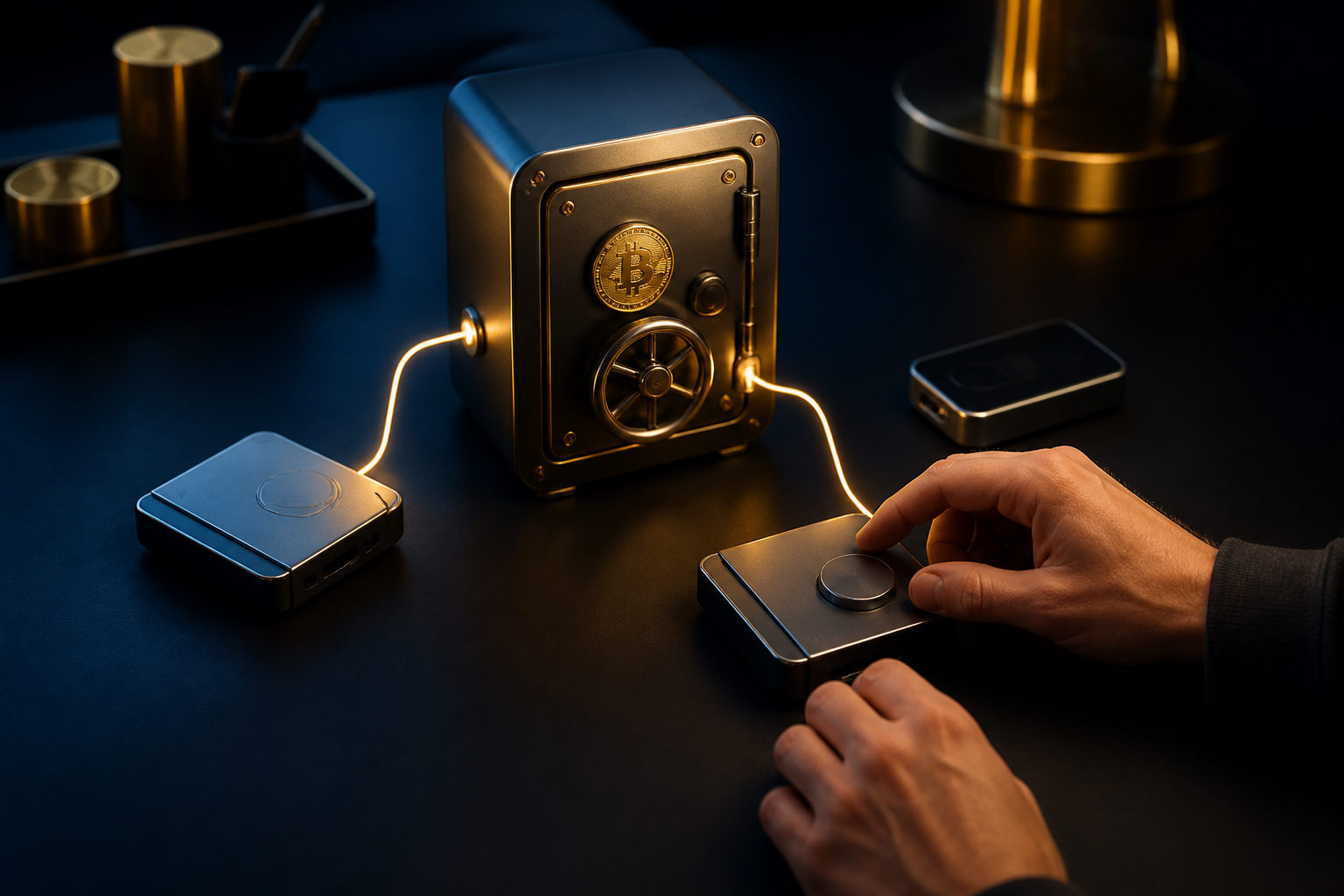
To perform a Bitcoin multisig transaction, you first create a multisig wallet, define the shared signing rule, build a transaction, collect enough signatures, and then broadcast it to the Bitcoin network.
What a multisig transaction is actually doing
A standard Bitcoin wallet lets one private key authorize spending. If that key is exposed, lost, or misused, control over the coins can be affected at once. A multisig wallet splits authority so that spending needs approval from more than one key holder according to a rule set in advance.
A simple way to picture it is a safe that needs several people to approve an opening. One person may prepare the payment, another may verify the destination, and the wallet only becomes spendable when the required signatures are present. That design is useful for shared treasury management, family holdings, or long-term storage where a single point of failure feels too risky.
| Use case | Single-signature approach | Multisig approach | Why people choose it |
|---|---|---|---|
| Daily personal spending | One person signs and sends | Several approvals are needed | Convenience usually matters more |
| Shared family funds | One holder controls access | Members approve under a rule | Better shared oversight |
| Small team treasury | One operator can move funds alone | Payment needs internal approval | Less unilateral control |
| Long-term storage | Risk stays concentrated | Risk is spread across people or devices | Stronger operational separation |
What to decide before you touch any wallet
Most multisig problems are not caused by Bitcoin itself. They come from weak planning: unclear roles, missing backups, or a setup where the keys are supposed to be distributed but end up controlled by one person anyway.
Before you set anything up, decide who holds signing power, who only monitors balances, who is allowed to create outgoing transactions, and who checks payment details before a signature is added. If this is for a group, write those steps down in plain language. A multisig wallet without a process can turn a simple payment into a deadlock.
You also need to separate three ideas that people often mix together: the private keys or seed phrases, the wallet description data used to rebuild the multisig structure, and the physical devices used for signing. Saving only the seed phrase may not be enough to restore the same wallet structure later if the descriptive wallet data is missing.
| Preparation item | What to confirm | Mistake to avoid |
|---|---|---|
| Participants | Who can sign and who only observes | Assuming everyone understands the same workflow |
| Devices | Whether signing devices are truly separate | Keeping all keys on one machine |
| Backups | Whether the wallet can be rebuilt in full | Saving seeds but not wallet description data |
| Workflow | Who creates, reviews, and broadcasts | Making decisions only when money needs to move |
| Testing | Whether the full process has been rehearsed | Using important funds on the first attempt |
How to perform a Bitcoin multisig transaction step by step
The first step is wallet creation. Choose a wallet or tool that supports Bitcoin multisig, add the public key information from each participant, and make sure everyone is looking at the same wallet setup. The receive addresses shown to each participant should match the same multisig structure. If they do not, stop there and resolve the mismatch before moving funds.
Next comes receiving bitcoin into that wallet. The important part is not just generating an address, but confirming that the address really belongs to the intended multisig wallet. If a wrong wallet was created, or an old setup file was used by mistake, the coins can be sent to a place that does not follow your shared approval rules.
When it is time to spend, one participant usually creates a new transaction by entering the destination address and fee settings. At this stage the transaction is only a proposal. It is closer to an unsigned payment instruction than a final transfer.
Each signer then reviews the transaction on their own device and signs if the details are correct. The review should focus on the destination address, the amount being sent, the fee, and any change output that returns funds back to the wallet. If the signing device can show the address and amount on its own screen, that display deserves more trust than a general-purpose computer screen, which can be tampered with by malicious software.
Once enough signatures have been collected under the wallet's rule, the signatures are combined and the finished transaction is broadcast to the Bitcoin network. From there it waits for confirmation like any other valid Bitcoin transaction.
| Stage | What happens | Main check |
|---|---|---|
| Create wallet | Add participant data and define signing policy | All participants see the same wallet setup |
| Receive funds | Generate and verify a receive address | The address belongs to the intended multisig wallet |
| Build transaction | Enter destination and fee details | Address, amount, and fee are accurate |
| Collect signatures | Each signer approves on a separate device | Transaction details match on the signing device |
| Broadcast | Combine signatures and send the transaction | The required approvals have been reached |
Where multisig users often get into trouble
A common mistake is thinking multisig is automatically safer just because several signatures are involved. If all the signing devices are stored together, or one person can access every key, the setup may look distributed while staying operationally centralized.
Another weak spot is recovery. Many people practice creating a wallet but never practice restoring it. That becomes a serious issue when a device fails, a signer changes hardware, or a family member needs to reconstruct the wallet later. Recovery should be treated as part of setup, not as a task to think about after something breaks.
Review discipline is another big factor. People get comfortable with familiar wallet screens and sign too quickly. A multisig process still relies on humans checking the right destination and the right outputs before approval. More signers do not remove the need for careful verification.
| Risk | Why it matters | Better practice |
|---|---|---|
| Keys or devices kept together | The setup keeps a single operational failure point | Separate custody by person and location |
| Incomplete backup material | Restoration may fail when needed most | Store seed data and wallet description data |
| Signing without full review | Funds may be approved to the wrong address | Check each transaction detail before signing |
| No rehearsal | Real transfers become the first live test | Practice the full flow before using important funds |
| Unclear responsibility | Payments stall when action is needed | Define who initiates, verifies, and broadcasts |
FAQ
Is a Bitcoin multisig wallet always safer than a normal wallet?
Not always. It can reduce the danger of one key being enough to move funds, but only if the keys, devices, and responsibilities are truly separated.
If one person controls everything in practice, the extra signatures add process without adding much real protection.
Do all signers need to be online at the same time?
No. In many setups, one person creates the transaction first, other signers approve it later from their own devices, and someone broadcasts it after the required signatures are collected.
That said, your chosen wallet and team workflow should be tested in advance so no one is guessing during a real transfer.
Can a multisig wallet receive bitcoin like any other wallet?
Yes. The key point is making sure the receive address truly comes from the intended multisig wallet rather than from a different setup or an outdated file.
A small test transfer can reveal setup mistakes before larger amounts are involved.
What happens if one signer changes devices?
The answer depends on whether that signer can restore their signing ability correctly and whether the wallet structure can still be rebuilt from the saved data. Do not assume a device replacement is harmless without checking.
Practice restoration before important funds depend on it. That step is often more important than the wallet interface itself.
Why does a multisig transaction feel slower than a regular bitcoin payment?
The network does not slow down the transaction just because it is multisig. The slower part is human coordination: creating the payment, reviewing it, signing it, and sending it out in the right order.
If quick access matters, design the approval process around that need before you deposit funds into the wallet.
If you plan to use Bitcoin multisig for real funds, the most useful next move is to rehearse the full cycle: create the wallet, verify a receive address, build a test spend, collect signatures, and confirm that the wallet can be restored from the saved materials. That practice exposes weak points before they turn into expensive mistakes.
Disclaimer: This article is for informational and educational purposes only and is not investment, financial, or legal advice. Crypto assets are highly volatile and you could lose your entire investment. Do your own research and decide carefully.