
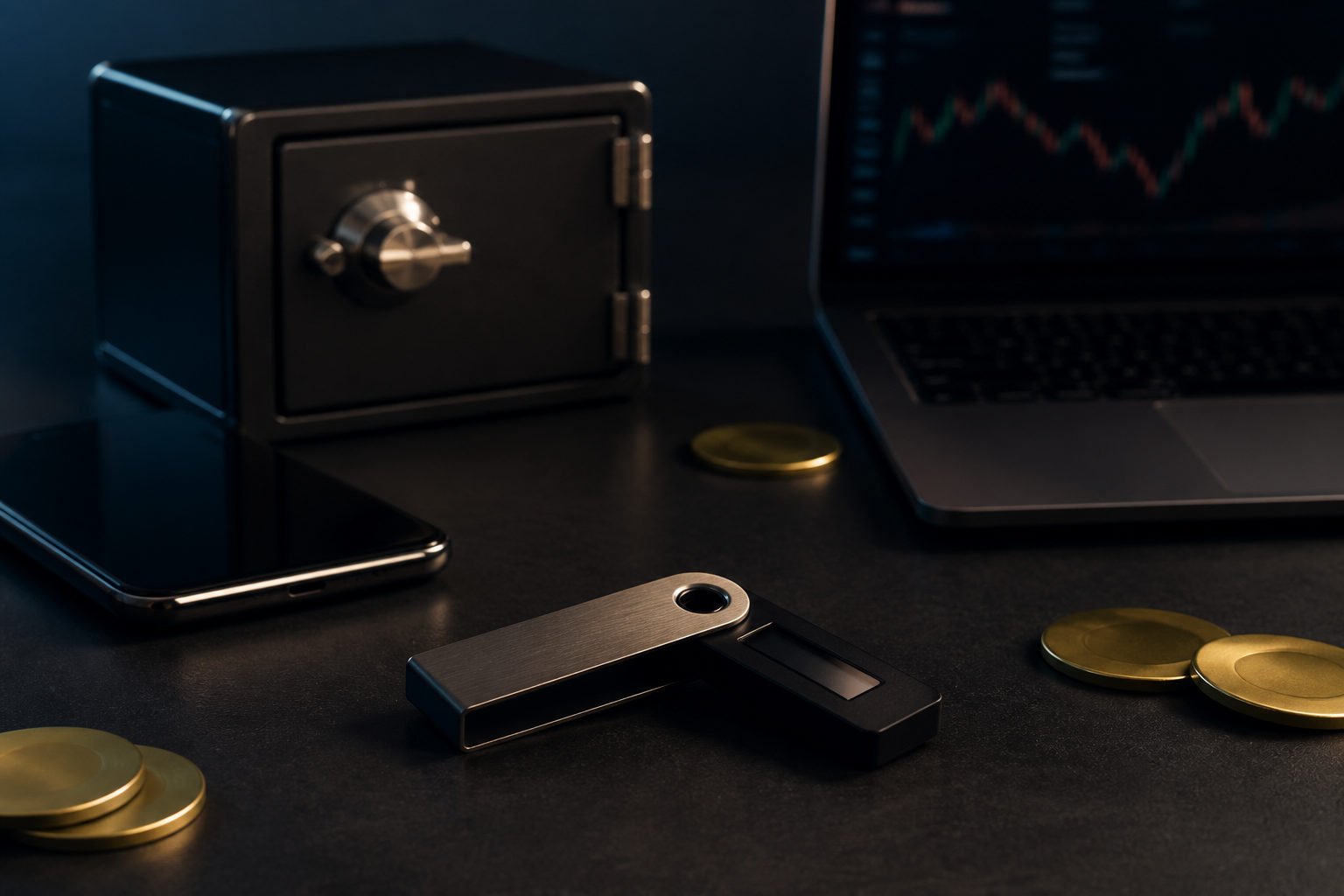
Where to put bitcoins depends on one thing first: do you want a platform to hold them for you, or do you want to control the keys yourself. For most people, the real choice is between an exchange account, a software wallet, and a cold wallet such as a hardware device.
What “putting bitcoins somewhere” actually means
Bitcoin does not sit inside your phone or laptop like a photo or document. Your coins remain recorded on the blockchain; what changes from one storage method to another is who controls the private keys that can authorize spending.
That distinction matters more than the device name. If an exchange keeps the keys, you have convenience but rely on the platform. If you keep the keys, you gain direct control, but you also take on backup and recovery duties yourself.
| Storage method | Who controls the keys | Best for | Main advantage | Main drawback |
|---|---|---|---|---|
| Exchange account | The platform | Frequent trading, beginners | Easy to buy, sell, and move quickly | Platform risk, account restrictions, withdrawal limits |
| Mobile or desktop wallet | You | Regular transfers and payments | Direct access and flexible use | Malware, device loss, poor backup habits |
| Hardware wallet | You | Long-term holders | Private keys stay isolated from internet-connected devices | Recovery mistakes, lost backup, bad device sourcing |
| Paper or offline backup | You | People who want minimal online exposure | Very limited network exposure | Damage, loss, transcription errors |
Which option fits which use case
Exchange accounts work best for active use
If you trade often, an exchange is usually the most practical place to keep the portion of bitcoin you expect to move soon. You can log in, check balances, place orders, and withdraw without handling private keys directly.
That ease comes with tradeoffs. The balance shown in your account is tied to the platform’s custody setup, so your access depends on the exchange staying operational and your account staying secure. If either side breaks down, your control is weaker than it would be in self-custody.
Software wallets suit everyday control
A mobile or desktop wallet is a common middle ground. You manage the wallet yourself, send and receive bitcoin directly, and learn how addresses, confirmations, and transaction approval actually work.
This makes software wallets useful for people who want real hands-on use rather than a purely account-based experience. At the same time, they live on internet-connected devices, so your security now depends on device hygiene, backup discipline, and your ability to keep recovery data offline.
Cold storage is built for long holding periods
Cold storage means the keys stay away from routine online exposure. In practice, that often means a hardware wallet, though other offline methods exist. For bitcoin that you do not expect to spend often, this setup reduces the number of ways an attacker can reach your keys.
That matters more for long-term holders because bitcoin has a hard cap of 21,000,000 BTC, with issuance expected to continue until around 2140. People who hold with a long time horizon usually care less about instant access and more about preserving control across years.
| Primary goal | Typical storage choice | Why it fits |
|---|---|---|
| Frequent trading | Exchange | Fast execution and no extra transfer steps |
| Regular sending and receiving | Software wallet | Convenient day-to-day use |
| Long-term holding | Hardware wallet or other cold storage | Lower online exposure |
| Risk spreading | Separate funds across more than one place | Reduces single-point failure |
How to decide where to put your bitcoins
A good decision starts with three questions. How often will you use these coins? Could you recover them on your own if your phone or laptop stopped working? Are you comfortable being fully responsible for the keys and backups?
If you plan to move your bitcoin often, deep cold storage for every coin may feel cumbersome. If you intend to hold for a long period, leaving everything on a trading platform may expose you to risks that have little to do with Bitcoin itself and a lot to do with third-party custody.
For many people, a layered approach works better than an all-or-nothing choice. Keep a smaller working balance where access is easy, and keep the long-term portion in a wallet where you control the keys and understand the recovery process.
| Your situation | Often suitable choice | Reason |
|---|---|---|
| New to bitcoin | Start small on an exchange or a simple software wallet | Learn transfers and backups before moving to a stricter setup |
| You send or receive often | Software wallet | Better for routine use |
| You are holding for the long term | Hardware wallet | Stronger separation between keys and online activity |
| You worry about one point of failure | Split funds by purpose | Keeps trading funds apart from long-term holdings |
The biggest storage mistakes usually come from user behavior
People often focus on the wallet brand first, but many losses start with simple handling errors. Recovery phrases stored in cloud notes, screenshots saved on a phone, copied addresses that were never double-checked, and devices loaded with unknown software can undo the benefit of a good wallet choice.
- Keeping the recovery phrase online: storing it in email, cloud drives, chat apps, or photo galleries increases exposure.
- Relying on one device without a real backup: if the device fails and you never prepared recovery data correctly, access may be lost.
- Downloading wallets or buying hardware from unclear sources: trust starts with where the tool came from.
- Sending the full amount on the first transfer: a small test transfer can catch address or workflow mistakes early.
- Keeping every backup in one physical place: fire, moisture, moving, or accidental disposal can wipe out your recovery path.
It also helps to separate device loss from bitcoin loss. If your phone is gone but your wallet can still be restored from valid offline recovery data, the coins are still under your control. The harder problem is a leaked or incorrect seed phrase, because that breaks recovery or hands control to someone else.
Bitcoin’s network rules are not the same thing as personal storage practice. The network targets a block about every 10 minutes, and the current block reward is 3.125 BTC after the 2024-04-19 halving, but those protocol facts do not protect a weak backup routine. Storage safety is mostly about custody decisions and execution.
FAQ
Should I keep all my bitcoin on an exchange?
That is usually only attractive if you trade actively and need quick access all the time. Many holders move the part they do not plan to use soon into a wallet where they control the keys.
Is a hardware wallet necessary for everyone?
No. It makes the most sense for people holding for the long term and willing to learn backup and recovery properly. A beginner can still start with a small amount in a simpler setup while learning the basics.
What is safer, a phone wallet or a desktop wallet?
It depends on how you use bitcoin. Phone wallets are convenient for daily access, while desktop wallets can feel easier for careful review and backup management; both still depend on clean devices and offline recovery storage.
If my device breaks, do I lose my bitcoins?
Not automatically. If your recovery phrase or other valid backup is correct and secure, you can usually restore access on another device.
What matters more, the wallet app or the backup process?
The backup process matters more over time. A decent wallet can still end badly if recovery data is exposed, misplaced, or written down incorrectly.
A practical way to store bitcoins
Start by separating purpose from location. Keep the bitcoin you may use soon in a place that is easy to access, and store long-term holdings in a setup where you control the keys and have already prepared an offline recovery backup. Before moving a larger amount to any new wallet, verify your backup plan and test the transfer flow with a small amount first.