
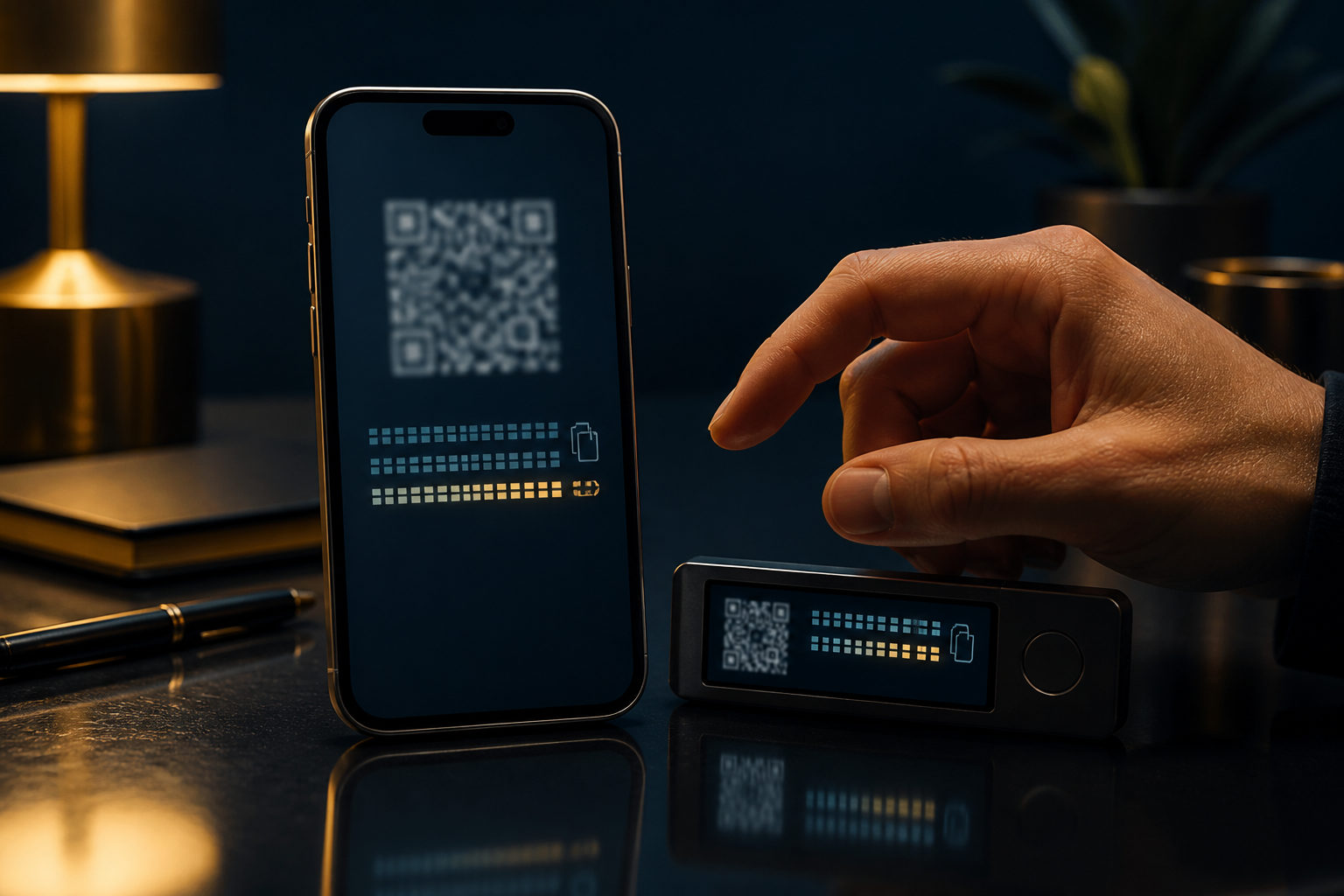
A Bitcoin wallet address usually appears as a long string of letters and numbers used to receive bitcoin. You can share that address for payments, but you should never share your private key or recovery phrase.
What a Bitcoin wallet address looks like in practice
When people ask “how does bitcoin wallet address look like,” they usually want to know whether the string on their screen is actually a valid receiving address. The safest way to judge it is not to memorize a fixed visual pattern. Instead, check where it came from: your wallet’s receive screen, a copy button, and often a matching QR code.
A Bitcoin wallet address is typically shown as a continuous string of alphanumeric characters. Different address types can look different at a glance, so there is no single appearance that covers every case. What matters more is that the address is generated by a wallet that supports the Bitcoin network and shown in the correct place for receiving funds.
That distinction matters because beginners often focus on the shape of the string and miss the real issue. A wallet address is public receiving information. It is not a password, and it is not proof that a page asking for your recovery phrase is legitimate.
Common visual traits
- It is a continuous string: usually no spaces, no normal words, and no account-style username.
- It often appears with a QR code: wallets do this to reduce typing mistakes.
- It can be copied and pasted: reputable wallets normally give you a copy function.
- It may not always look the same: address formats can vary, even within the same wallet.
If someone tells you to send bitcoin to a support handle, a social account name, or a chat ID, that is not the standard way a Bitcoin address is presented on-chain. In that situation, stop and go back to your own wallet interface before doing anything else.
Address, private key, and recovery phrase are not the same thing
A large share of avoidable mistakes happens because users confuse three separate items: the wallet address, the private key, and the recovery phrase. They serve very different purposes, and mixing them up can lead to permanent loss.
The address is what you share to receive bitcoin. The private key is what controls spending authority. The recovery phrase is the backup that can restore wallet access. In practical terms, the address can be public, while the private key and recovery phrase must stay private.
This is the operational rule to remember: you may share a Bitcoin wallet address for payment, but you must never send your private key or recovery phrase to another person, website, or fake support agent. No legitimate bitcoin payment requires those secrets.
A quick way to tell them apart
- If someone wants to pay you, they need your receiving address.
- If you are restoring your own wallet inside trusted software, you may need your recovery phrase.
- If anyone asks for your private key or recovery phrase to “verify” your wallet address, treat it as a serious risk.
So the answer to “how does a bitcoin wallet address look like” is only part of the story. The real safety issue is understanding which information is public and which information gives away control.
How to verify an address before sending
This warning should be front and center: Bitcoin transactions are generally irreversible once sent. If you paste the wrong address, scan the wrong QR code, or use the wrong network, there may be no practical way to undo the result.
Because of that, a good process matters more than visual confidence. You do not need to memorize an entire address. You need a repeatable checklist that catches common mistakes.
A practical pre-send checklist
- Copy the address only from your own wallet’s receive screen: do not rely on old chat messages or screenshots.
- After pasting, compare the beginning and ending characters: make sure they match the source.
- Confirm you are using the Bitcoin network: do not assume similarly named deposit pages are interchangeable.
- Use the QR code if helpful, but still verify the pasted result: scanning reduces input errors, but it does not remove the need to check.
- For larger transfers, send a small test first: verify the route before moving more funds.
- Watch for clipboard tampering: some malware replaces copied wallet addresses with an attacker’s address.
- Do not trust screenshots alone: they may be outdated or from the wrong account.
If you are sending to or from an exchange account, add one more check. Make sure the page specifically says it is for Bitcoin deposits or withdrawals, not a different asset or a different network with a similar name. Interface confusion is a common source of user error.
Another point that surprises new users: the same wallet can generate more than one receiving address. That does not mean the wallet is broken, and it does not mean you suddenly have separate wallets. In many cases, it is a normal design choice tied to privacy and account management.
Why the address may look different from one time to another
Many users expect their Bitcoin wallet address to stay visually identical forever. In practice, a wallet may show you a new receiving address at different times. That can happen without any problem on your side.
This is one reason there is no single perfect answer to what a Bitcoin wallet address should “look like.” You may be seeing different Bitcoin address types, or a fresh receiving address generated by the same wallet. Visual variation alone does not prove something is wrong. Source, network, and control matter more.
When you should stop immediately
- The address did not come from your own wallet’s receive page.
- You copied an address, pasted it, and the first or last characters no longer match.
- A page pressures you to send quickly without giving you time to verify the network and address.
- Someone says they need your recovery phrase to confirm that a wallet address is valid.
If any of those things happen, do not rush. Close the suspicious page, open your official wallet app, and fetch the receiving address again from your own interface. That simple reset is often safer than trying to reason through an untrusted screen.
FAQ
Does a Bitcoin receiving address always stay the same?
Not always. Many wallets can provide a new receiving address, often for privacy or account management reasons. What matters is whether the address was generated by your wallet and remains under your control.
Can I safely share my Bitcoin wallet address?
In normal use, yes. A wallet address is meant to be shared for receiving payments. The dangerous information is your private key or recovery phrase, because those can affect control of the wallet.
Why did my copied address change after I pasted it?
Sometimes it is a simple copy mistake. In worse cases, malware may have altered your clipboard contents. If the pasted address does not match the original source, stop the transfer and check your device before trying again.
Is using a QR code safer than typing the address?
It is often safer in the sense that it reduces manual entry mistakes. You should still verify the address shown after scanning, especially the first and last characters and the selected network.
Is an exchange deposit address the same as a self-custody wallet address?
Both can receive bitcoin, but the control model is different. An exchange deposit address is managed within the platform’s system, while a self-custody wallet puts backup and key responsibility on you.
What to do right after you get an address
Copy it from your own receive screen, compare the beginning and ending characters after pasting, confirm the Bitcoin network, and send a small test first if the amount matters. At the same time, store your recovery phrase offline and keep it out of chat apps, cloud drives, and photo galleries. The address is the part you can share; the real job is protecting the secrets behind it.